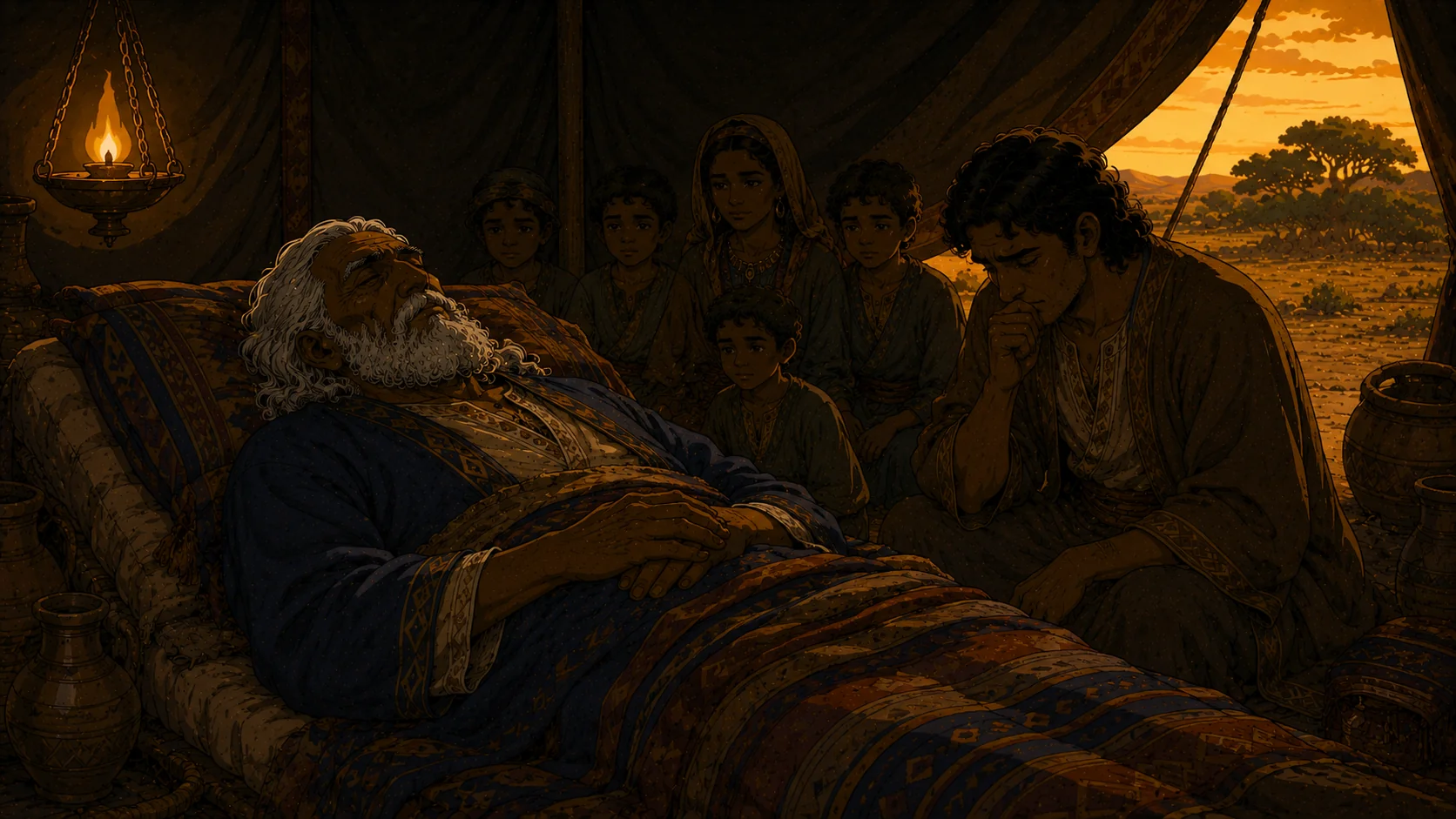
Abraham’s death is recorded with three phrases stacked in sequence: בְּשֵׂיבָה טוֹבָה (in a good old age), זָקֵן (old, elderly), וְשָׂבֵעַ (and satisfied, full). Each phrase is a complete description of a completed life. He was not cut off in grief or exile. He died with fullness. The same phrase will be used for Isaac.
The verb וַיִּגְוַע (vayigva, and he expired / breathed his last) is a dignified term for death distinct from the ordinary verbs of dying. It is used for the patriarchs. It implies a peaceful cessation, a completion of breath rather than a violent end. Then וַיָּמָת (vayamot, and he died) follows as the declarative fact.
He is gathered to his people. This phrase — וַיֵּאָסֶף אֶל־עַמָּיו — cannot refer to burial, since he is not yet buried when this is said. His people are those who preceded him in death. The phrase implies a gathering, a reunion, an afterlife whose form the Torah does not describe but whose reality it assumes.