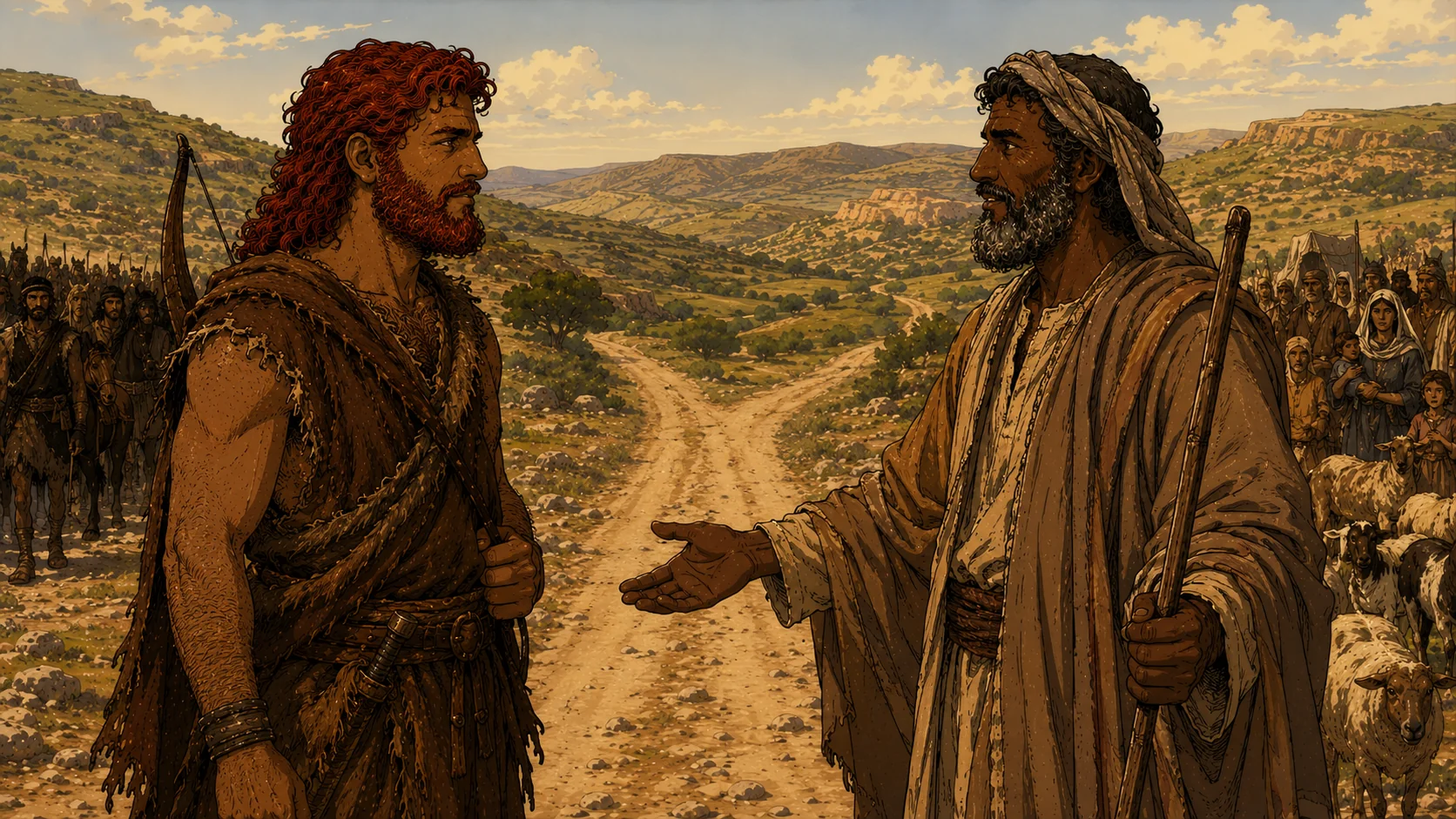
Esau offers to travel together. He says: let us journey on and I will go alongside you. The word nisa — let us journey — is a single verb of motion, an offer of companionship. Jacob refuses it carefully. He calls Esau my lord, calls himself his servant — the same protocol he used in his messages from Paddan-aram. The embrace did not dissolve the hierarchy Jacob imposed on himself. He uses it still, even after the reunion.
His reason is the children and the flocks. The nursing animals, if driven too hard for even one day, would all die. Jacob asks Esau to go ahead at his own pace while he follows slowly, arriving at last in Seir. Esau then offers to leave some of his men. Jacob again declines — why should I find favor in your eyes, my lord? The offers are generous. The refusals are polite. But Jacob is not going to Seir.
Esau returns that day to Seir. Jacob journeys to Succoth — not south toward Esau but west, into Canaan. He builds a house and makes booths for his livestock. The text says: therefore the name of the place was called Succoth. The place is named for Jacob's act of settling. He had said he would follow slowly to Seir. He builds a house instead. The brothers depart, and the next time they appear together is at their father's grave.