The single word shalem carries the weight of twenty years. Jacob left this land in the dark with a staff, fleeing Esau. He arrives with wives, children, servants, flocks, silver, and a new name. The Torah does not give him a speech at the border. It gives him one word: shalem. Whole. Complete. The same root as shalom. The vow of Genesis 28 — if you bring me back to my father's house in peace — is fulfilled here before he even pitches his tent.
He camps before the city of Shechem and purchases a portion of the field from the sons of Hamor, the father of Shechem, for a hundred kesitah. The kesitah is an ancient unit of weight or currency that appears only here and in two other places in the Hebrew Bible. The price is paid. The land is owned. Unlike Abraham, who negotiated for a burial cave, Jacob buys ground to live on. He plants himself in Canaan with a legal transaction.
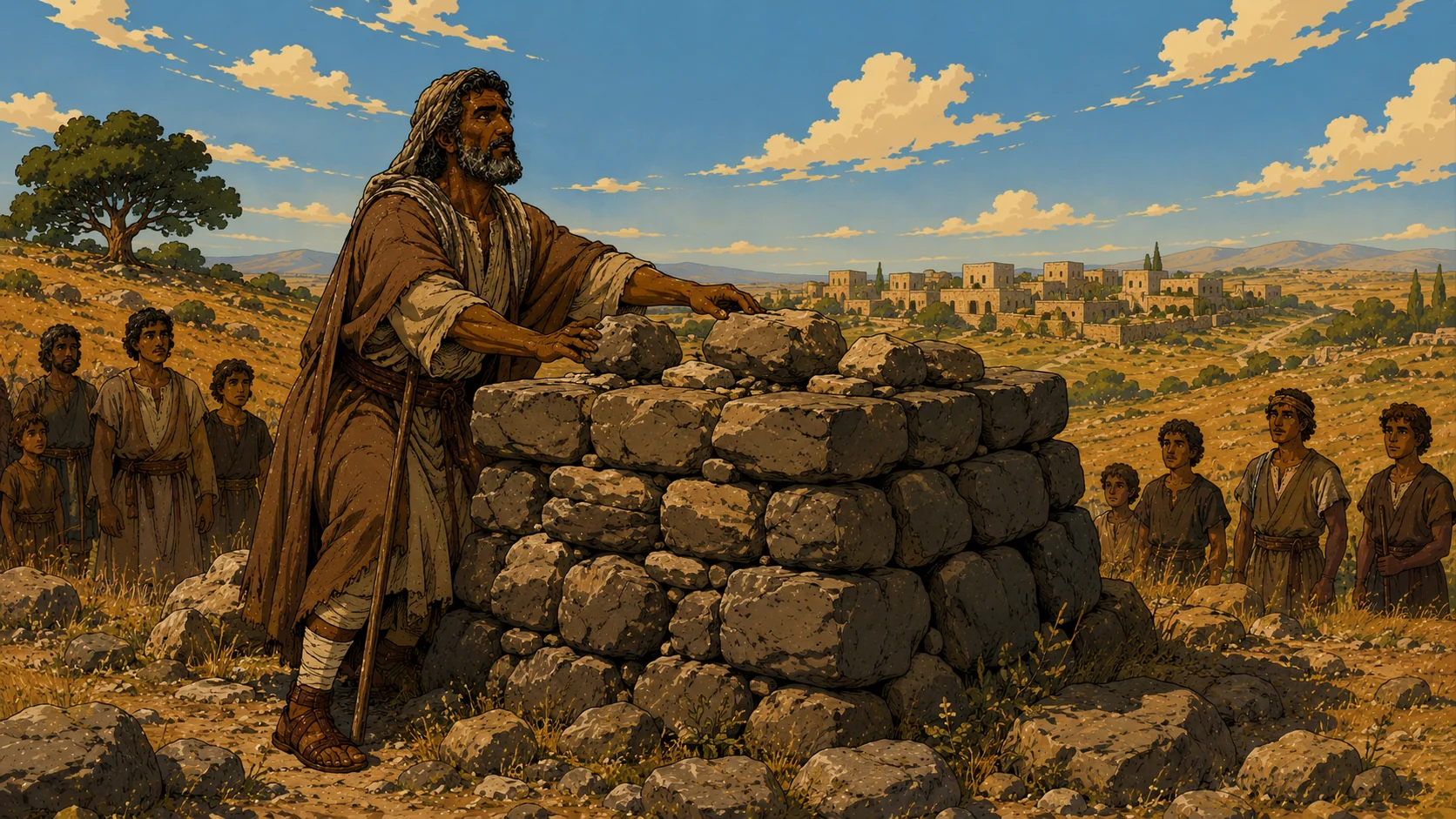
Then he erects an altar and names it El Elohe Israel — God, the God of Israel. This is the first time the name Israel appears in a divine title. The name God gave Jacob at Jabbok now belongs to the altar. The man who wrestled with God all night names his altar after the fight: the God who renamed him, he calls by his new name. The three acts — purchase, tent, altar — move from commerce to habitation to worship. Jacob has come home.