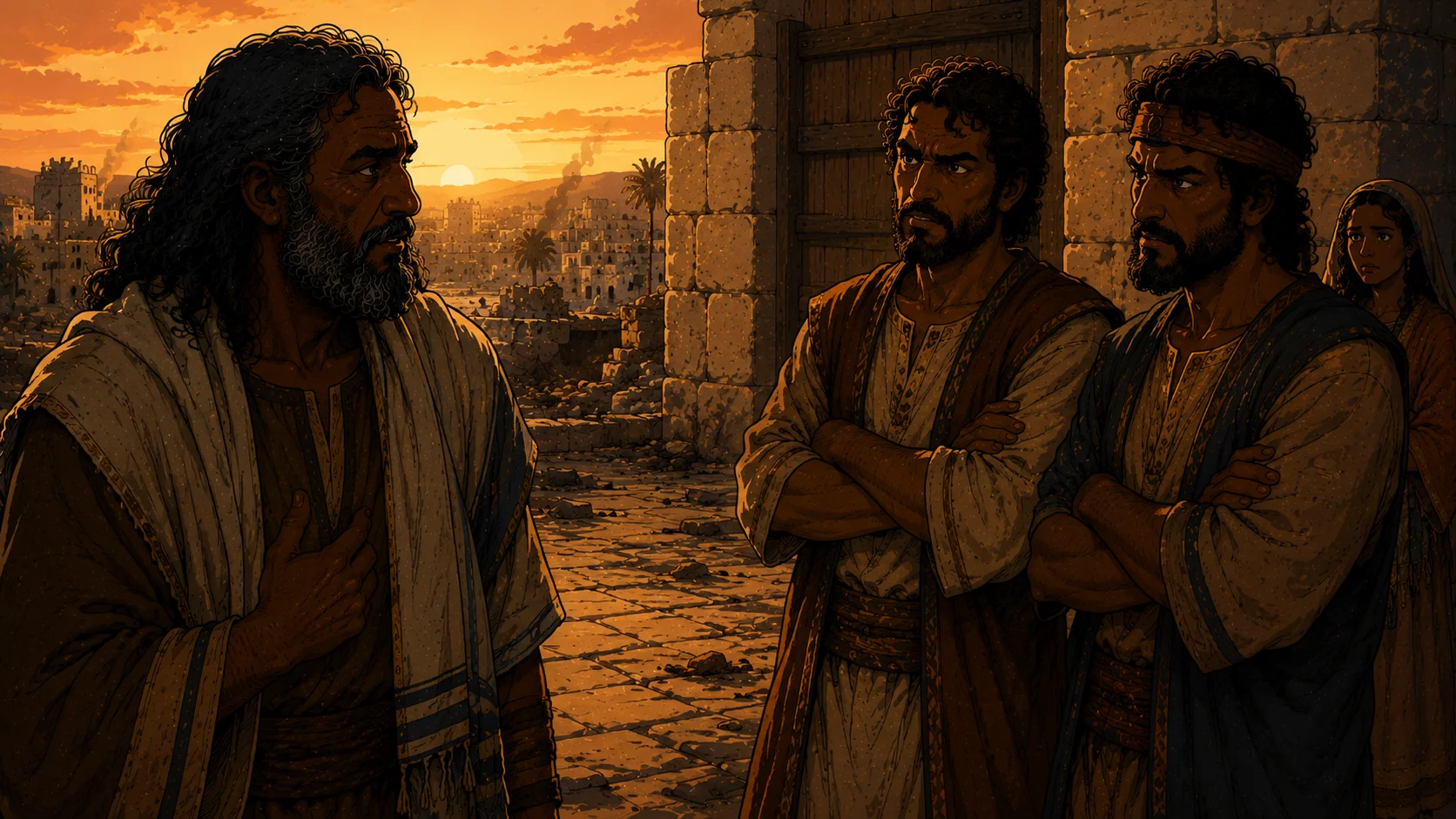
The chapter opens with three words that carry everything: וַתֵּצֵא דִינָה — and Dinah went out. She goes out to see the daughters of the land. This is the first and last time in Genesis that a woman simply goes out of her own initiative, without a man directing her movement. The Torah records it plainly and without judgment. She went out.
Shechem son of Hamor, prince of the Hivites, sees her. The text then moves in rapid sequence through four verbs: saw, took, lay with, and afflicted. Each verb is its own line in the Hebrew. The progression has no gap, no pause for consent. The verb vay'anneha — and he humbled her, oppressed her, violated her — is the legal and moral verdict. The Hebrew does not soften what happened.
Then verse 3 turns: his soul cleaved to Dinah daughter of Jacob. He loved the young woman and spoke to her heart. The same man who took her by force now speaks tenderly. The juxtaposition is deliberate and disturbing. The Torah does not resolve it — it simply records both things in sequence. Shechem goes to his father and says: get me this girl as a wife. The request frames Dinah as an object to be obtained. Her name appears again here — daughter of Jacob — as if to remind the reader who she belongs to and that she has a family who has not yet heard.
