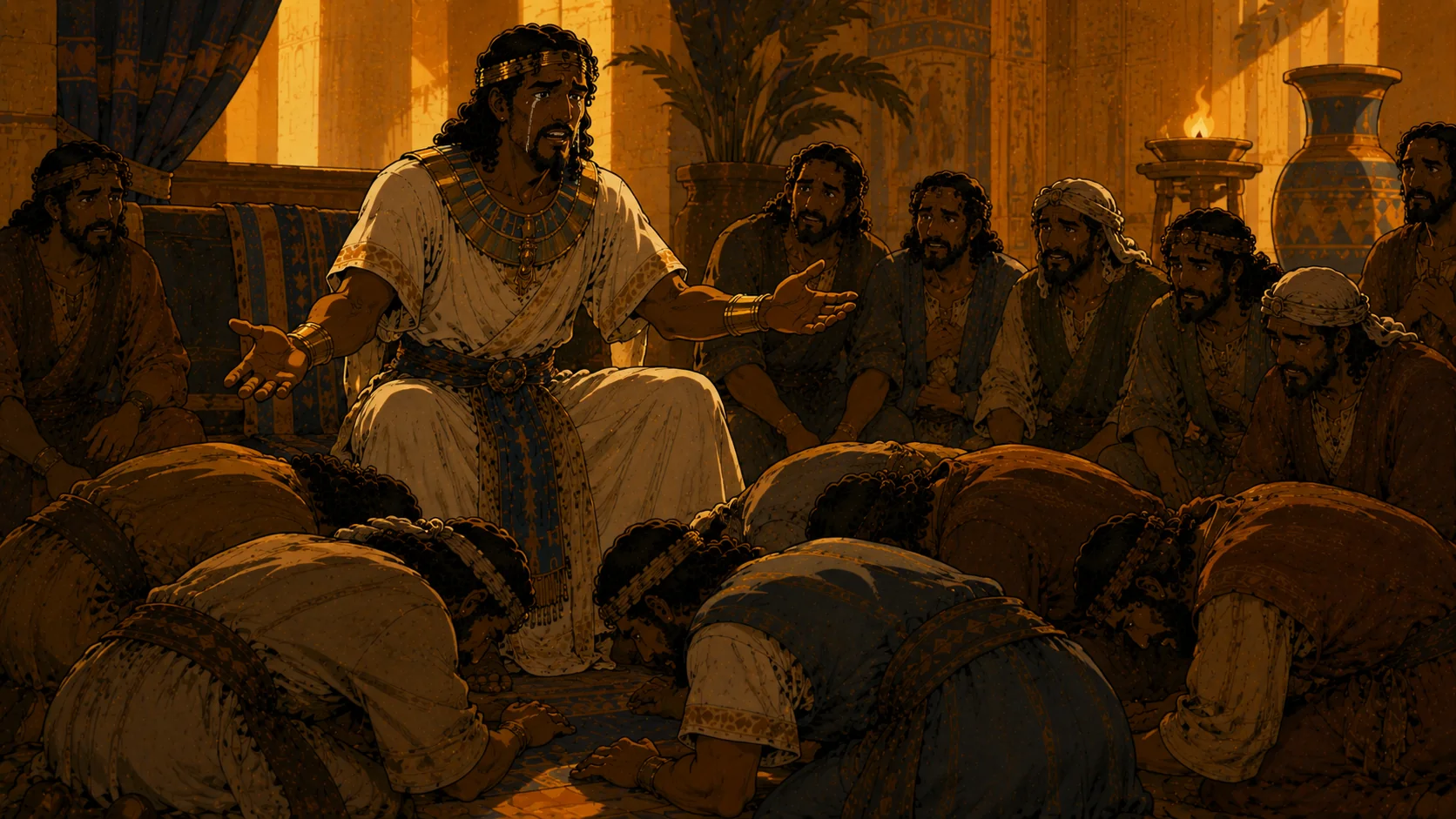
With Jacob dead, the brothers panic. They send a messenger to Joseph: "Before he died, your father commanded — please forgive the transgression of your brothers and their sin, for they did evil to you." There is no record of Jacob giving this command. The brothers appear to have fabricated a paternal deathbed instruction to protect themselves. Then they come themselves and fall before Joseph: "We are your servants." Joseph weeps when he receives the message. Not from manipulation — from grief that his brothers, after everything, still believe he has been waiting for his father to die before taking revenge. Thirty-nine years total — twenty-two of exile and seventeen of reunion — and the brothers still do not believe they are forgiven.
Joseph gives the definitive answer of the entire narrative. "Do not be afraid. Am I in the place of God? You meant evil against me — but God meant it for good, to bring it about that many people should be kept alive as they are today. So do not fear. I will provide for you and your little ones." The Hebrew is precise and structural: atem chashavtem alai ra'ah — you planned evil against me. Elohim chashavah l'tovah — God planned it for good. The same verb, chashav. The same event. Two intentions running simultaneously on one set of facts.
Joseph does not deny that they meant evil. He does not minimize the suffering. He says: while you were planning evil, God was planning good. The two plans ran in parallel and produced one outcome. This is the Torah's theological answer to the problem of evil in the Joseph narrative — and by extension to every story of suffering in which human malice intersects with divine purpose. Joseph comforts them and speaks kindly to them.
