Israel camps at Rephidim by YHWH's command — and there is no water. The people quarrel with Moses: Give us water to drink. Moses answers: Why do you quarrel with me? Why do you test YHWH? But thirst is real and the people are thirsty. They grumble: Why did you bring us up from Egypt — to kill us, our children, and our livestock with thirst?
Moses cries out to YHWH: What shall I do with this people? A little more and they will stone me. The threat is not rhetorical. Moses is standing between a nation near riot and a God who has commanded them into a waterless camp. He has nothing to give them. He has only the God who brought them here.
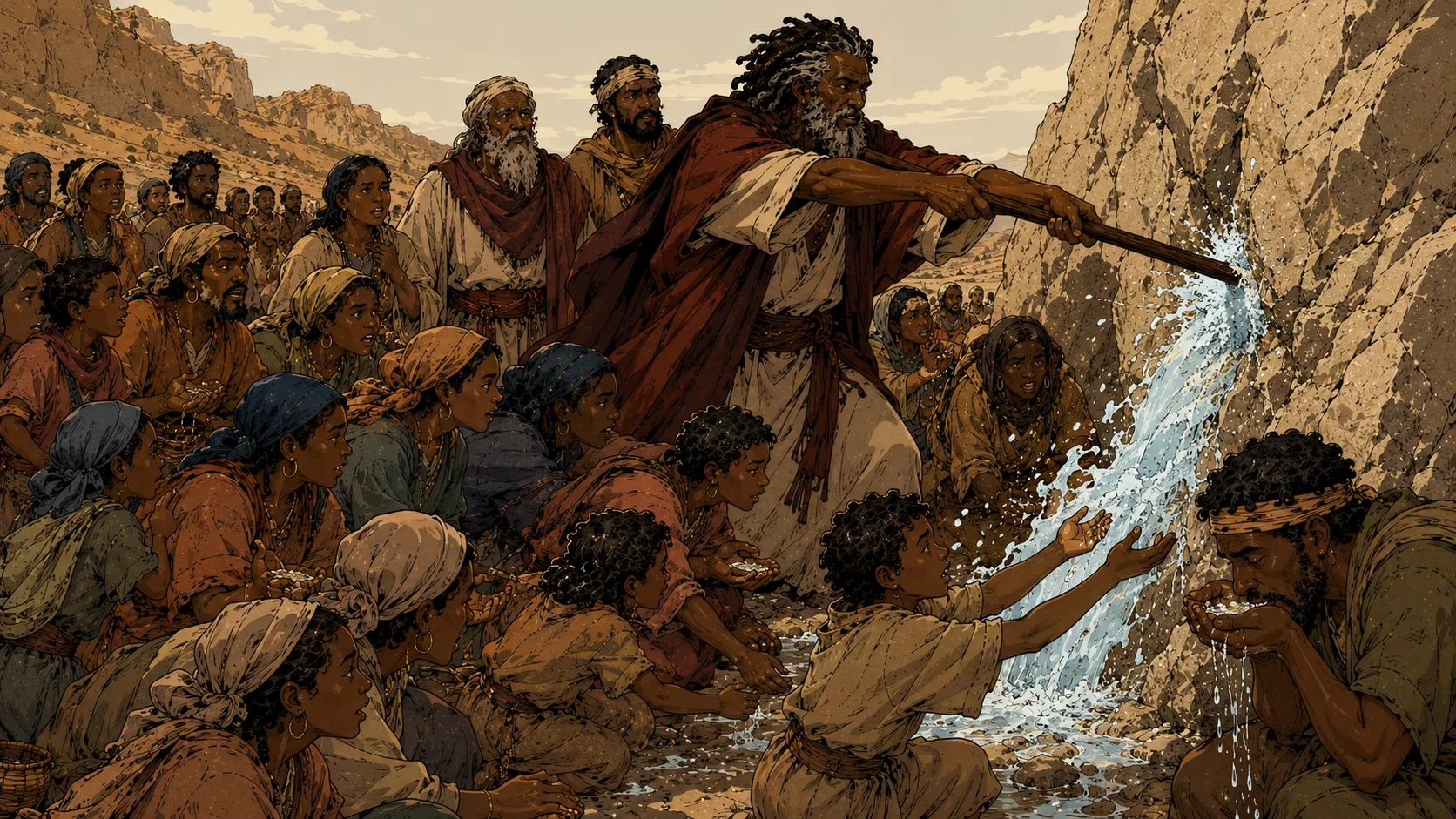
YHWH answers with precision: Take your staff — the one you struck the Nile with. Go ahead of the people. Take some of the elders with you. And go to the rock at Horeb. Behold, I will stand before you there on the rock. Strike the rock and water will come out of it. Moses does it in the sight of the elders of Israel. Water pours from the rock and the people drink.
The place receives two names that will follow it through the rest of the Torah. Moses calls it Massah — Testing — and Meribah — Strife. Because of the quarreling of the children of Israel, and because they tested YHWH, saying: Is YHWH among us or not? The question they asked at the rock is the question of the wilderness: is God actually present, or is this all empty promise? At Rephidim the rock answers.
Psalm 78:15–16 will remember it: He split rocks in the wilderness and gave them drink abundantly as from the deep. He made streams come out of the rock and caused waters to flow down like rivers. The rock at Horeb is a fixed point in Israel's memory of God's faithfulness in impossible places.