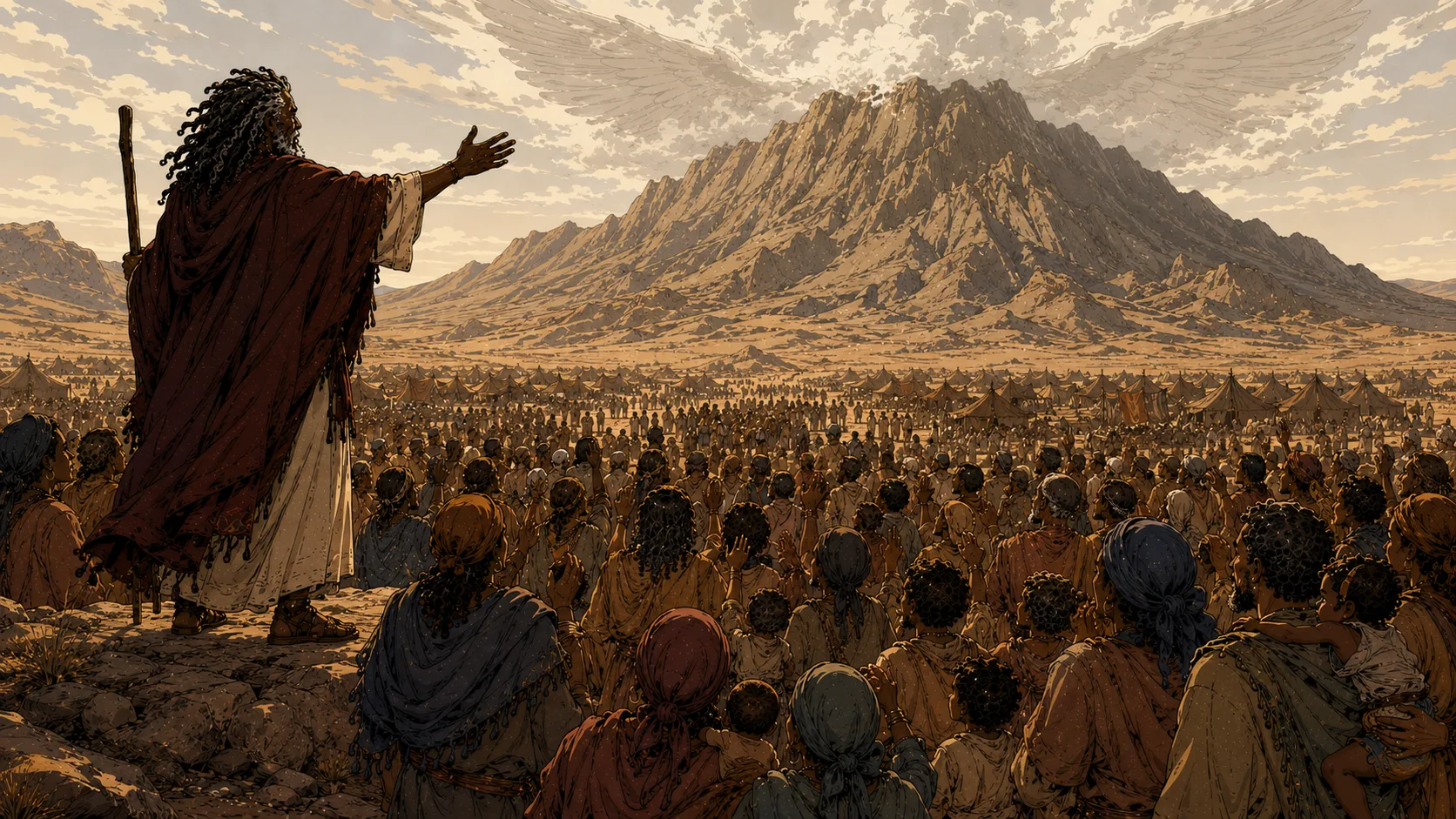
On the third new moon after the children of Israel left Egypt, they arrived at the wilderness of Sinai. They had journeyed from Rephidim and came into the wilderness and camped before the mountain. The text is spare and exact: one verse for three months of travel, because the arriving is the point. This is where everything has been leading — not Canaan, not a land of rest, but this mountain, this encounter, this moment.
Moses goes up to God, and YHWH calls to him from the mountain. He does not open with a list of requirements. He opens with what he has already done: You yourselves have seen what I did to Egypt — how I bore you on eagles' wings and brought you to myself. The image is of the great nesher, the eagle of the Levant, that hovers beneath its young as they attempt their first flight — positioned to catch them on its own wings if they fall. Israel did not arrive at Sinai by their own strength. They were carried. The destination was not freedom from Egypt; it was nearness to YHWH himself.
Then comes the offer: Now therefore, if you will indeed obey my voice and keep my covenant, you shall be my treasured possession (סְגֻלָּה) among all peoples, for the whole earth is mine. And you shall be to me a kingdom of priests and a holy nation. This is the constitution before the constitution — the declaration of identity before the law is given. The covenant terms are not yet spelled out. But the shape of Israel's calling is announced here: not merely a nation among nations, but a priestly kingdom, consecrated at the center of the peoples, bearing the knowledge of God toward the world.
Moses descends and calls the elders of the people and sets these words before them. The response is immediate and complete: כֹּל אֲשֶׁר-דִּבֶּר יְהוָה נַעֲשֶׂה — all that YHWH has spoken we will do. Moses brings their answer back to YHWH. The people have not yet heard the specific terms. They have not yet seen the fire and smoke on the mountain. They say yes before any of it — yes to the God who has already carried them.
This is the hinge of the book. Egypt is behind. The sea is crossed. The wilderness is traversed. Now the mountain stands before them. In the Hebrew imagination, Sinai is not a burden imposed from outside — it is the moment of mutual choosing. The people are chosen; the people choose. The covenant is not a contract drafted under duress but an embrace of the relationship that the exodus already established.