Exodus 24 opens with YHWH calling Moses, Aaron, Nadab, Abihu, and seventy elders of Israel to come up to him — but only Moses is to draw near. The others are to worship from afar. Moses comes down and tells the people all the words of YHWH and all the ordinances. All the people answer with one voice: כָּל-הַדְּבָרִים אֲשֶׁר-דִּבֶּר יְהוָה נַעֲשֶׂה — all the words that YHWH has spoken, we will do.
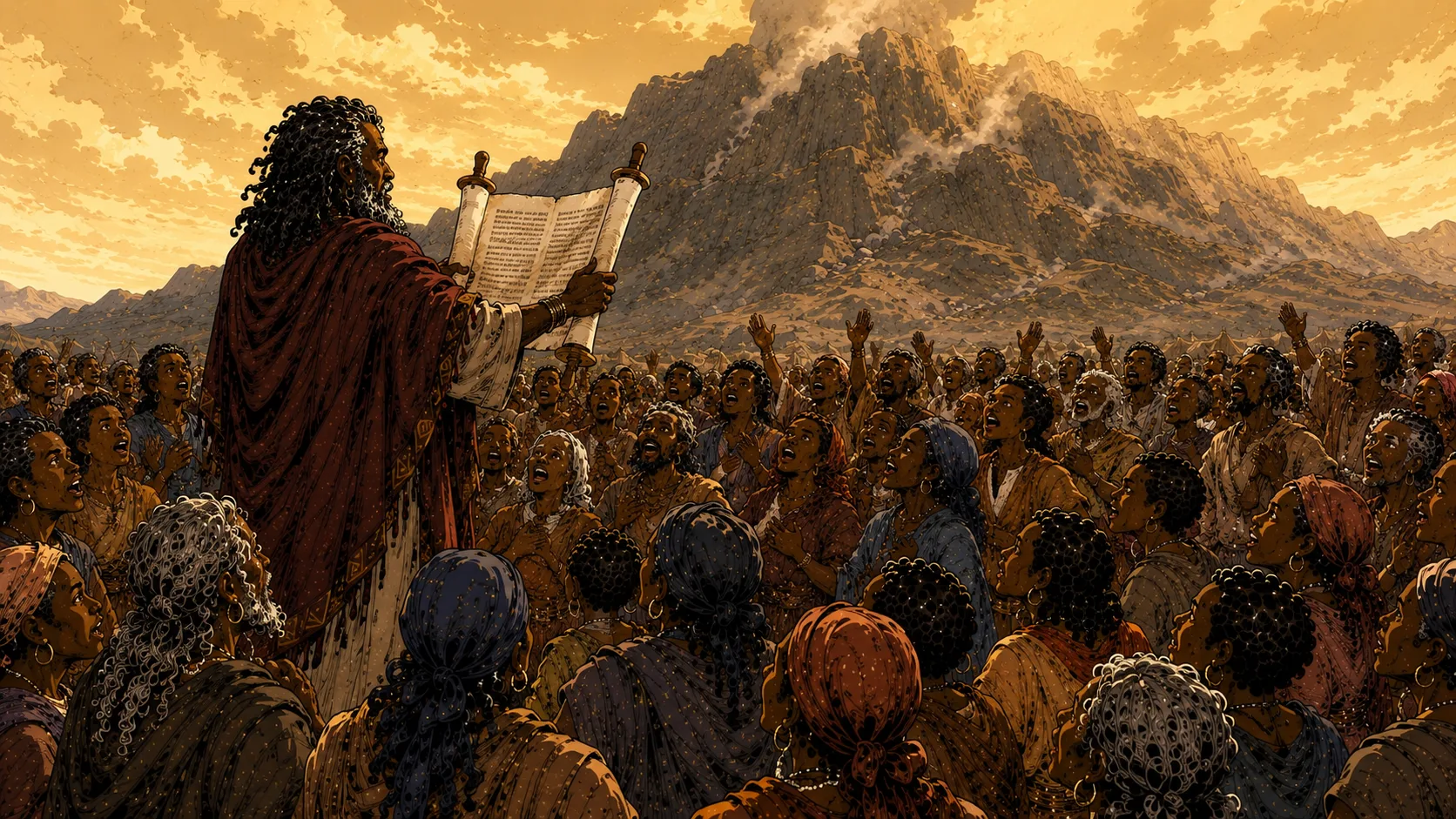
Moses rises early in the morning. He builds an altar at the foot of the mountain and erects twelve pillars for the twelve tribes of Israel. Young men of Israel offer burnt offerings and peace offerings of oxen. Moses takes half the blood and puts it in basins; the other half he throws against the altar. The altar represents YHWH; the blood splashed against it begins the covenant sealing from the divine side. Then Moses takes the Book of the Covenant — סֵפֶר הַבְּרִית (sefer habrit) — and reads it aloud in the hearing of the entire people.
The people's response is immediate and total: כֹּל אֲשֶׁר-דִּבֶּר יְהוָה נַעֲשֶׂה וְנִשְׁמָע — all that YHWH has spoken, we will do and we will hear. The word order is the theological heart of the verse. In any human transaction, hearing (understanding) comes before doing (committing). Israel says doing before hearing. They commit before they have processed the full implications. This is not recklessness — it is the logic of a relationship built on demonstrated trust. The people have seen what YHWH did at the sea, heard his voice at the mountain, and received his words through Moses. The na'aseh comes from that cumulative knowledge of who he is. Nishma — we will continue to hear, continue to attend, continue to obey — is the promise of ongoing responsiveness to the covenant partner.
Moses then takes the blood from the basins and throws it on the people, saying: Behold the blood of the covenant which YHWH has cut with you in accordance with all these words. Blood from both sides: half on the altar representing YHWH, half on the people. The life-substance is shared. In ancient Near Eastern treaty practice, covenant parties sometimes walked between divided animals, symbolizing that the same fate would befall either party who broke the terms. Here the shared blood binds YHWH and Israel in something more intimate: one blood, one covenant, one future.
The sefer habrit is the first document explicitly named as a book within the Torah. Torah is not merely oral law — it is written, read aloud, heard by the community, and verbally accepted. The entire ceremony of writing, reading, hearing, and responding is the act of covenant ratification. This pattern — the word written, proclaimed, and accepted — will shape Jewish communal practice for every generation that follows: the Torah scroll, the public reading, the congregation's response. Sinai is not merely the mountain where the law was given; it is the moment when Israel learned how to receive it.