Moses sees that the people are פָּרֻעַ — paru'a. The word means broken loose, unrestrained, stripped of covering. It is used for wild, disordered hair, for a person uncovered and exposed, for a crowd that has shed its structure and reason. Aaron has let them become paru'a לְשִׁמְצָה — to derision, to a shameful reputation — among their enemies. The same people who stood at the foot of the mountain and declared we will do and we will hear have, in forty days, become a spectacle. The calf has been burned and drunk; the tablets are shattered fragments at the mountain's base. Now there is the question of what comes next.
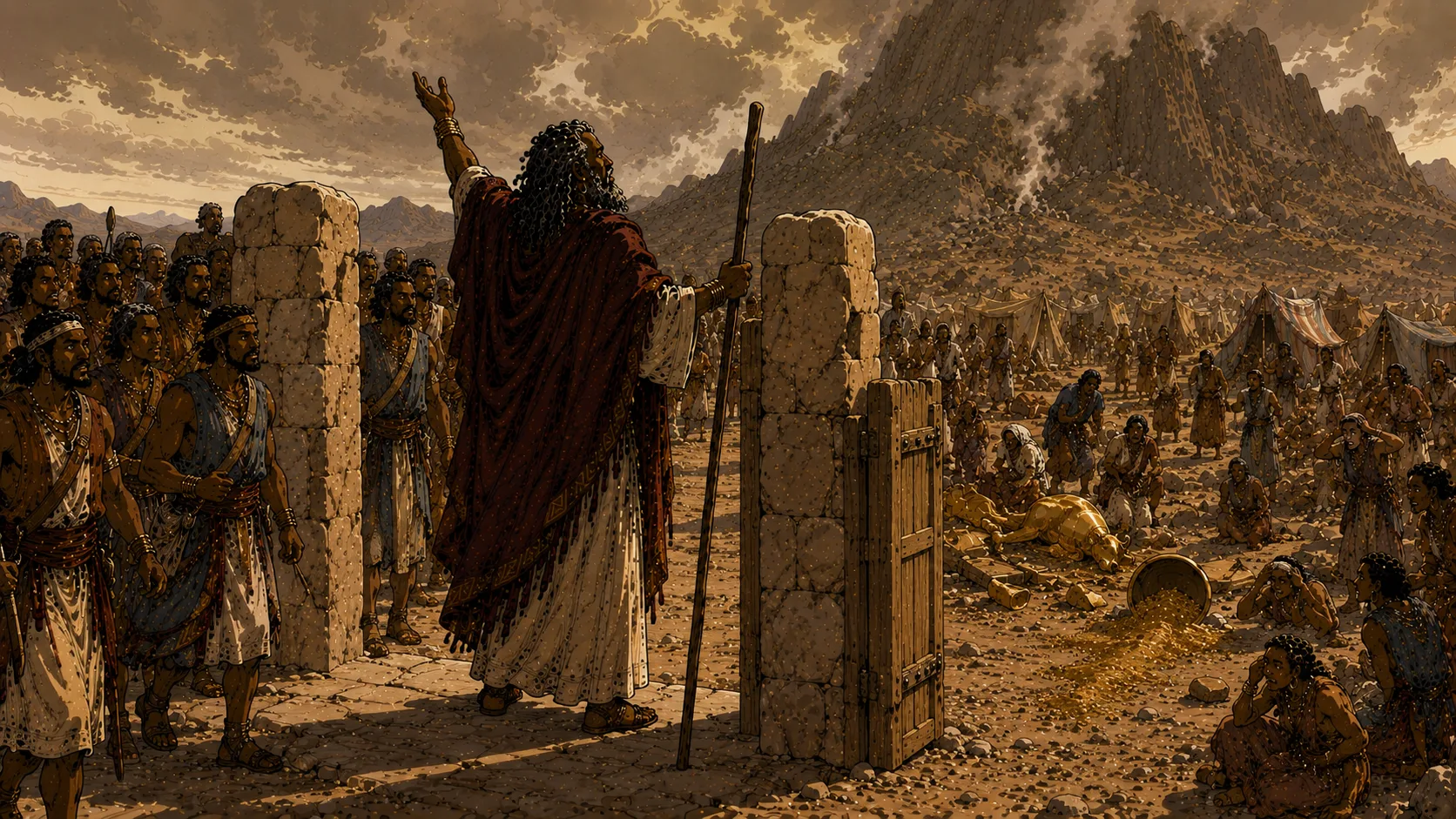
Moses stands at the gate of the camp — שַׁעַר הַמַּחֲנֶה, the threshold between the sacred assembly and the chaos within it — and he calls out: מִי לַיהוָה אֵלָי — Who is for YHWH? To me! The call is stark. There is no speech, no argument, no list of grievances. It is a single binary question, and the gate is the line. To cross to Moses is to declare an allegiance. To stay in the camp is to remain where the dancing was. The question will not be asked twice. Every son of Levi gathers to him — וַיֵּאָסְפוּ אֵלָיו כָּל-בְּנֵי לֵוִי. All of them. The text does not report a single Levite who held back.
Moses gives them the command: each man put his sword on his side, go back and forth through the camp from gate to gate, and kill — brother, neighbor, near kinsman. The Hebrew pairs are exact: אִישׁ אֶת-אָחִיו וְאִישׁ אֶת-רֵעֵהוּ וְאִישׁ אֶת-קְרֹבוֹ — each man his brother, each man his neighbor, each man his kinsman. The three terms encompass every form of human closeness: sibling, companion, relative. The command does not offer exceptions. If the person you meet in the camp has not crossed to the gate, the sword does not ask who they are to you. The Levites go through the camp. About three thousand men fall that day.
Then Moses declares: כִּי מִלְּאוּ יֶדְכֶם הַיּוֹם לַיהוָה — for today you have filled your hands for YHWH. The phrase מִלֵּא יָד, to fill the hand, is the technical idiom of priestly ordination and installation. To fill the hand is to be commissioned, set apart, placed in office. The Levites were not ordained by ritual bath and anointing oil that day; they were ordained by the sword, by their willingness to pass through the camp and let loyalty to YHWH override every claim of blood. The text adds: כִּי אִישׁ בִּבְנוֹ וּבְאָחִיו — each man against his own son and against his own brother. It was not strangers they encountered. The ordination cost them their most intimate relationships, and it was this cost that made it valid.
This scene stands behind every subsequent identity of the tribe of Levi. They will receive no territorial inheritance in the land of Canaan — YHWH himself is their portion (Deuteronomy 10:9). They will be set apart to carry the ark, to serve at the altar, to stand and bless in the name of YHWH. The blessing Moses declares — לָתֵת עֲלֵיכֶם הַיּוֹם בְּרָכָה, to give upon you today a blessing — is the origin of the Levitical calling. Levi is not called through ancestry alone. Levi is called because, on the day when the covenant was shattered at the mountain's foot, every son of Levi crossed to the gate and said: we are for YHWH.