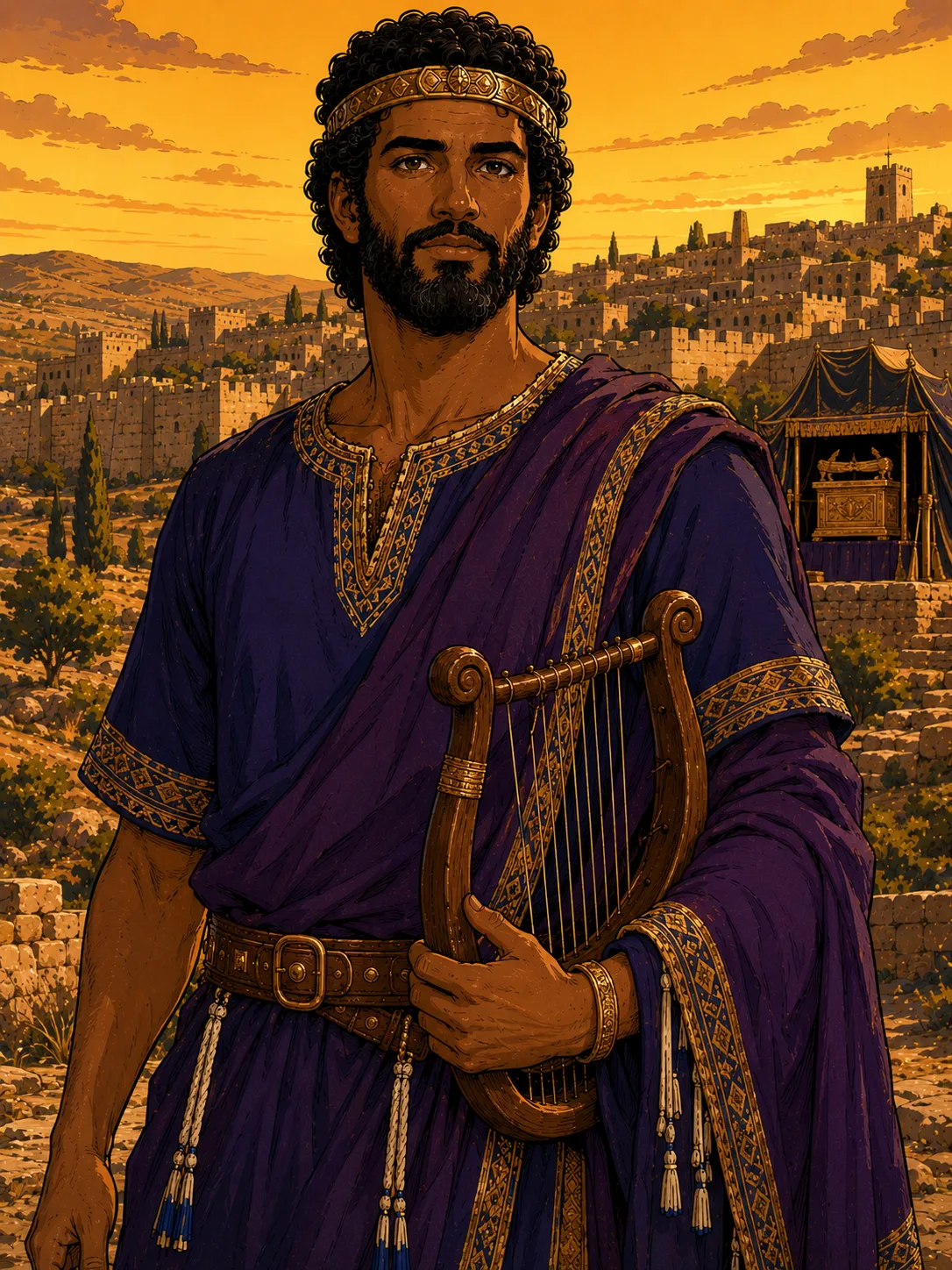
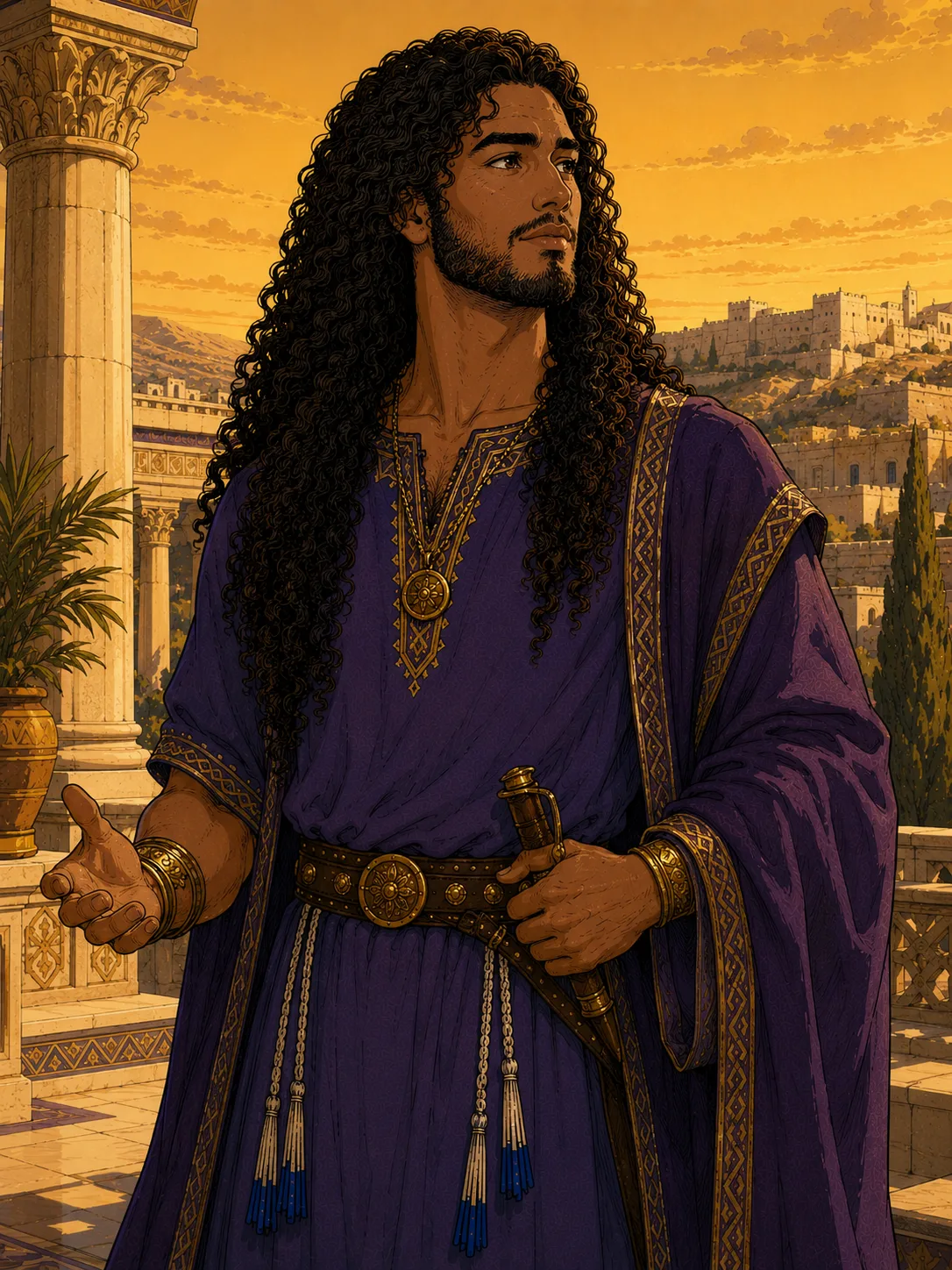
David — Hebrew Dawid, “beloved” — is the youngest of Yishai’s sons (1 Chronicles 2:13–15), called from tending his father’s flock outside Beit-Lechem to be anointed king while Shaul still reigned (1 Samuel 16:1–13). Before the throne came the trials: he killed the Philistine champion Golyat with a sling and stone (1 Samuel 17), played the harp to soothe Shaul’s troubled spirit, and then spent years as a fugitive when that same Shaul turned on him in jealousy.
After Shaul’s death David was crowned king of Yehudah at Hevron, and later of all Israel, bringing the Ark of the Covenant up to his new capital, Yerushalayim (2 Samuel 5–6). There Yah made David an extraordinary promise through the prophet Natan — the “Davidic covenant” of 2 Samuel 7: David’s house, throne, and kingdom would be established forever. Tradition credits David with composing many of the Psalms, the prayer-book of Israel ever since.
David’s story is not whitewashed. 2 Samuel 11–12 records his affair with Bathsheva, the death of her husband Uriyah, and the prophet Natan’s confrontation — followed by David’s own psalm of repentance (Psalm 51). Out of that broken, restored marriage came Shlomo, David’s heir.
The New Testament treats “son of David” as Yeshua’s primary royal title. Matthew opens his genealogy “the son of David, the son of Avraham” (Matthew 1:1) and names David again at 1:6; Luke 3:31 traces the line through David’s son Natan; in Acts 13:22 Paul calls David “a man after my own heart”; Romans 1:3 says the gospel concerns Yeshua, “descended from David according to the flesh”; and Revelation twice ties Yeshua directly to David — “the Root of David” (5:5) and “the Root and the Offspring of David” (22:16). The shepherd-king of Beit-Lechem becomes, in Scripture’s own telling, the pattern for the King who was to come.
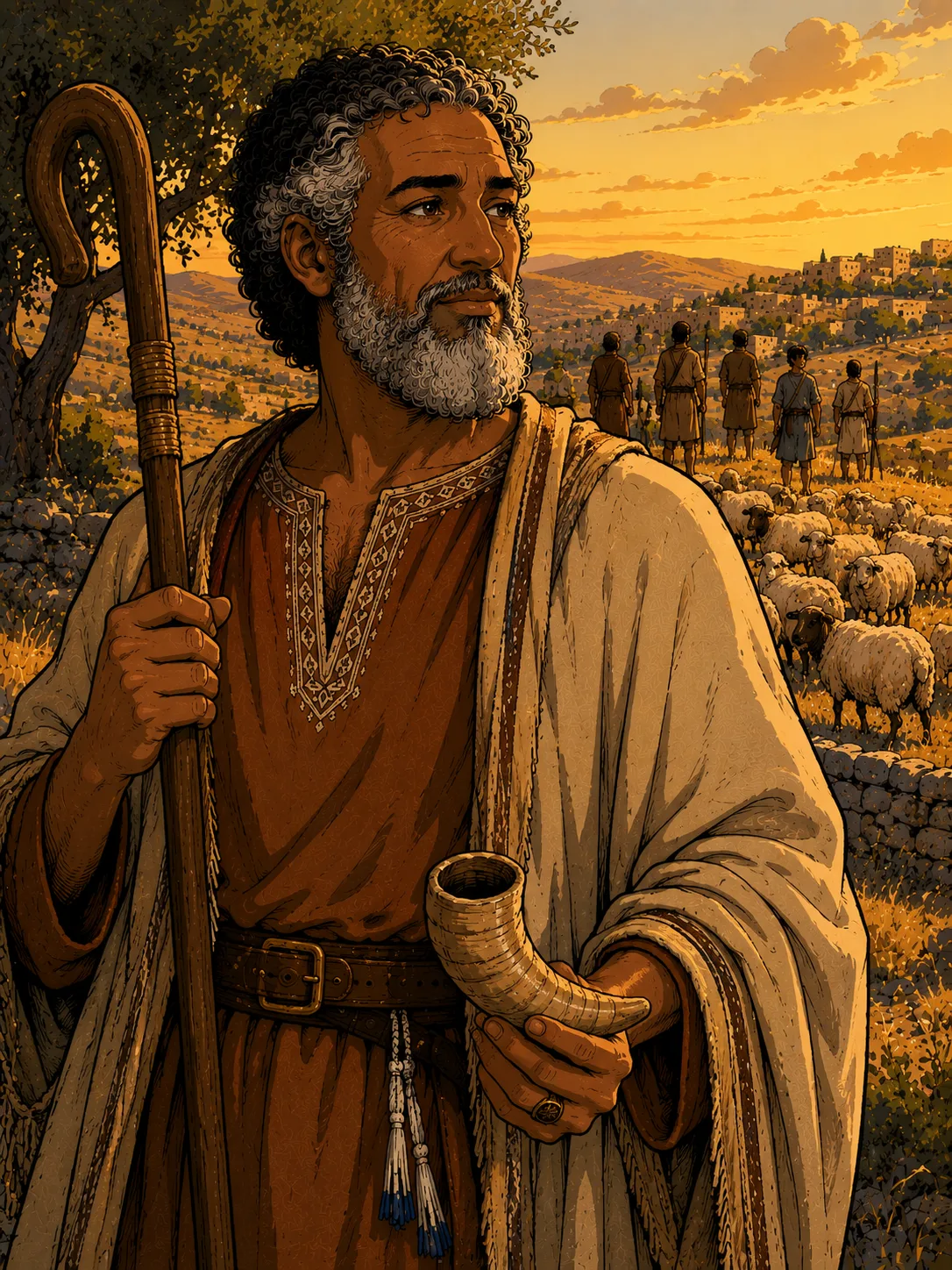 Jesse
Jesse  Bathsheba
 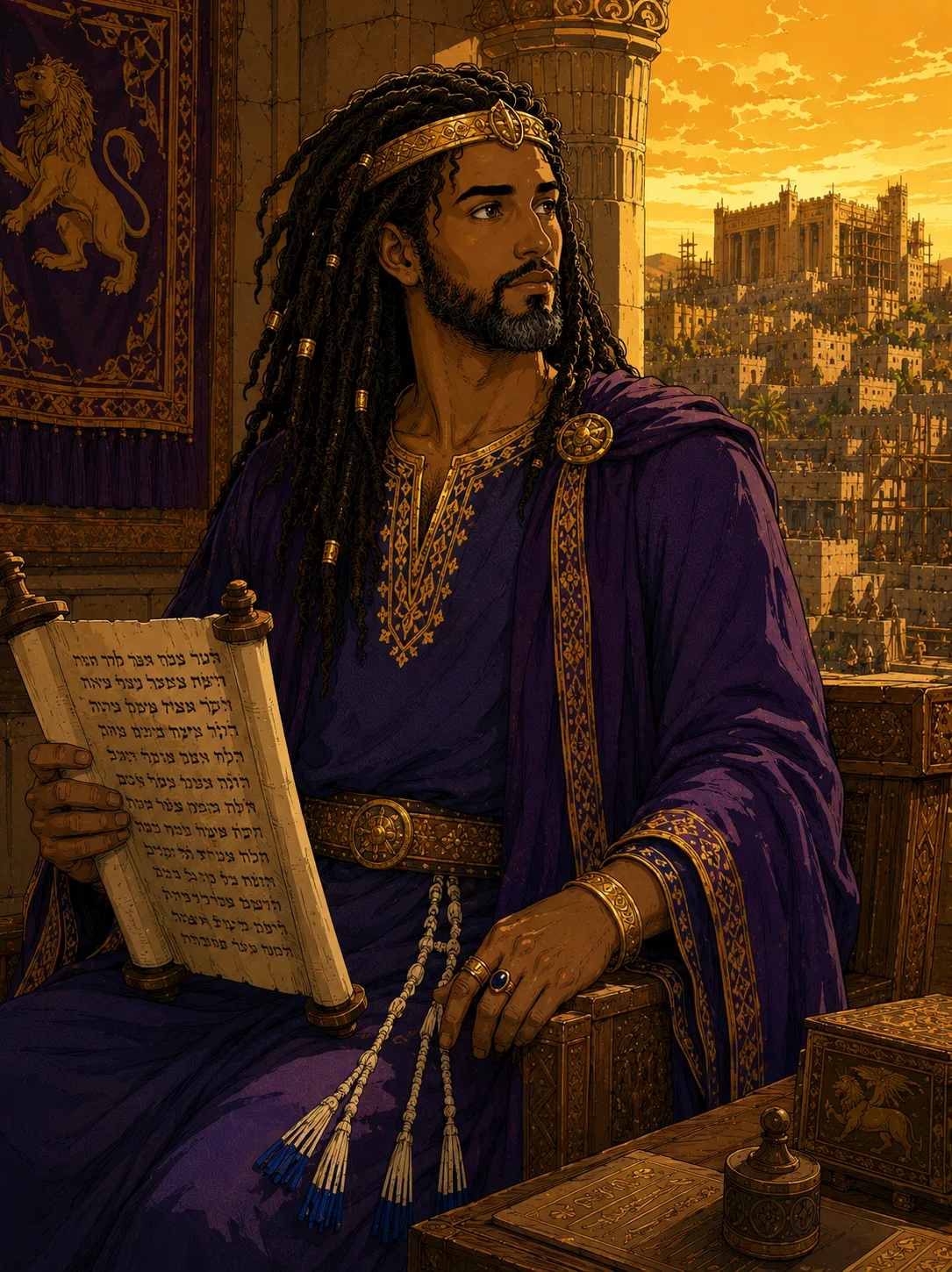 Solomon
  Absalom