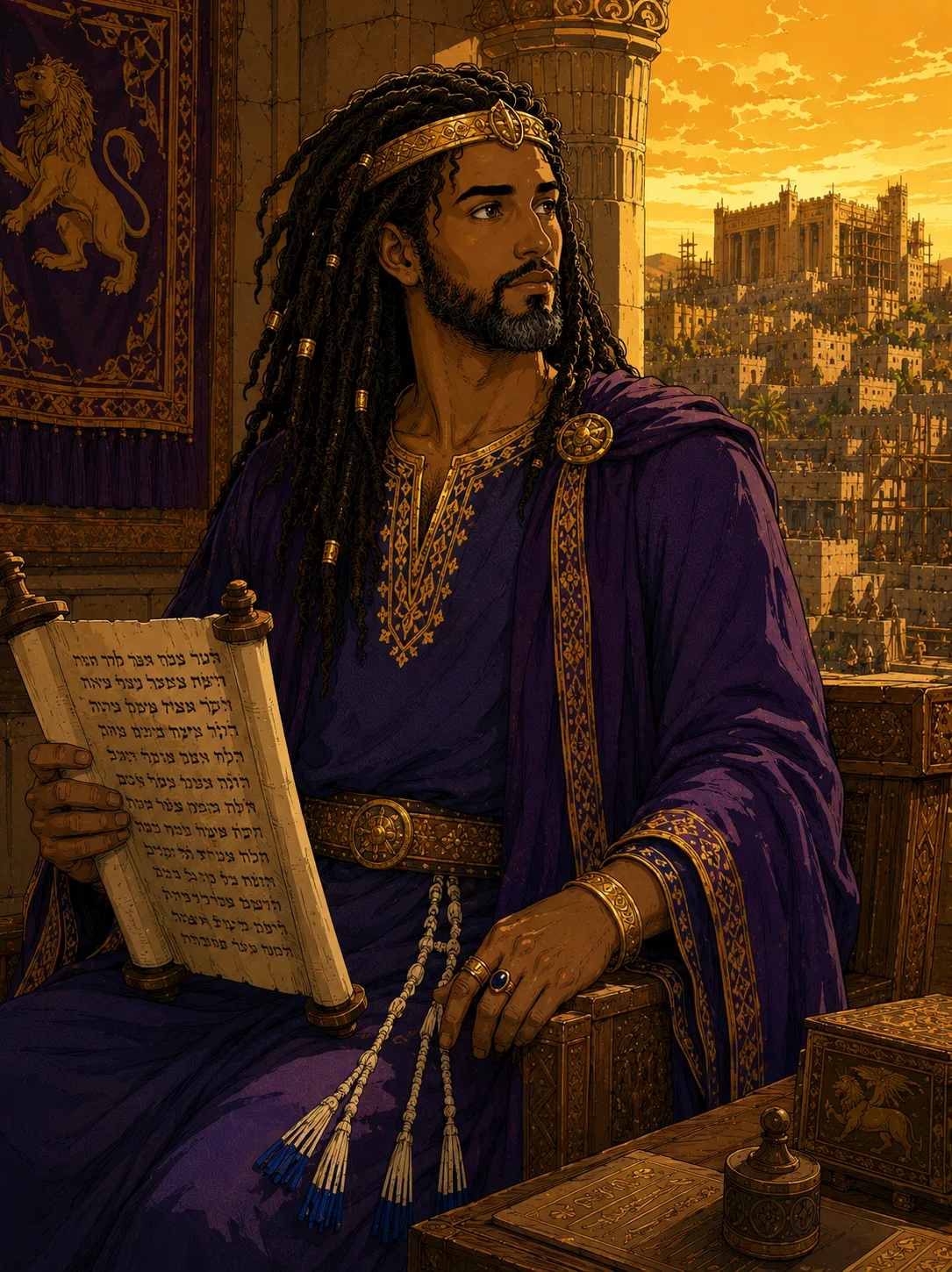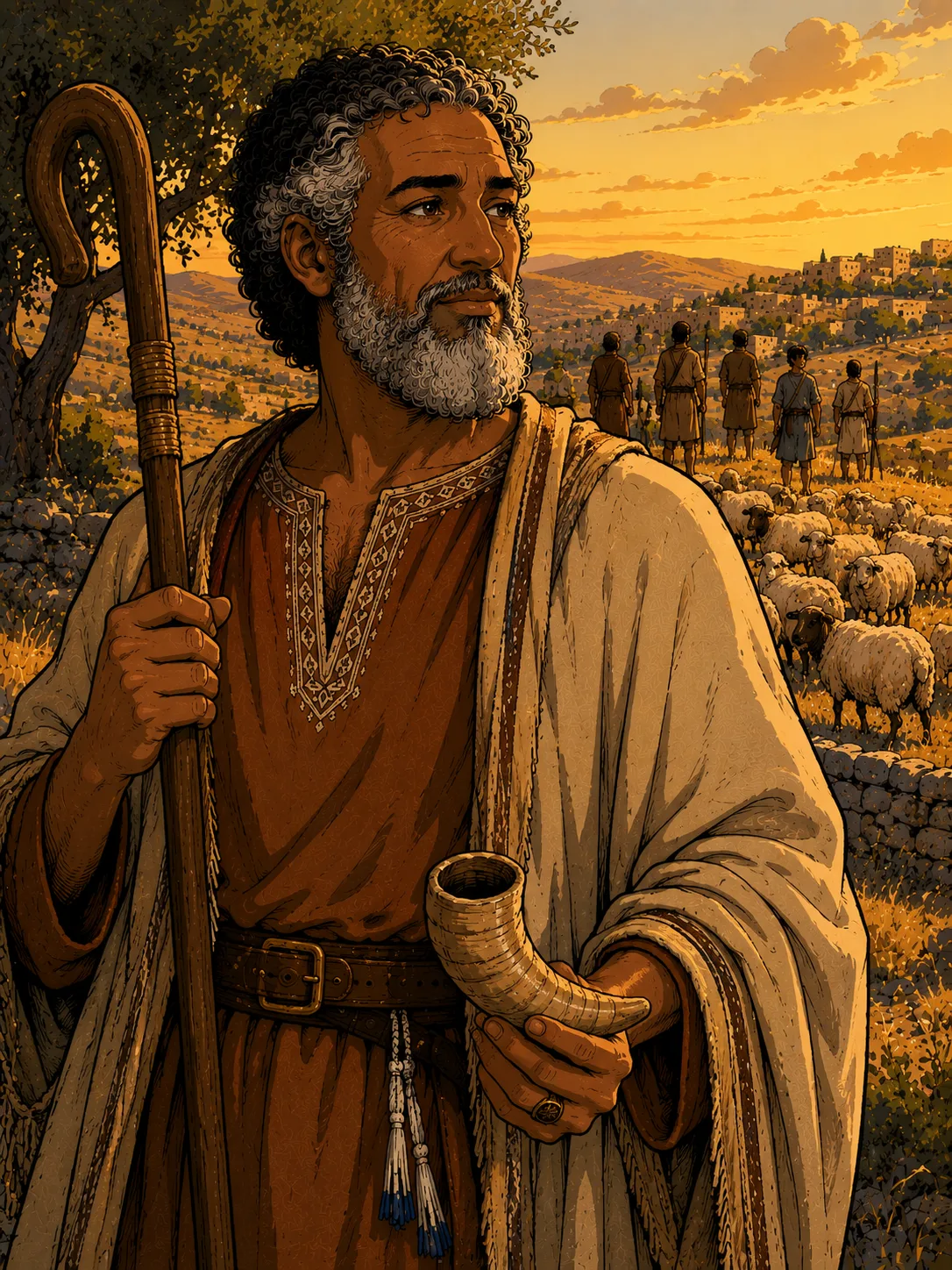
Yishai of Beit-Lechem — known in English as Jesse — is one of the most consequential “minor” figures in Scripture: an elder of Yehudah whose household became the seedbed of Israel's royal line. He was the son of Oved, and through Oved the grandson of Boaz and Ruth, the Moabite great-grandmother whose chesed (loyal love) toward Naomi reshaped the family's future (Ruth 4:17, 21–22; 1 Chronicles 2:12).
1 Samuel 16 opens with the prophet Shmuel arriving in Beit-Lechem at Yah’s command to anoint Israel’s next king from among Yishai’s sons. One by one, seven sons passed before Shmuel — and Yah rejected each. Only when Yishai sent for his youngest, tending sheep in the field, did Shmuel anoint David. 1 Chronicles 2:13–15 and the Samuel account differ slightly on the exact count of Yishai’s sons — seven or eight, with David as the youngest either way — a small textual tension this dataset notes rather than resolves.
1 Samuel 17:12 calls Yishai “an Ephrathite of Beit-Lechem-Yehudah” — a clan designation within the tribe of Yehudah (compare 1 Chronicles 2:19, 24, 50–51), not a reference to the tribe of Efrayim, despite the similar sound.
Yishai’s lasting significance, though, is prophetic. Isaiah 11:1 declares that “a shoot shall come forth from the stump of Yishai, and a branch shall grow out of his roots” — and verse 10 calls that branch “a root of Yishai” that the nations will seek. Paul quotes this directly in Romans 15:12, applying it to Yeshua. An elder presenting his sons for inspection becomes, in Isaiah’s image, the literal root from which the Messiah springs — which is why both Matthew 1:5–6 and Luke 3:32 preserve his name in their genealogies of Yeshua.
 David
David