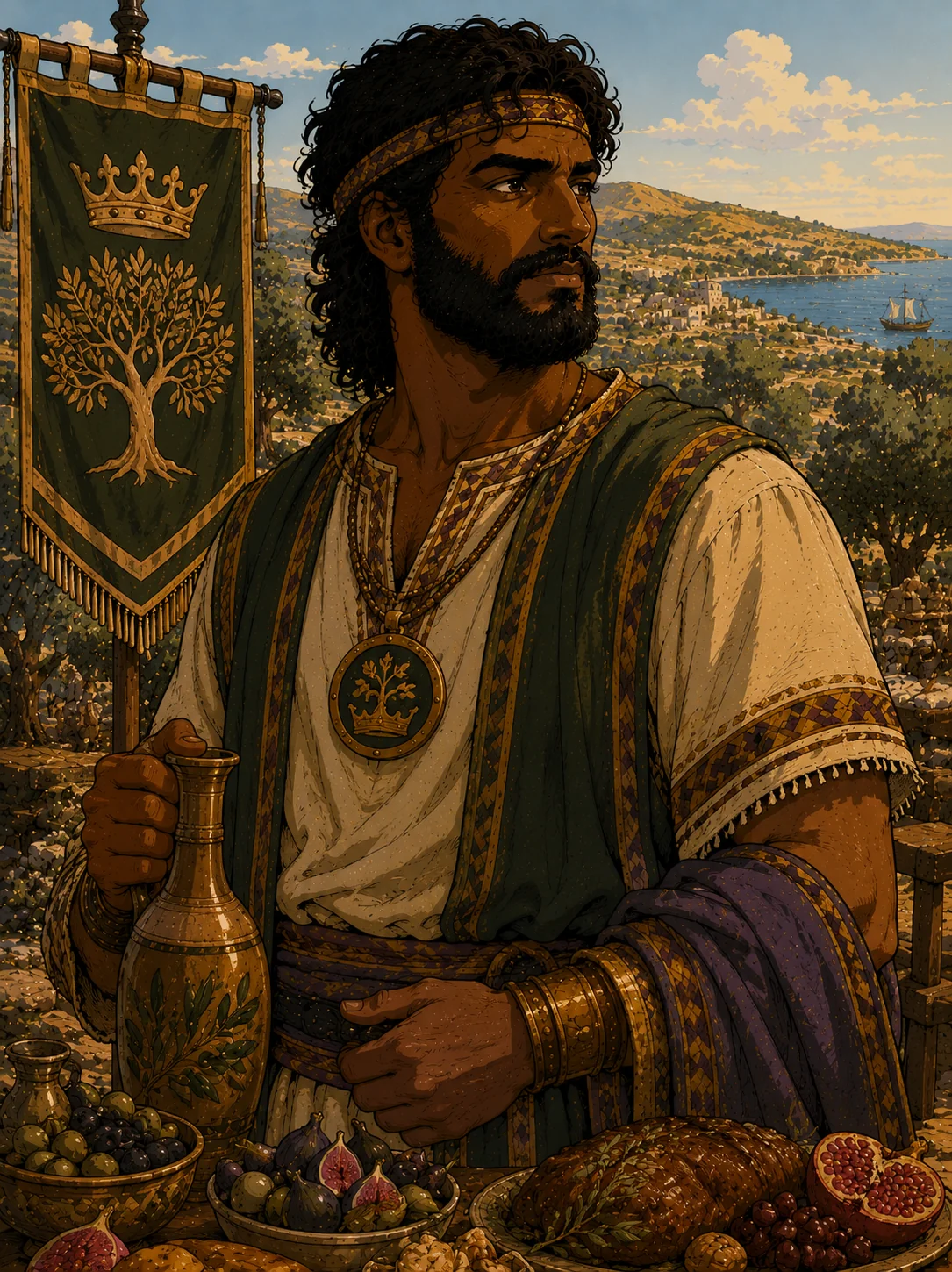
Asher was the second son of Zilpah and the eighth son of Jacob. Leah, who gave Zilpah as a maidservant, named him "Happy" (Asher) — "for daughters will call me happy." Jacob's blessing (Genesis 49:20) is brief but materially rich: "Asher's food shall be rich, and he shall yield royal delicacies." Moses' blessing (Deuteronomy 33:24–25) adds: "Most blessed of sons is Asher; let him be the favorite of his brothers and let him dip his foot in oil."
Asher's territory ran along the northwestern coast from the Carmel range northward toward Sidon and Tyre (Joshua 19:24–31) — Phoenician borderland, renowned for olive oil production. The image of "dipping his foot in oil" fits perfectly: Asher's land was rich in olive groves, and its food — olive oil, fish, fruits — would supply royal tables. Despite the material blessing, Asher is largely absent from the military record. Deborah's Song notes that Asher "sat still at the coast of the sea" (Judges 5:17) instead of joining battle against Sisera.
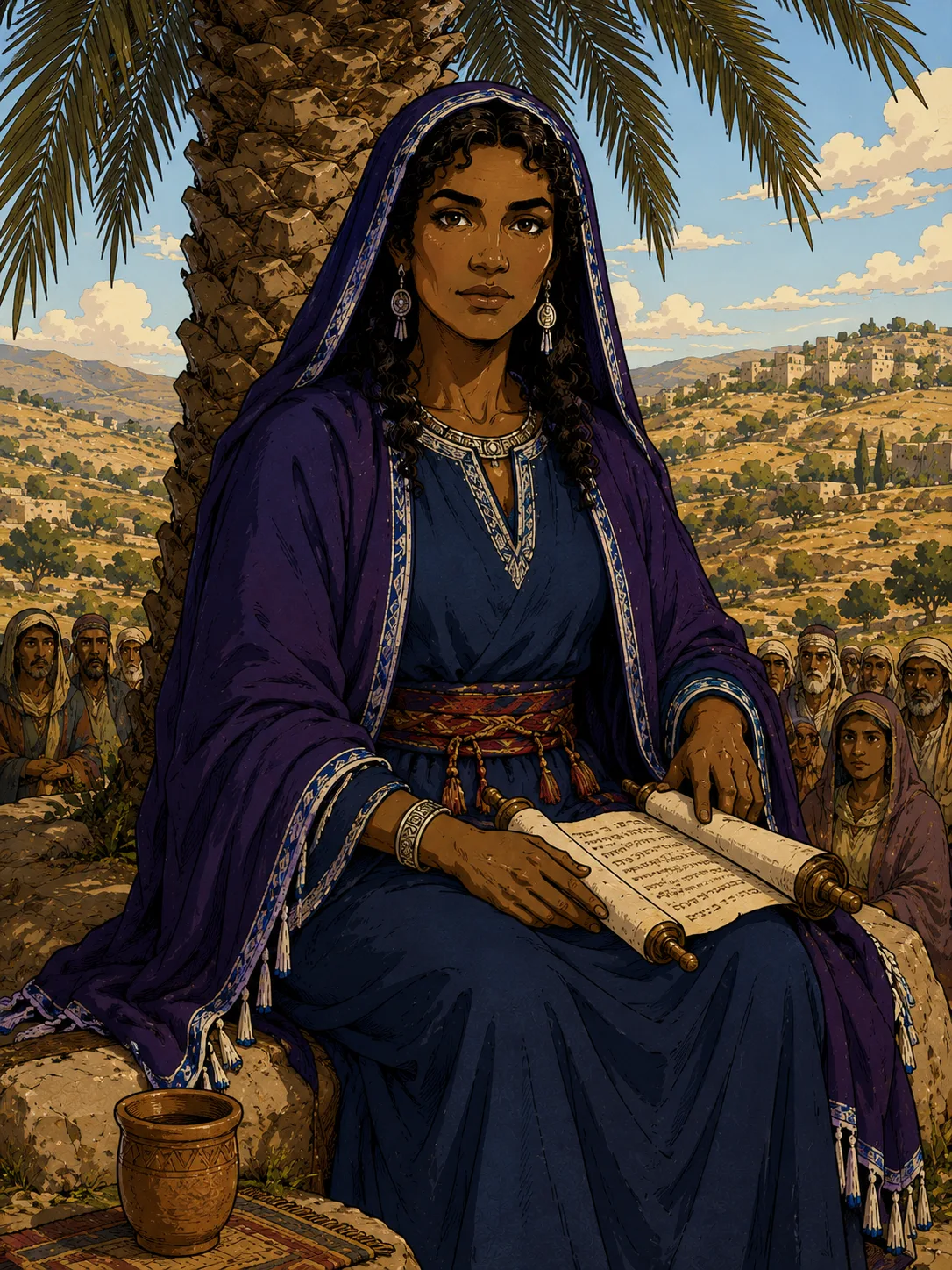
The most notable Asherite in the New Testament is Channa (Anna) bat Penuel, identified in Luke 2:36 as "a prophetess, the daughter of Penuel, from the tribe of Asher." Widowed young, she remained at the Temple day and night in fasting and prayer. When the infant Yeshua was brought for consecration, Channa "gave thanks to God and spoke about him to all who were waiting for the redemption of Jerusalem" (Luke 2:38). She is the only person in the New Testament explicitly identified by tribal origin other than Paul (Benjamin) and Yeshua himself (Judah through David).
"Asher's food shall be rich, and he shall yield royal delicacies." (Genesis 49:20)
Moses adds: "Most blessed of sons is Asher; let him be the favorite of his brothers, and let him dip his foot in oil." (Deuteronomy 33:24)