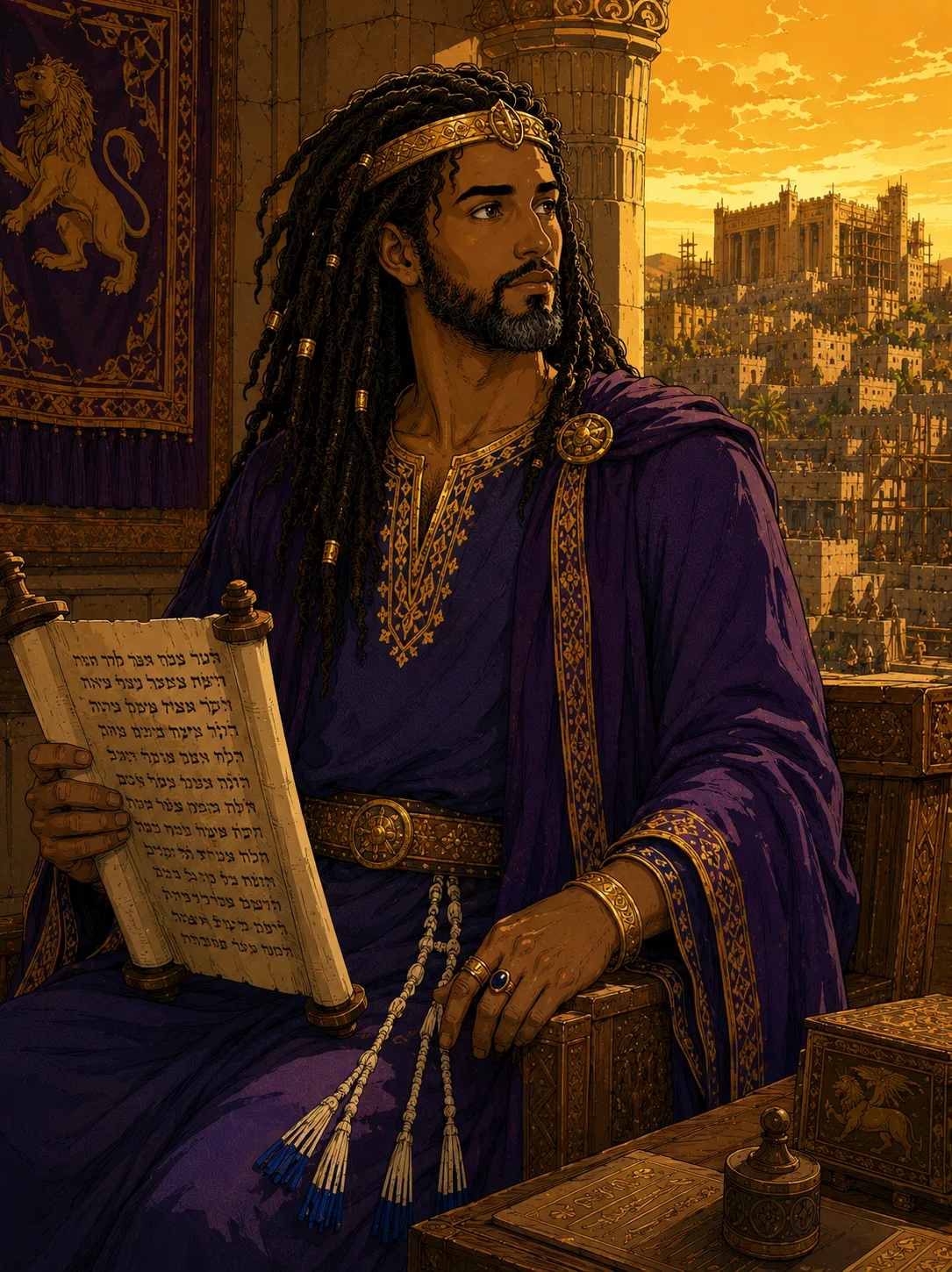
Judah was the fourth son of Jacob and Leah, the one whose birth made Leah simply say "This time I will praise Yah" and stop naming. Among the twelve brothers, Judah occupies a singular position: no other patriarch receives a blessing as directly royal, no other tribe produced the kingly dynasty, and from no other tribe came the Messiah.
In the Joseph crisis, it was Judah who proposed selling Joseph rather than letting him die in the pit (Genesis 37:26–27) — a compromise that saved Joseph's life. Years later, when Joseph demanded Benjamin remain in Egypt, Judah stepped forward and pledged himself as surety (Genesis 43:8–9; 44:32–34). His speech to Joseph in Genesis 44 — offering himself as a slave in place of Benjamin — broke Joseph's composure and led to the reunion. This willingness to sacrifice himself for his brother reversed the sin of selling Joseph years earlier.
Genesis 38 records Judah's complex history with Tamar and the birth of Perez and Zerah. Through Perez's line came Boaz, then Yishai, then David. Calev ben Yefuneh, one of the two faithful spies, was from Judah (Numbers 13:6). The entire arc from the Kingdom through the exile and into the New Testament runs through Judah's line. Revelation 5:5 calls Yeshua "the Lion of the tribe of Judah, the Root of David."
"Judah, your brothers shall praise you; your hand shall be on the neck of your enemies... Judah is a lion's cub... The scepter shall not depart from Judah, nor the ruler's staff from between his feet, until Shiloh comes — and to him shall be the obedience of the peoples." (Genesis 49:8–10)
This is the longest, most royal of Jacob's twelve blessings. The New Testament opens Matthew's Gospel (Matthew 1:1–17) with a genealogy from Abraham through David to Yeshua, placing him squarely in this kingly line.