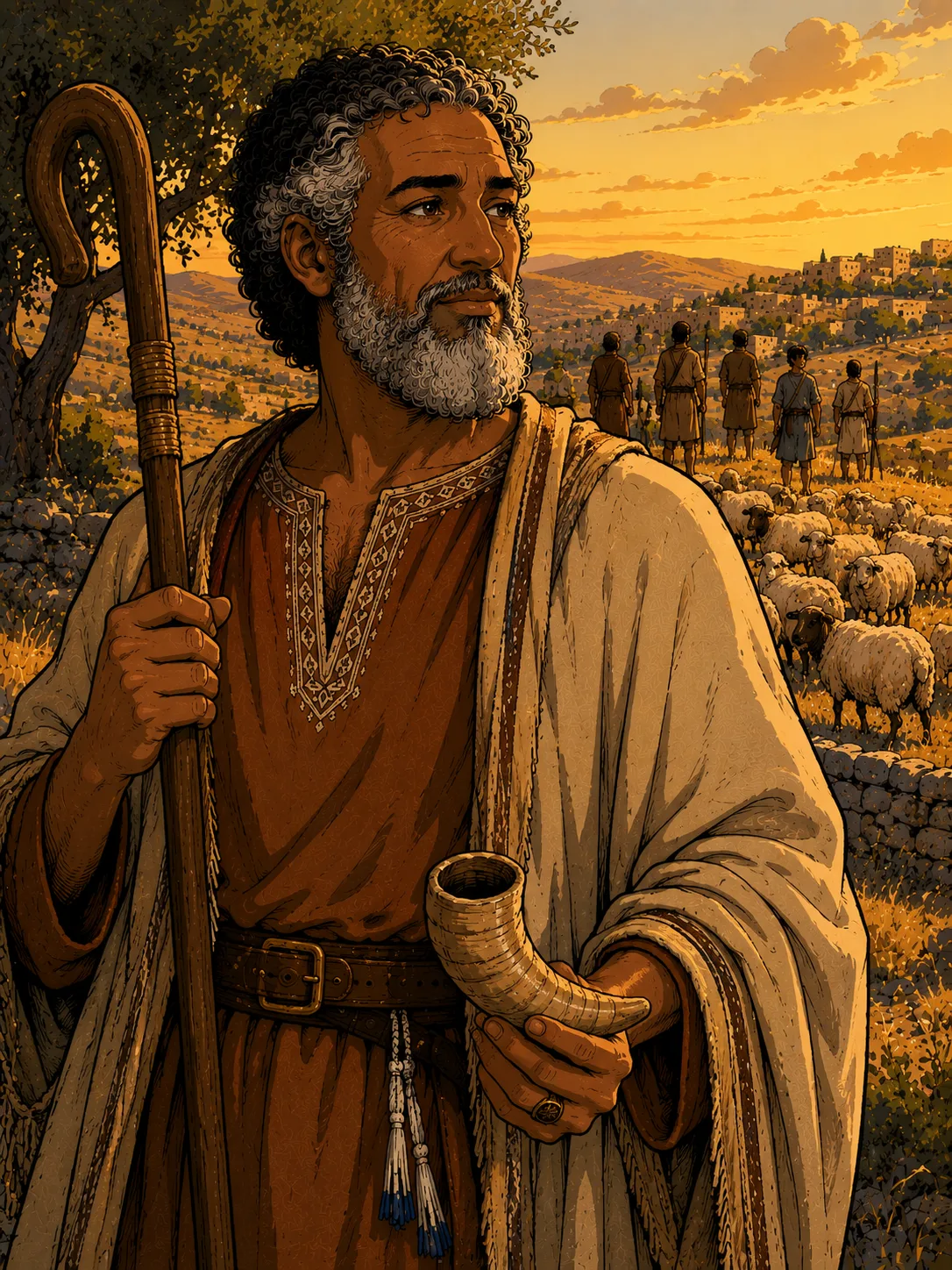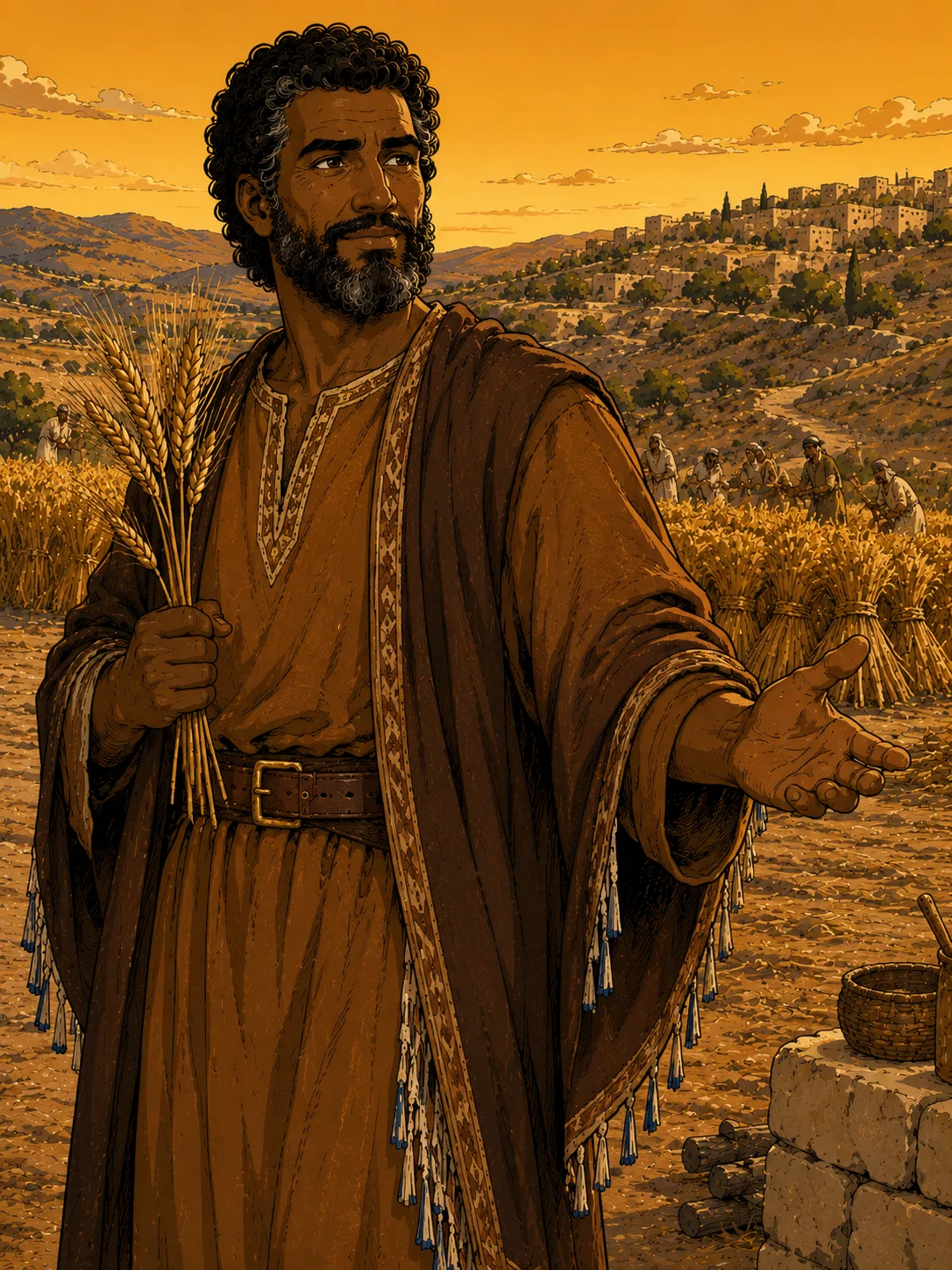
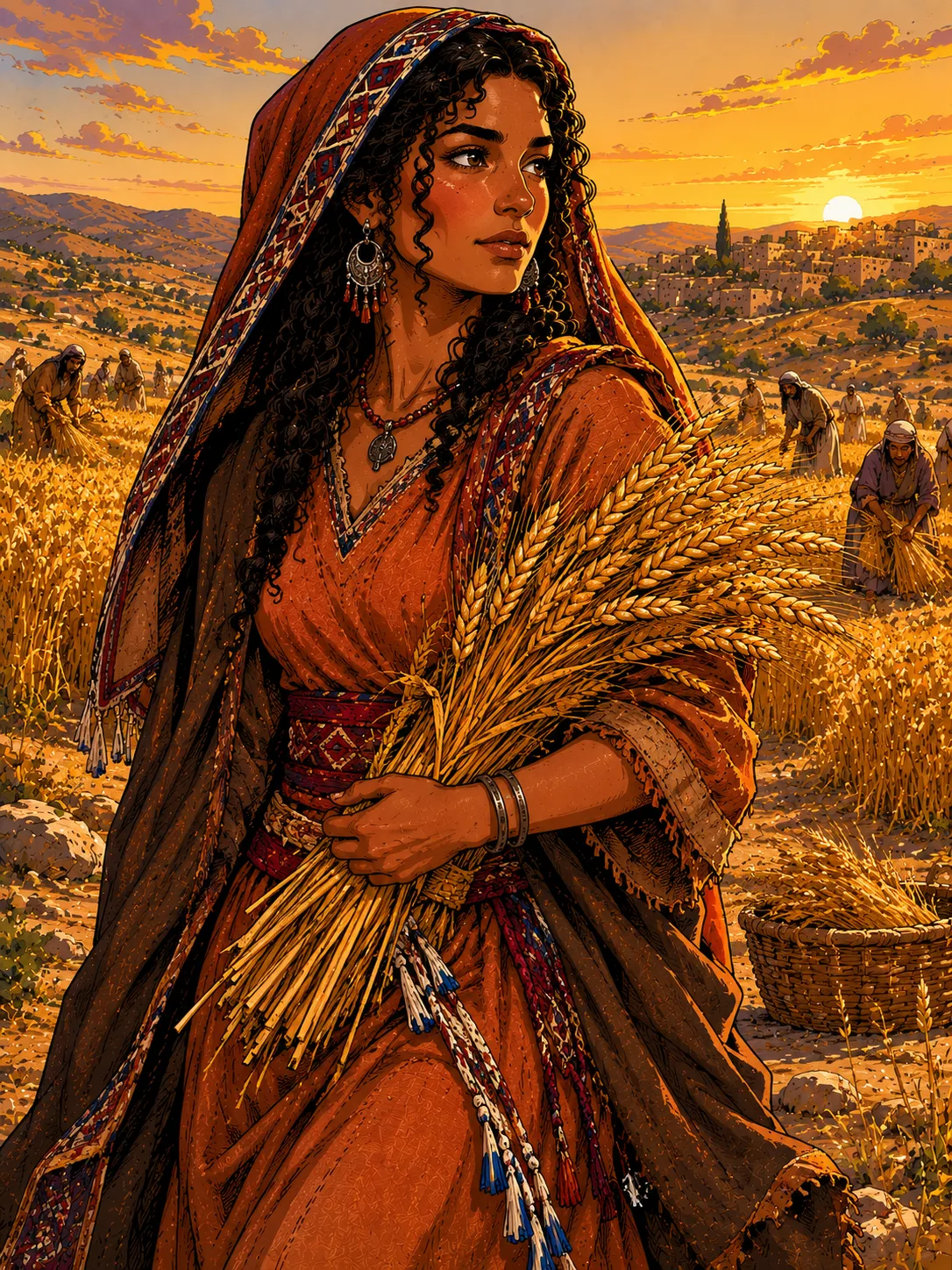
Boaz appears in Ruth 2 as “a relative of Naomi’s husband, a worthy man” (Ruth 2:1) — a landowner in Beit-Lechem of Yehudah, son of Salmon and (per Matthew 1:5) the Canaanite Rahav. When Ruth, a Moabite widow, gleaned in his field, Boaz noticed her immediately and blessed her with words that became one of the book’s most quoted lines: “May Yah recompense your work, and a full reward be given you by the God of Israel, under whose wings you have come to take refuge” (Ruth 2:12).
Ruth 3–4 shows Boaz acting as go’el — kinsman-redeemer — a role rooted in Torah law that allowed a near relative to buy back family land and, where a widow was involved, to marry her and preserve her late husband’s name. Boaz handled the matter publicly, at the city gate, before the elders of Beit-Lechem, securing both the field that had belonged to Elimelech and the right to marry Ruth.
The marriage produced Oved, and 1 Chronicles 2:11–12 traces the line forward: Boaz fathered Oved, Oved fathered Yishai, and Yishai fathered David. A man introduced simply as “a worthy man” in a small-town harvest scene becomes, three generations later, the great-grandfather of Israel’s king.
Both genealogies of Yeshua preserve his name — Matthew 1:5 and Luke 3:32 — making Boaz a direct link in the chain from Yehudah through David to the Messiah. His story, alongside Ruth’s, is also one of the clearest pictures in the Hebrew Bible of chesed — loyal kindness that goes beyond what the law strictly requires — a theme that runs through the whole book that bears the genealogy in its closing lines.
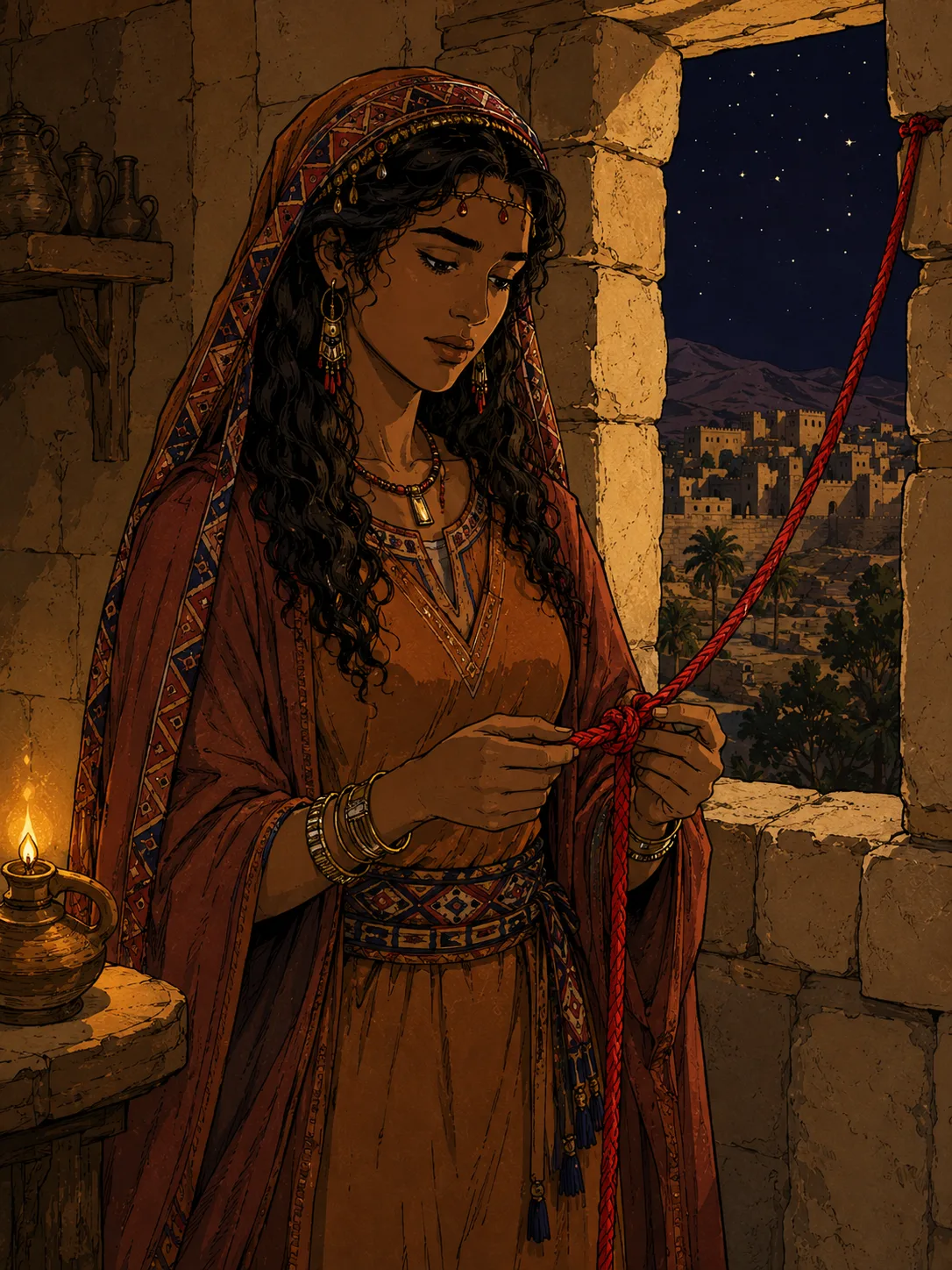 Rahab רָחָב
 Ruth
Ruth