Ruth 1 opens with famine, exile, and loss: a family from Beit-Lechem settles in Moav, where the sons marry Moabite women — Orpah and Ruth — before all three men die, leaving Naomi and her two daughters-in-law widowed. When Naomi decides to return to Yehudah and urges both women to go back to their own families, Orpah does. Ruth does not.
Ruth’s response is one of the most quoted lines in Scripture: “Where you go I will go, and where you lodge I will lodge. Your people shall be my people, and your God my God. Where you die I will die, and there will I be buried” (Ruth 1:16–17). A Moabite woman — from a people Israel had a long and difficult history with — binds herself not just to Naomi but to Naomi’s God and Naomi’s nation, with no promise of anything in return.
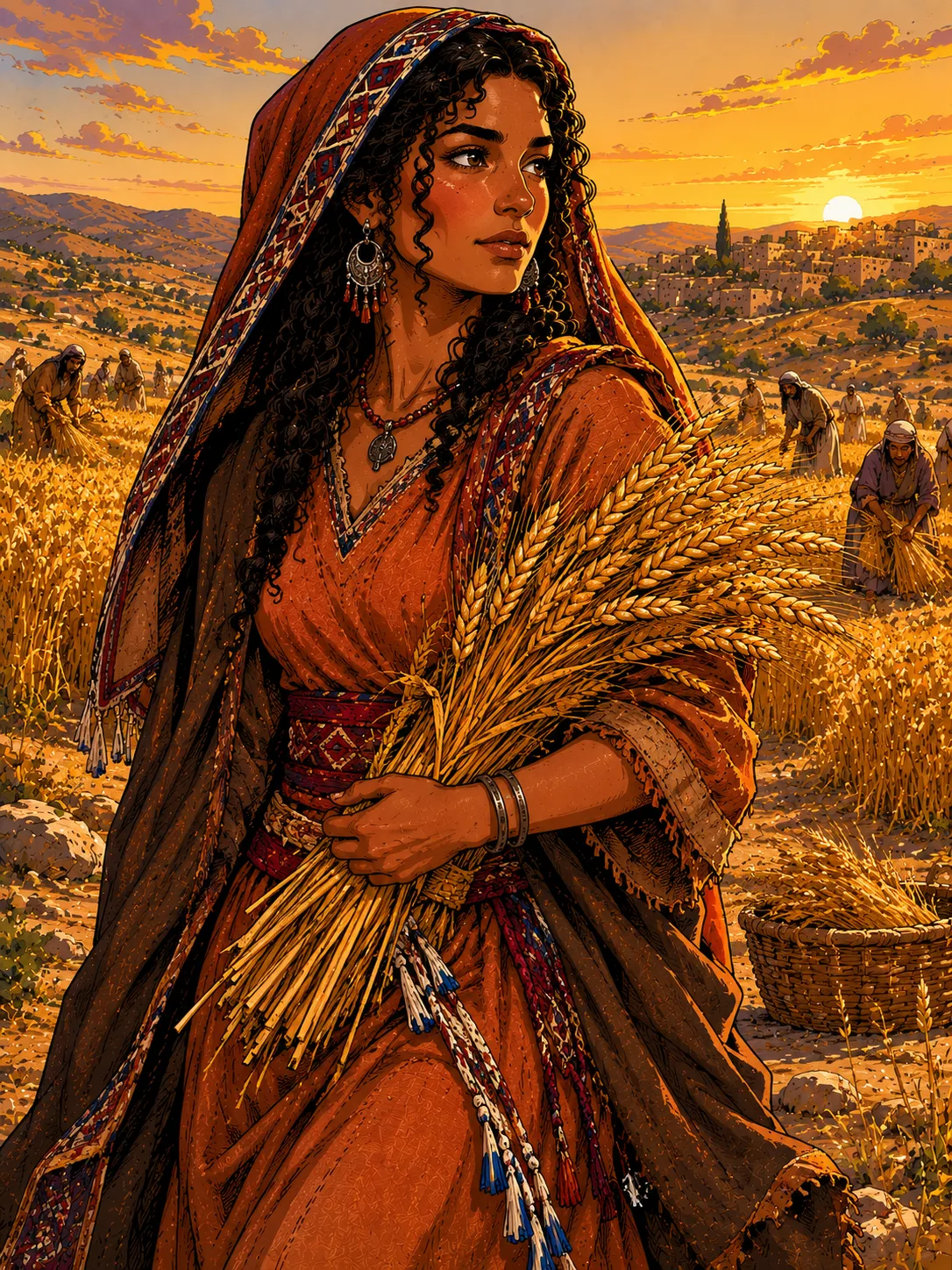
Ruth 2–4 follows what that loyalty produced. Gleaning in the fields to support herself and Naomi, Ruth caught the attention of Boaz, a relative of Naomi’s late husband. Naomi guided Ruth through the customs of kinship-redemption, Boaz acted honorably and publicly, and the two married. Their son was Oved — and 1 Chronicles 2:11–12 traces the line from Oved to Yishai to David.
Ruth’s place in Matthew 1:5 — one of only four women named in Yeshua’s genealogy, alongside Tamar, Rahav, and Bathsheva — means that Israel’s royal line, and the Messianic line that runs through it, passes through a Moabite outsider who chose Israel’s God before Israel’s God had promised her anything. The book’s last word is genealogy; its first word is chesed — and in Ruth, the two are the same story.
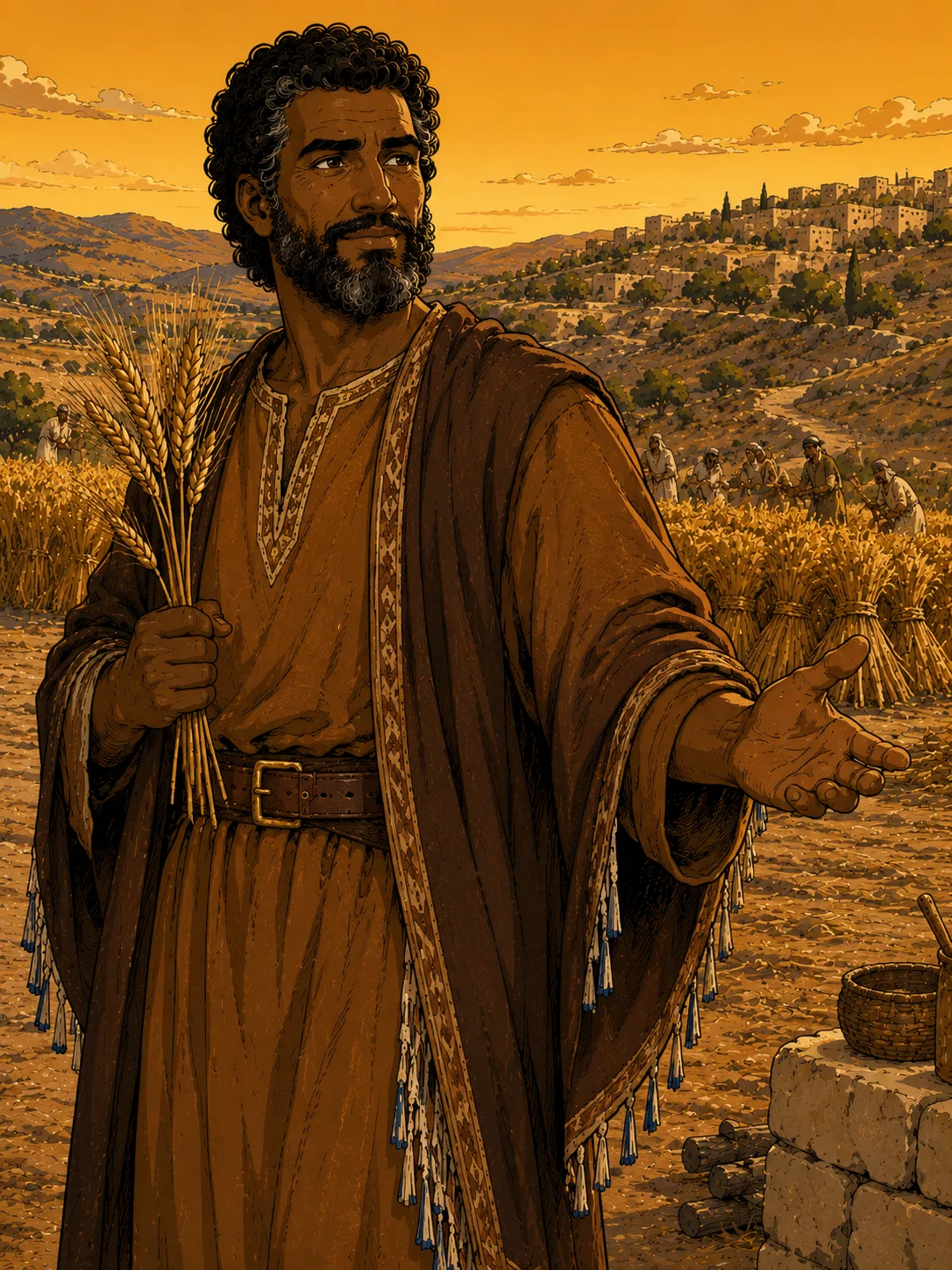 Boaz בֹּעַז