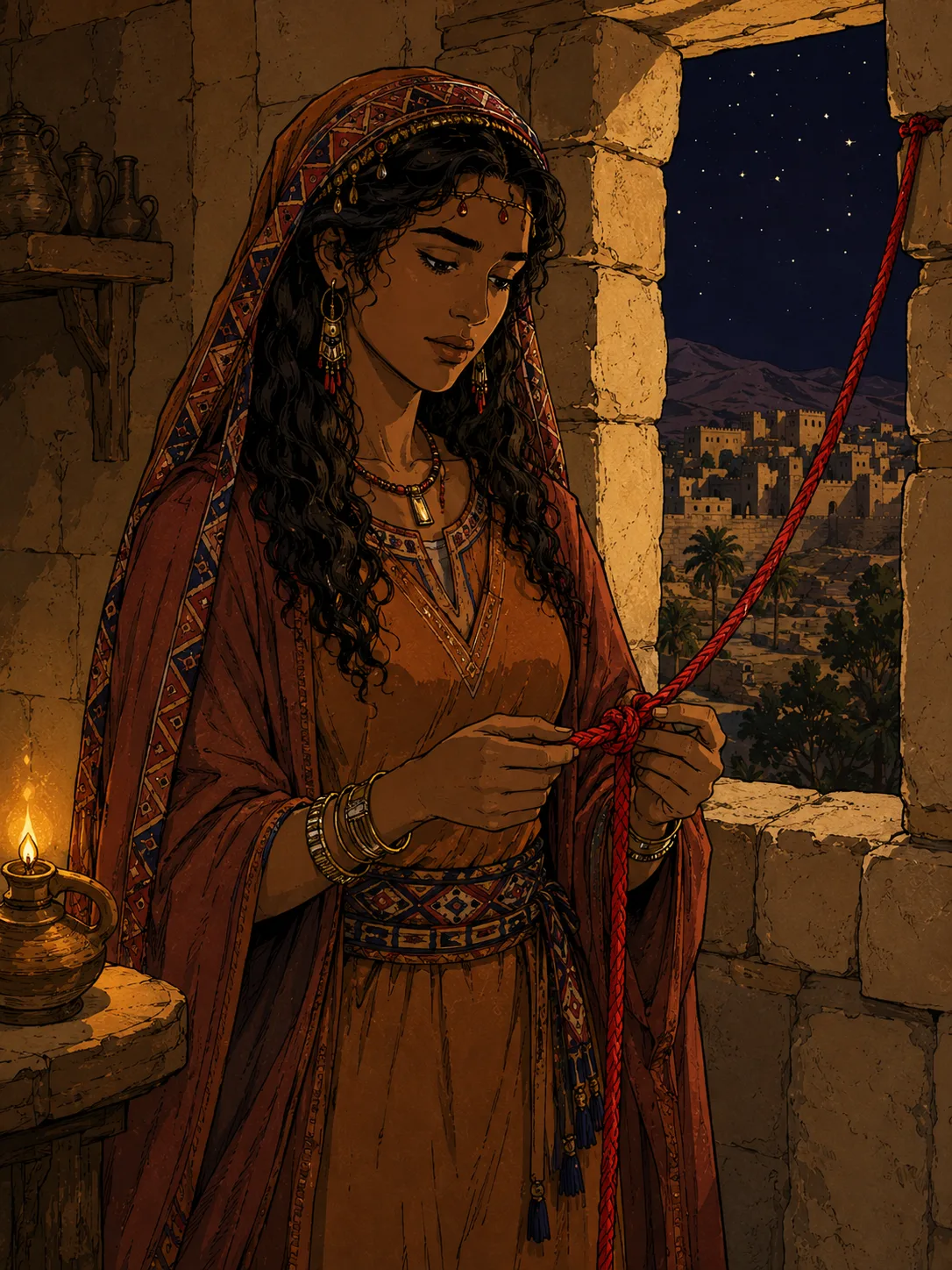
Joshua 2 introduces Rahav as a Canaanite woman of Jericho — the text calls her a zonah, usually translated “prostitute,” though some traditions read the term as “innkeeper.” Either way, when two Israelite spies came to her house before the conquest, she hid them from the king’s men on her roof and sent the pursuers off on a false trail.
Rahav’s words to the spies reveal more than fear: “I know that Yah has given you the land … for we have heard how Yah dried up the water of the Sea of Reeds … Yah your God is God in heaven above and on earth beneath” (Joshua 2:9–11). In exchange for sparing her family, she asked the spies to mark her house with a scarlet cord. When Jericho fell, that house — and everyone in it — was spared (Joshua 6:17, 22–25).
From there, Rahav’s story moves quietly into the genealogy of Israel’s greatest king. 1 Chronicles 2:11–12 places Salmon — of the tribe of Yehudah — as the father of Boaz, and Matthew 1:5 names Rahav as the wife who bore him Boaz. That makes her the great-grandmother of Oved, great-great-grandmother of Yishai, and great-great-great-grandmother of David. A Canaanite woman who once hid spies inside the walls of an enemy city becomes, a few generations later, an ancestor of Israel’s royal house.
The New Testament returns to her twice more. Hebrews 11:31 lists Rahav among the heroes of faith — “by faith Rahab the prostitute was not destroyed with those who were disobedient, because she had given the spies a friendly welcome” — while James 2:25 points to the same story to argue that genuine faith shows itself in action. Between Hebrews’ faith and James’ works, and standing in Matthew’s genealogy of Yeshua himself, Rahav of Jericho is remembered from every angle the New Testament offers.
 Boaz
Boaz 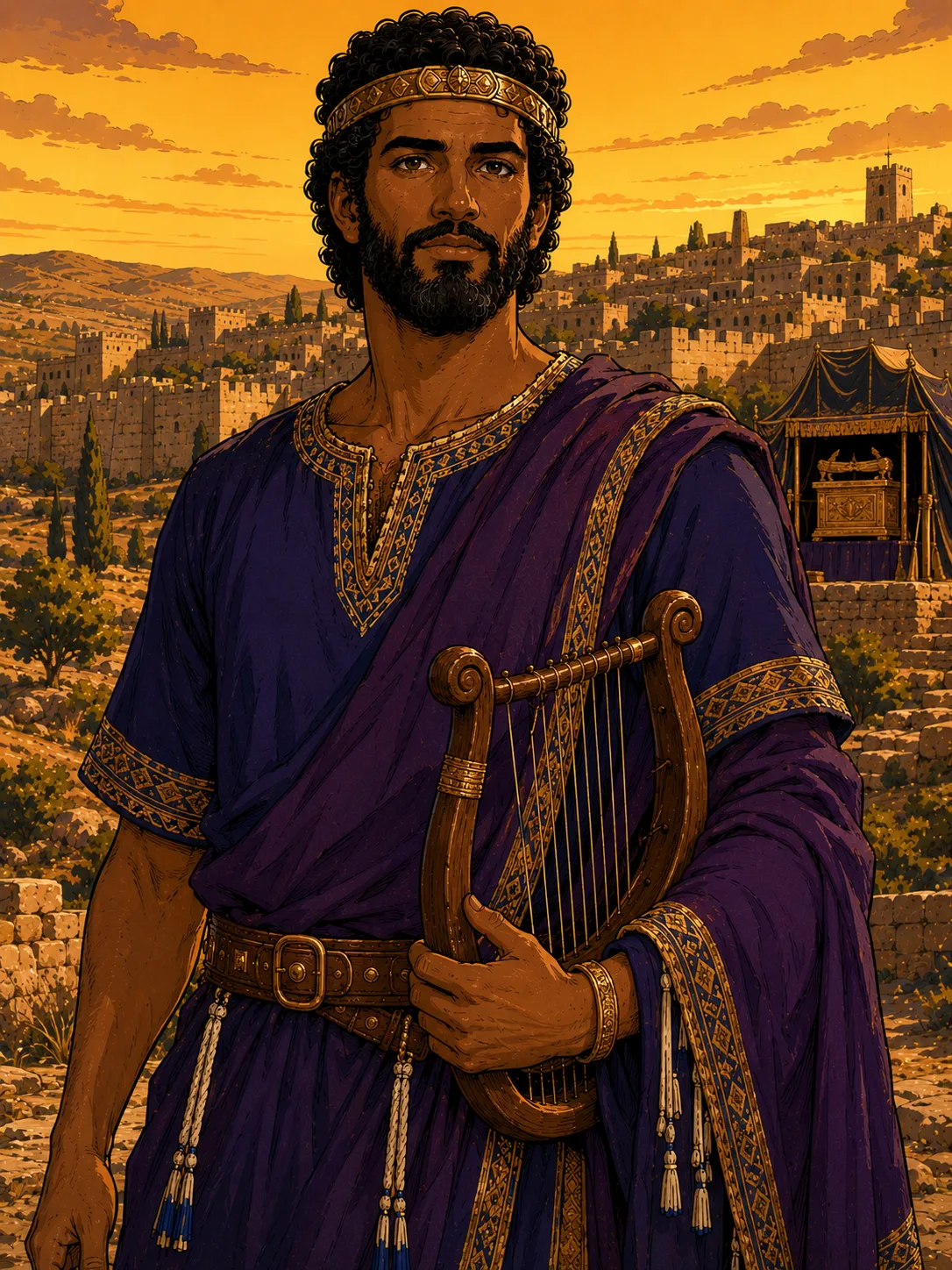 David
David