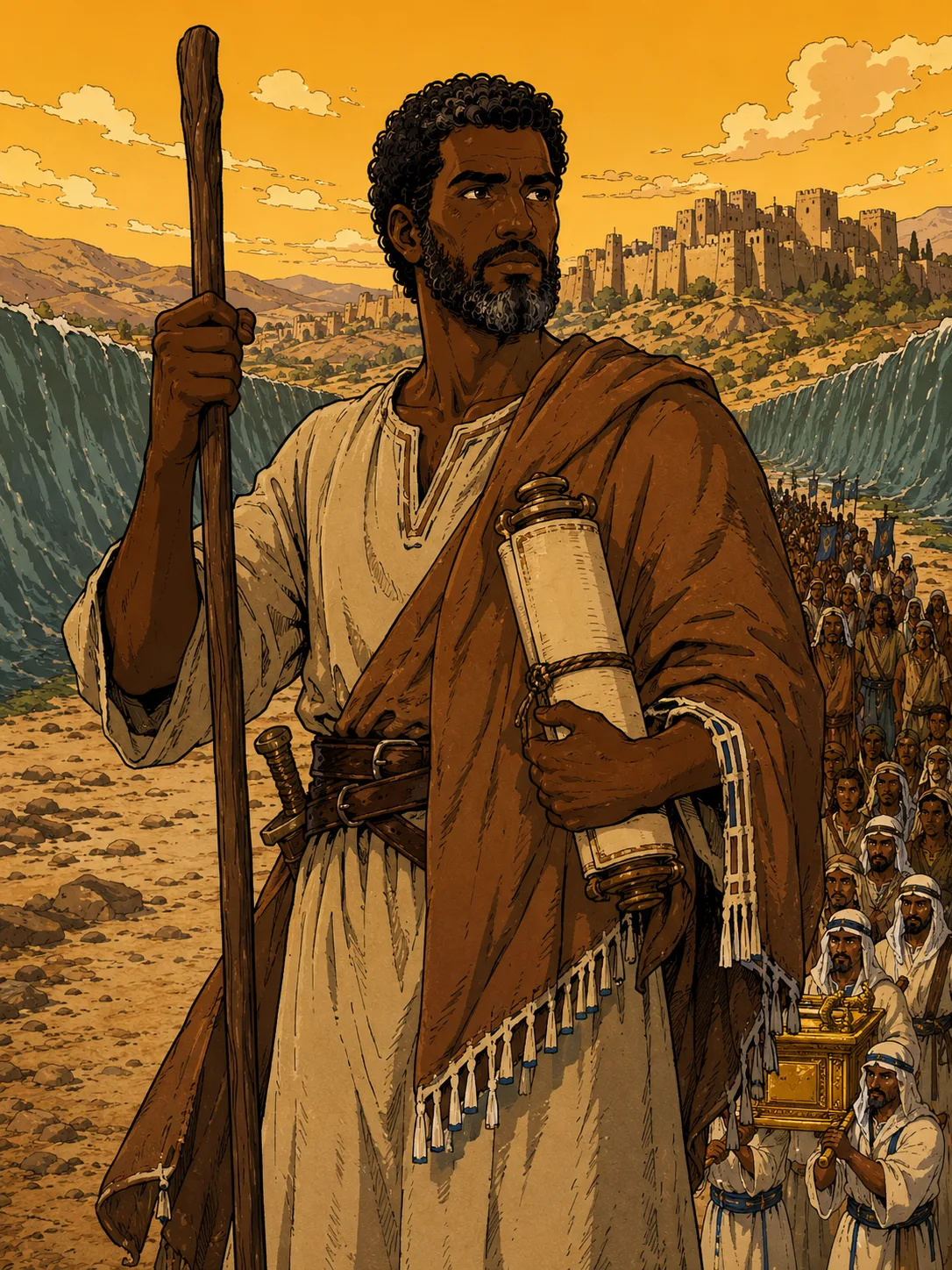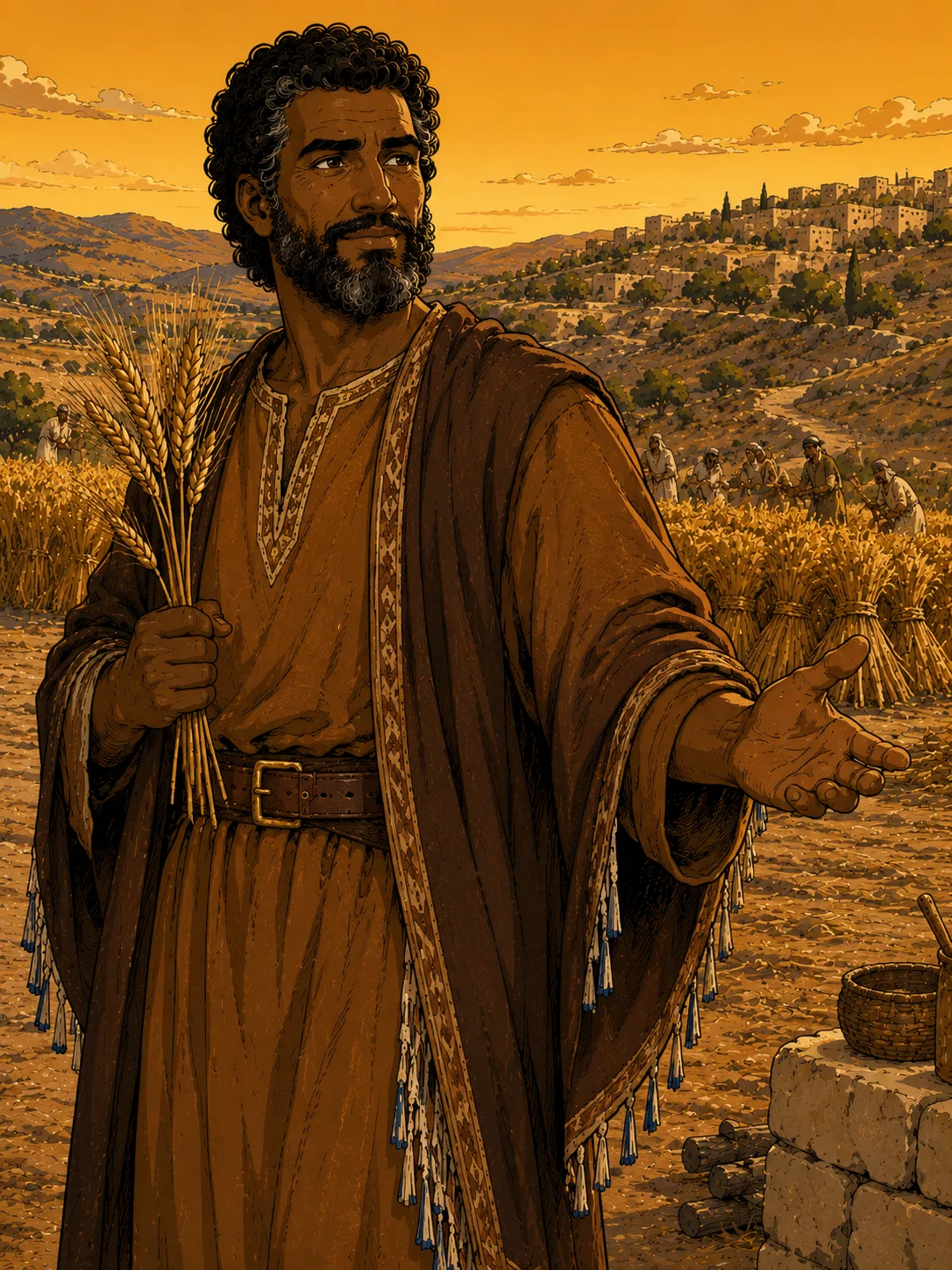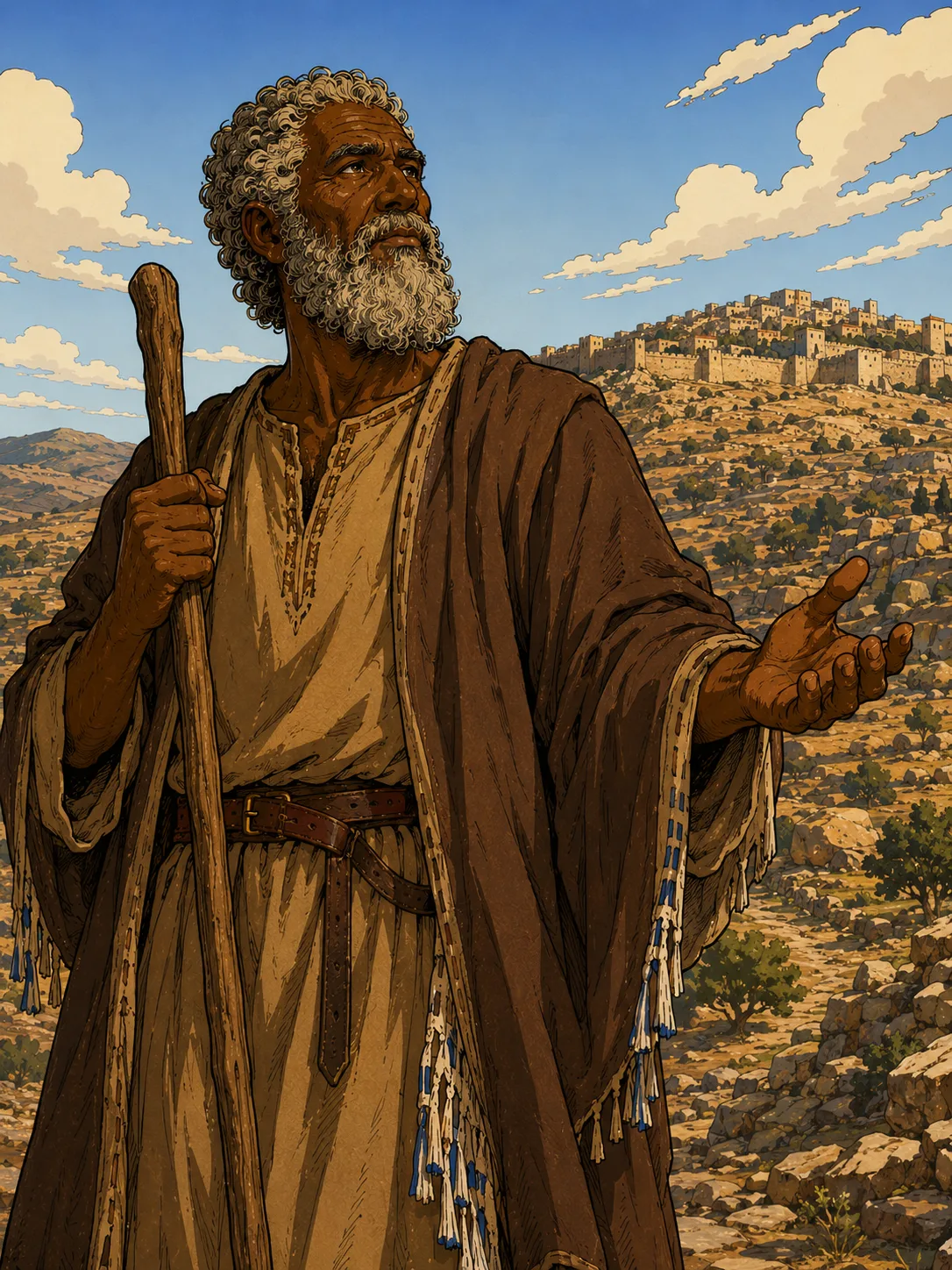
Calev ben Yefuneh represented the tribe of Yehudah among the twelve spies Moshe sent to scout Canaan (Numbers 13–14). When ten of the twelve returned with a report designed to terrify the camp, Calev — alongside Yehoshua bin Nun — stood against the majority. Yah himself testified of him: “my servant Calev, because he had another spirit with him, and has followed me fully, I will bring into the land” (Numbers 14:24).
That single line — another spirit, followed fully — became the defining description of Calev’s life. Through forty years of wilderness wandering and years of conquest under Yehoshua, the promise stood untouched. Deuteronomy 1:36 repeats it: Calev would see the land “because he has wholly followed Yah.”
Joshua 14:6–15 records the payoff, decades later. Calev — now eighty-five years old — came to Yehoshua and asked not for an easy inheritance but for Hebron, the very hill country the ten spies had once called impossible: “Give me this mountain” (Joshua 14:12). He took it. Joshua 15:13–19 and Judges 1:11–15 add a coda: Calev’s daughter Achsah married the man who captured Kiryat-Sefer for him, and at her urging Calev gave her springs of water as well — a small story of a father’s generosity carried alongside his own.
Scripture twice calls Calev “the Kenizzite” (Numbers 32:12; Joshua 14:6), a label that has led some to wonder whether his family was originally outside Israel and was absorbed into Yehudah — a possibility this dataset notes without resolving. 1 Chronicles 4:15 preserves his line within Yehudah’s genealogy, and his name remains paired with Yehoshua’s as the model of two men, out of an entire generation, who believed the report of Yah over the report of giants.