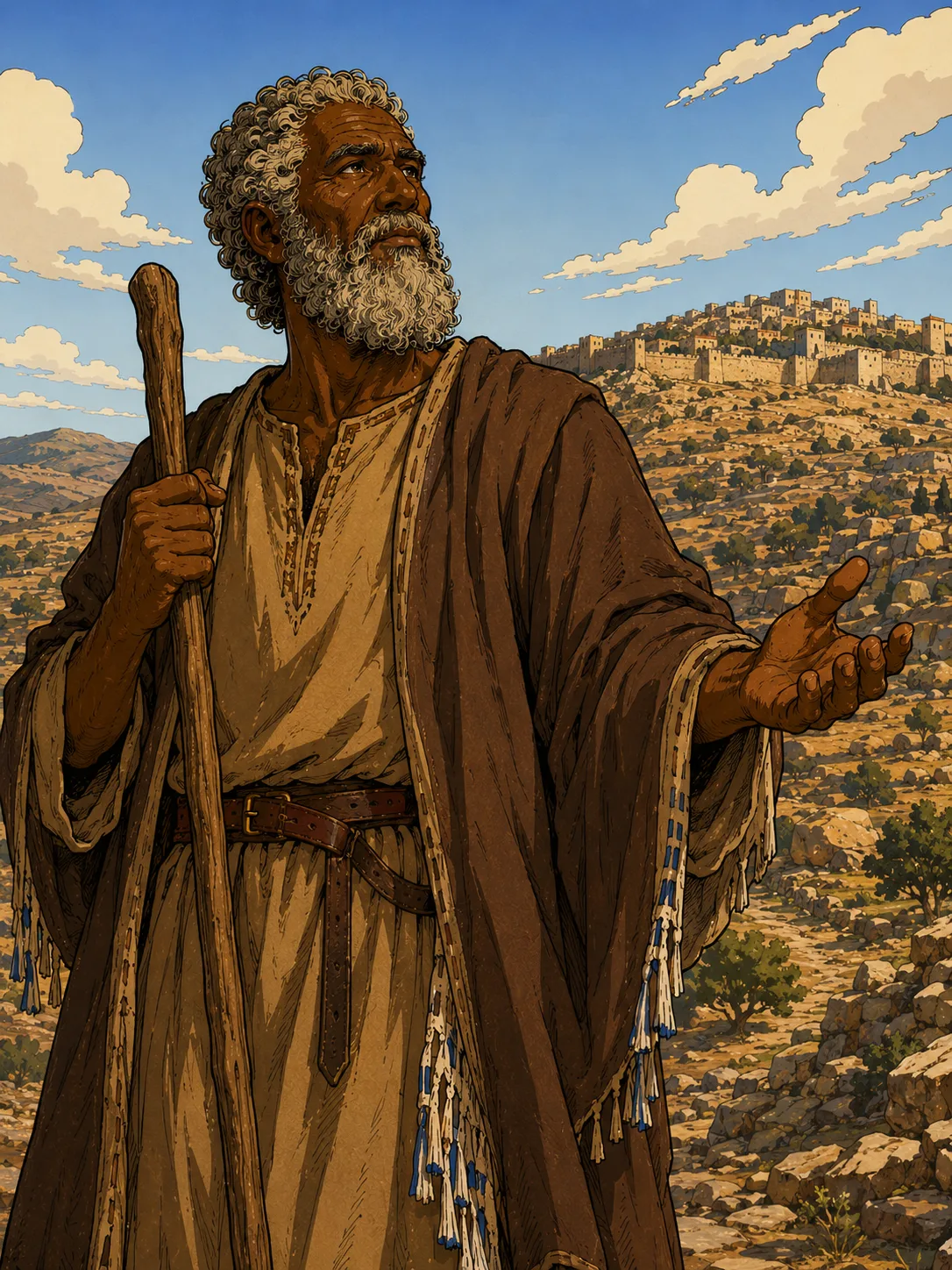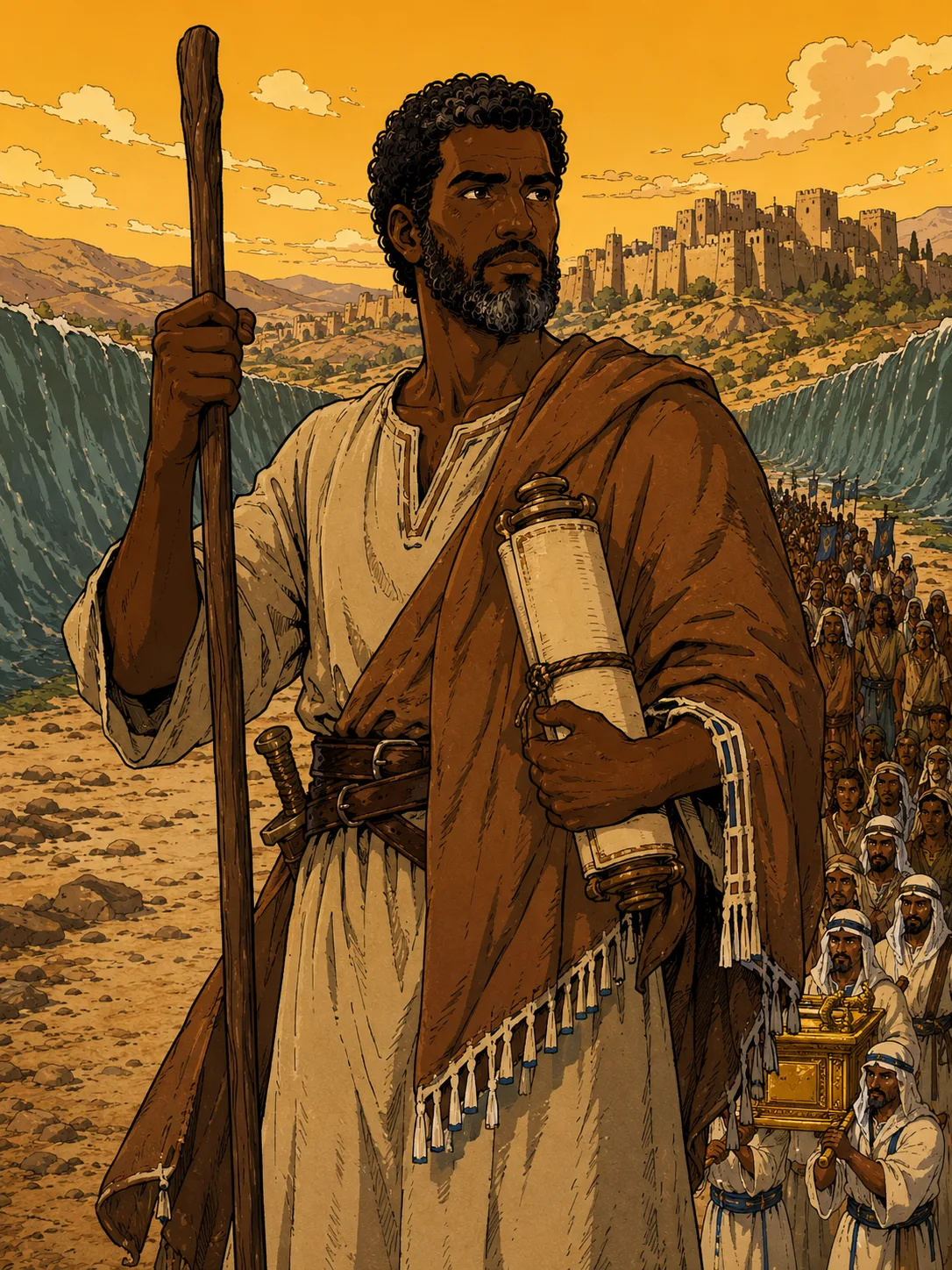
Yehoshua — known in English as Joshua — first appears as Moshe’s aide, leading Israel’s forces against Amalek while Moshe’s hands were held up in prayer (Exodus 17:9–14). He alone, with Moshe, ascended part of Mount Sinai (Exodus 24:13), and he is the one who remained in the Tent of Meeting after Moshe withdrew (Exodus 33:11) — a servant shaped by proximity to the presence of Yah long before he ever led anyone.
When Moshe sent twelve men to scout the land of Canaan, Yehoshua — still called Hoshea at the time — was one of them. Numbers 13–14 records that ten of the spies returned with a report of giants and fortified cities that broke the people’s nerve; only Yehoshua and Calev ben Yefuneh insisted Yah would give them the land. For that faithfulness, of the entire generation that left Egypt, only these two would live to enter it.
Before his death, Moshe laid hands on Yehoshua and commissioned him publicly as Israel’s next leader (Numbers 27:18–23; Deuteronomy 31). The book that bears his name records what followed: Israel crossed the Yarden on dry ground exactly as the sea had once parted (Joshua 3–4), the walls of Jericho fell (Joshua 6), and at Givon the sun stood still over the battlefield (Joshua 10:12–14). Near the end of his life, at Shechem, Yehoshua gathered the tribes and gave them the choice that defines the whole book: “choose this day whom you will serve … as for me and my household, we will serve Yah” (Joshua 24:15).
Yehoshua’s own name carries forward into the New Testament. Numbers 13:16 notes that Moshe changed his attendant’s name from Hoshea (“he saves”) to Yehoshua (“Yah saves”) — the same root that, in its shortened post-exilic form, becomes Yeshua. Hebrews 11:30 lists the fall of Jericho’s walls among the great acts of faith, and Judges 2:8 records his death as the last leader of the conquest generation. The man who carried Israel into the land carries, in his very name, the name of the One who would carry them further still.