Joseph was the eleventh son of Jacob and the firstborn of Rachel — the wife Jacob loved. His birth immediately prompted Rachel's wish for another son, which came in Benjamin. Joseph occupies more narrative space in Genesis than any other figure except Abraham: Genesis 37 through 50 is essentially the Joseph story.
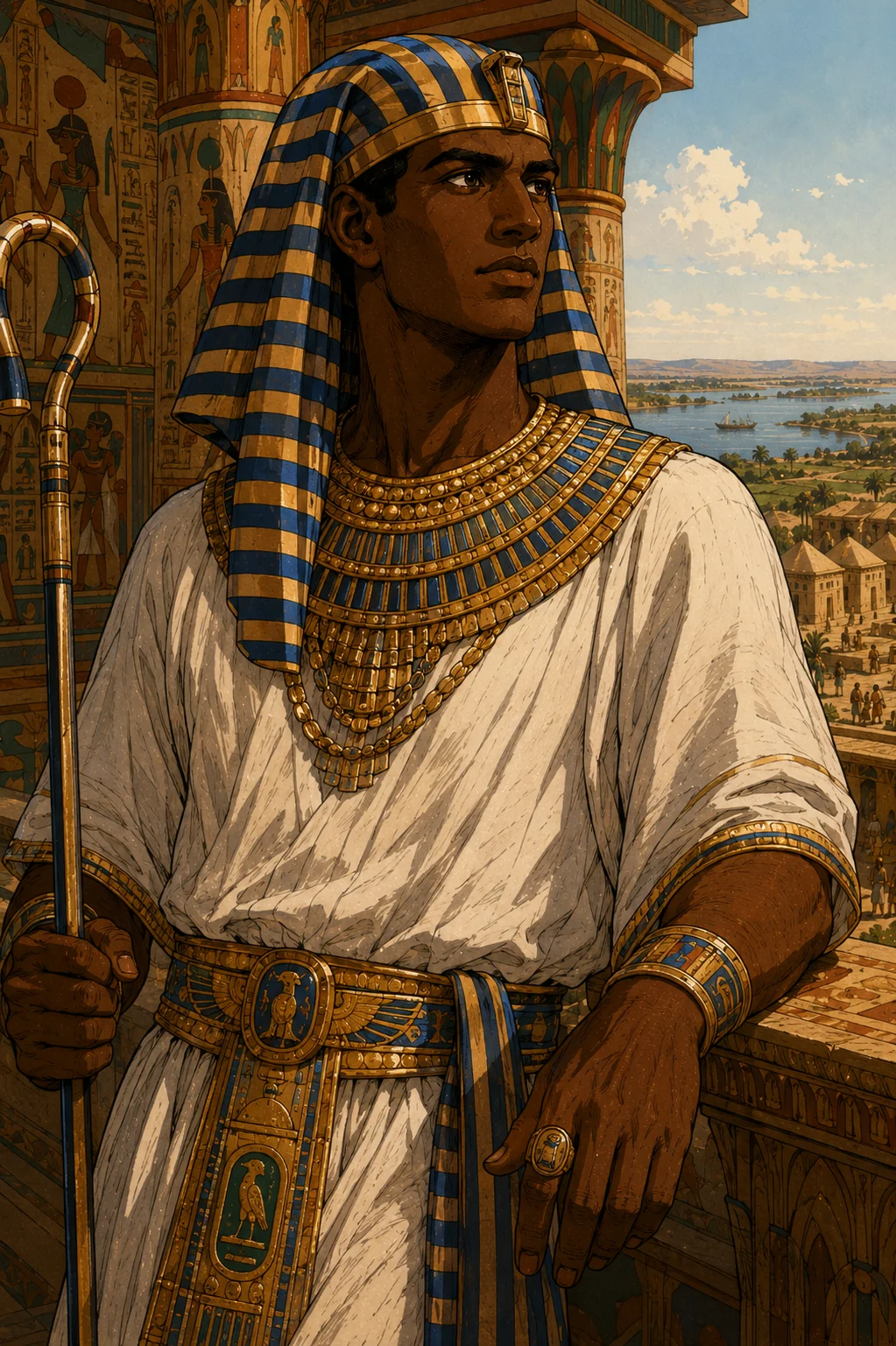
His brothers' jealousy was provoked by Jacob's favoritism — the famous coat of many colors (ketonet passim, Genesis 37:3) and by Joseph's dreams showing his brothers bowing to him. When they threw him in a pit and sold him to Ishmaelite traders, they believed they were ending the threat of his dreams. Instead, the trajectory ran through Potiphar's house, a false accusation, two years in prison, and the interpretation of Pharaoh's dreams — until Joseph stood before Pharaoh at thirty years old and was made viceroy of Egypt (Genesis 41:41–45).
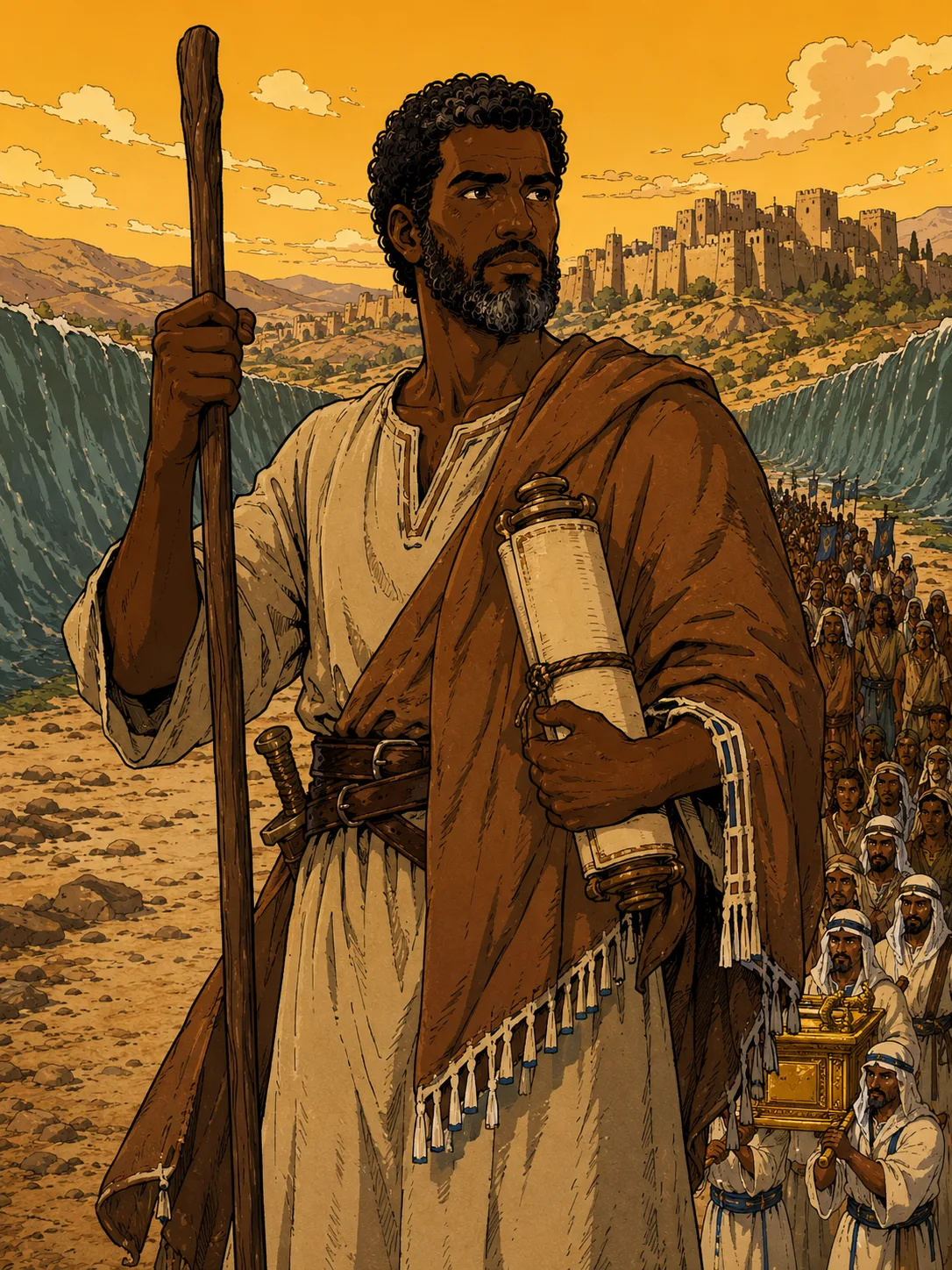
When famine struck, Joseph's granaries held Egypt's stored grain, and it was to Egypt that Jacob's sons came. The recognition scene — Joseph revealing himself to his brothers weeping (Genesis 45:1–3) — is one of the most emotionally charged in all of Scripture. He told them: "God sent me before you to preserve life." Jacob's deathbed blessing of Joseph's sons deliberately reversed the birth order (Genesis 48:13–20): Ephraim the younger received the greater blessing — "his younger brother shall be greater than he." The double portion (Reuben's forfeited birthright) went to Joseph in the form of two tribes: Ephraim and Manasseh. Yehoshua bin Nun, who led Israel into the land, was from Ephraim (Numbers 13:8). Gidon, the great judge, was from Manasseh (Judges 6:15).
"Joseph is a fruitful bough, a fruitful bough by a spring; his branches run over the wall. The archers bitterly attacked him... but his bow remained unmoved; his arms were made agile by the hands of the Mighty One of Jacob..." (Genesis 49:22–26) — one of the longest and most battle-imagery-laden of Jacob's twelve blessings.