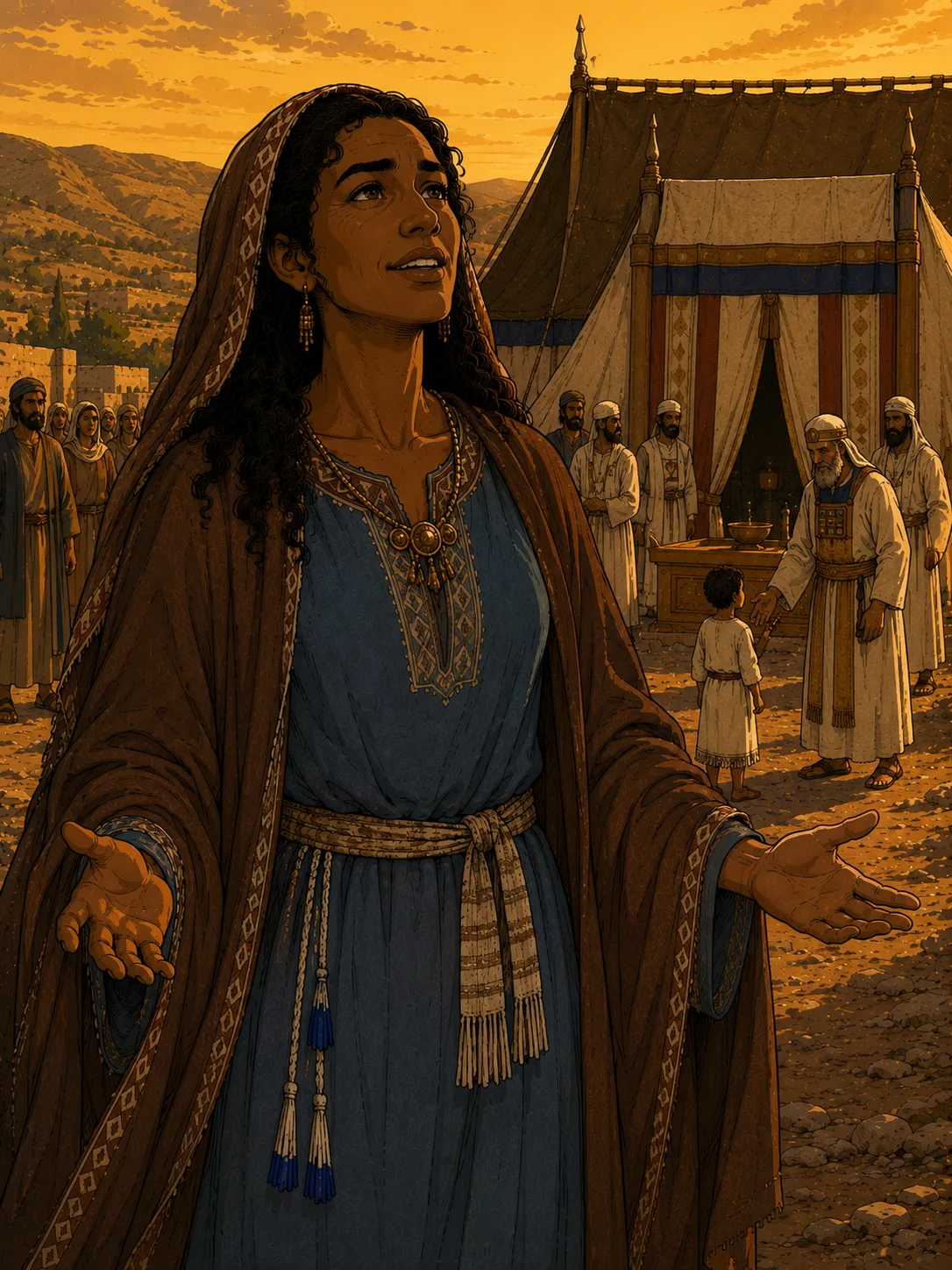
1 Samuel 1 opens with a household divided by grief: Chanah is one of two wives of Elkanah, an Ephraimite of Ramatayim-Tzofim, and she is barren, while Elkanah’s other wife Peninah has children. Year after year, on the family’s pilgrimage to worship at Shiloh, Peninah “provoked her, to make her fret” (1 Samuel 1:6) — until one year Chanah, “in bitterness of soul,” went up to pray.
What follows is one of Scripture’s most intimate prayer scenes. Chanah “spoke in her heart; only her lips moved, but her voice was not heard” (1 Samuel 1:9–13) — and Eli the priest, watching from his seat by the doorpost, mistook her for drunk. Her answer is quiet and direct: “I have drunk neither wine nor strong drink, but have poured out my soul before Yah.” She vowed that if given a son, she would give him back — a Nazirite, dedicated to Yah all his days (1 Samuel 1:11). Eli blessed her, and she conceived.
She named the child Shmuel — “because I have asked him of Yah” (1 Samuel 1:20) — and once he was weaned, kept her vow, bringing him to Shiloh “as long as he liveth” (1 Samuel 1:24–28). Chanah went on to have three more sons and two daughters (1 Samuel 2:21); the boy she gave away became the prophet who would anoint Israel’s first two kings.
1 Samuel 2:1–10 — the Song of Chanah — is her response to that gift: a song of reversal, where Yah “raises up the poor out of the dust” and “the bows of the mighty are broken,” while the weak are girded with strength. Centuries later, Miryam’s song in Luke 1:46–55 echoes the same themes and, in places, nearly the same words — the lowly lifted up, the proud brought down. Chanah herself is not named in the New Testament, but the shape of her prayer is unmistakable in Miryam’s.

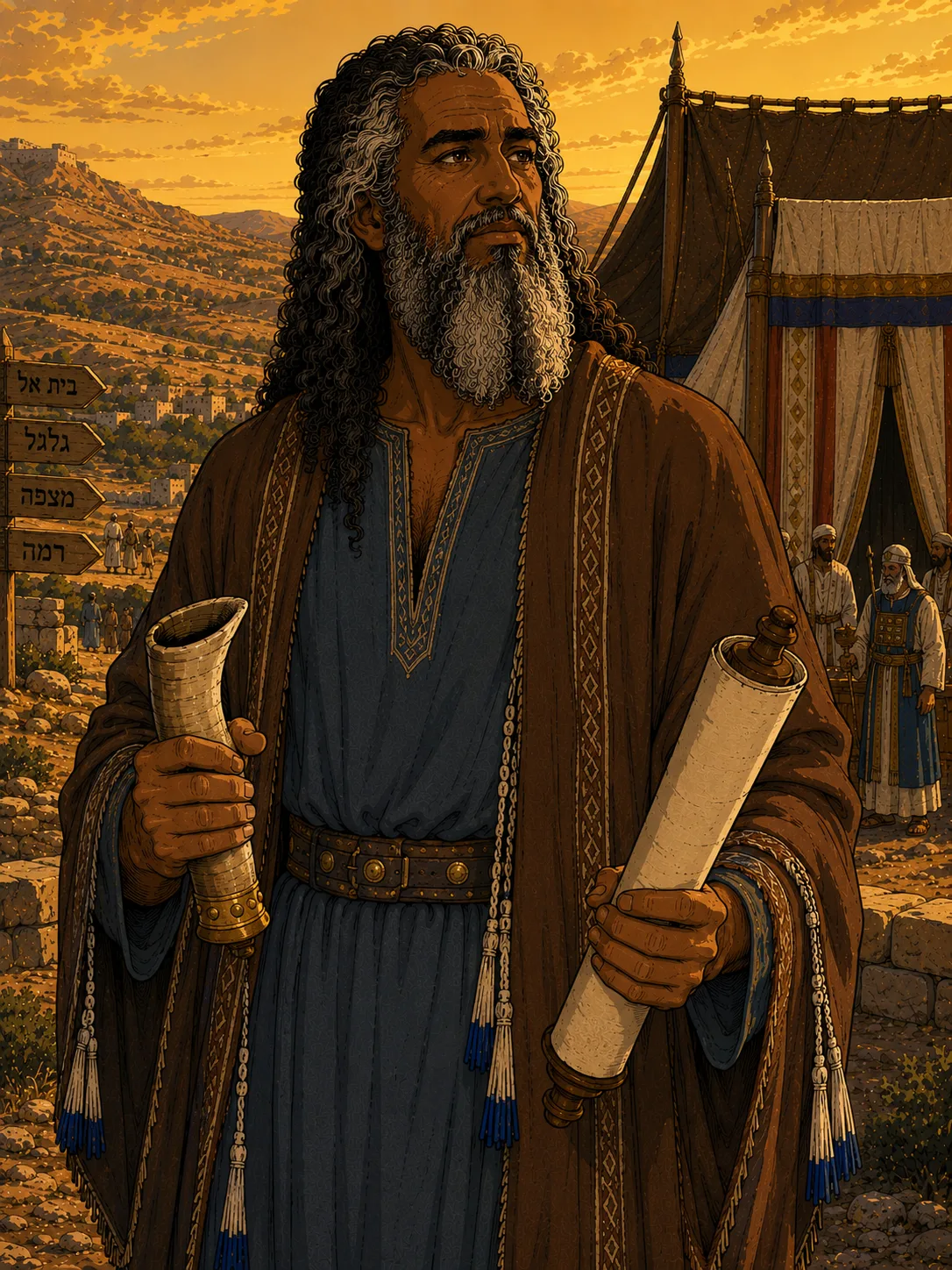 Samuel