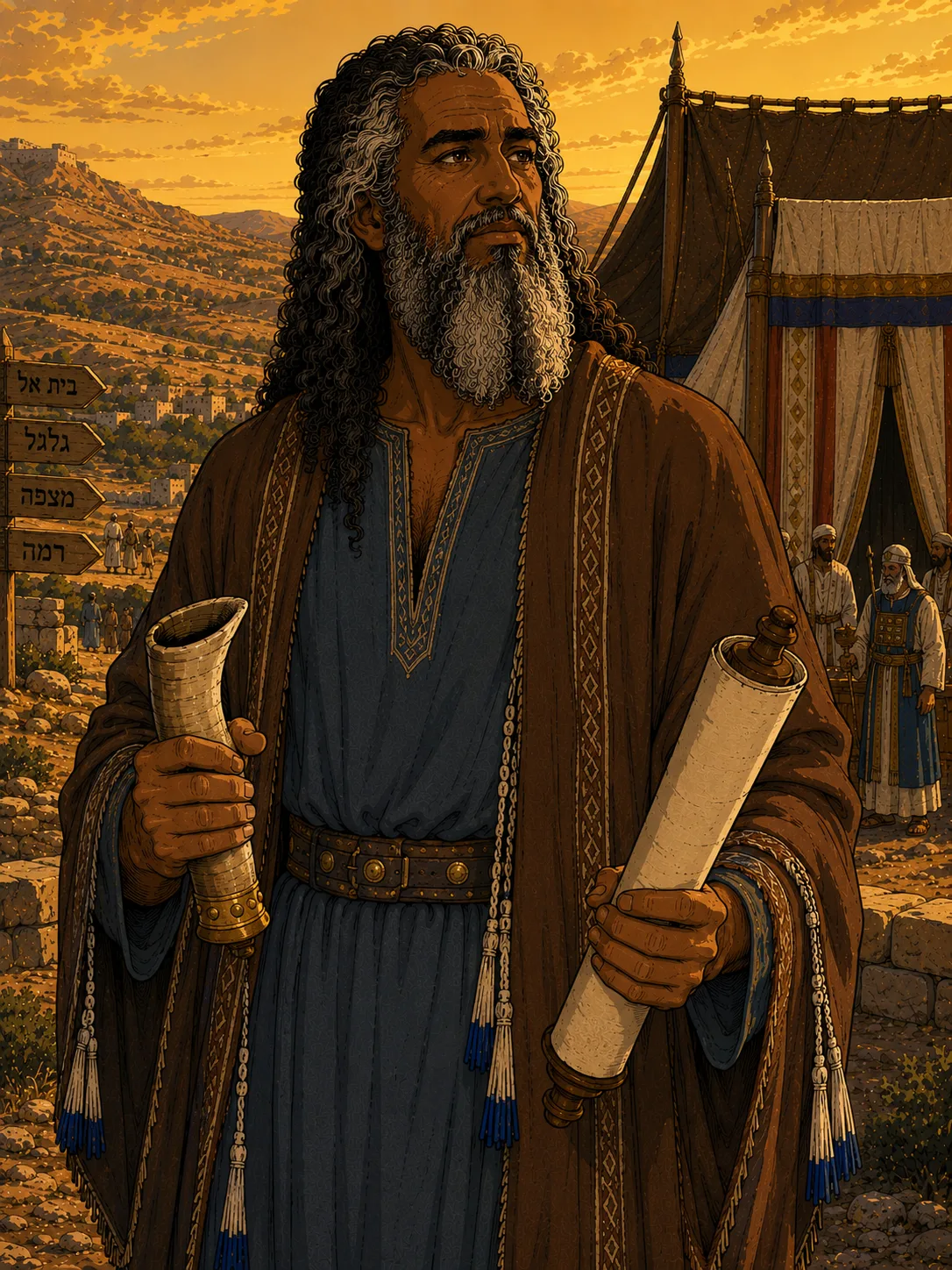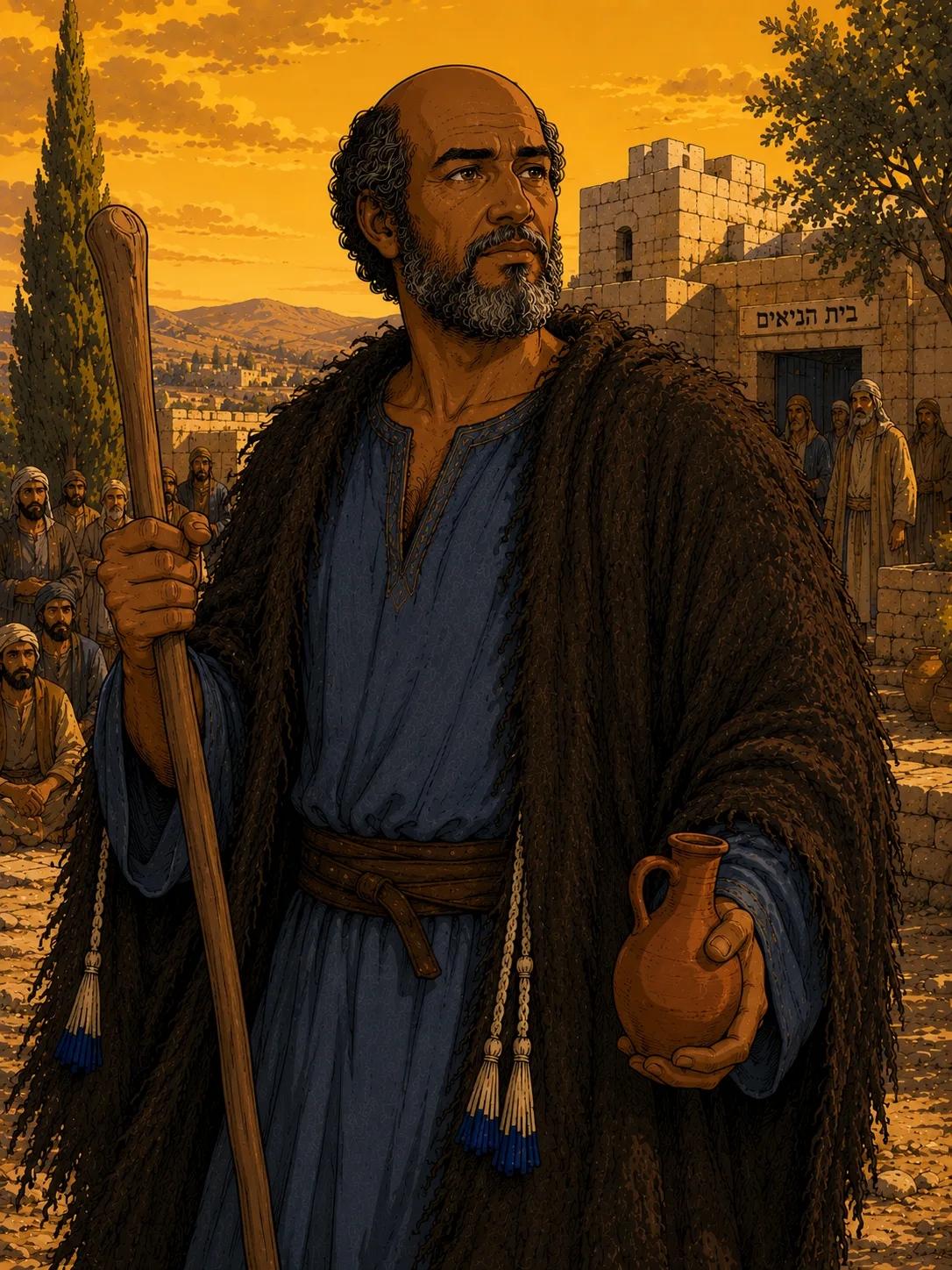
Elisha is called while plowing — Eliyahu, on Yah’s instruction from Horeb, throws his mantle over him, and Elisha leaves his oxen to follow him (1 Kings 19:16–21). The handoff becomes formal years later: as Eliyahu is about to be taken up, Elisha asks for “a double portion” of his spirit. He receives it — watching Eliyahu ascend in the whirlwind, picking up the fallen mantle, and parting the waters of the Jordan with it exactly as Eliyahu had just done (2 Kings 2:1–15).
2 Kings 4 shows the shape of Elisha’s ministry: smaller in scale than Eliyahu’s public contests, but persistently aimed at ordinary need. He multiplies a widow’s jar of oil so she can pay her debts, and — in the dataset’s fullest single narrative about him — restores to life the son of a Shunammite woman who had given him hospitality, after the boy dies suddenly in the field (2 Kings 4:8–37).
His most famous miracle reaches outside Israel entirely. 2 Kings 5 tells of Na’aman, commander of the army of Aram, who comes to Elisha to be healed of leprosy. Elisha never even comes out to meet him at first, sending only the instruction to wash seven times in the Jordan — an act so unimpressive that Na’aman is initially offended, until his servants persuade him to try it, and he is healed. Luke 4:27 records Yeshua citing this very story — a foreigner healed while “many lepers were in Israel” — to make a point about the reach of Yah’s mercy.
2 Kings 6 records the floating axe head — recovering an iron axe head by making it float to the surface of the water — and Elisha’s later involvement, through a disciple, in anointing Yehu and Chazael, fulfilling commissions Eliyahu had originally received at Horeb (2 Kings 8–9; cf. 1 Kings 19:15–17). Even Elisha’s death carries one more miracle: 2 Kings 13:14–21 records that a dead man, thrown into Elisha’s tomb, was revived simply by touching his bones — a final, almost wordless echo of the “double portion” he had asked for at the Jordan.

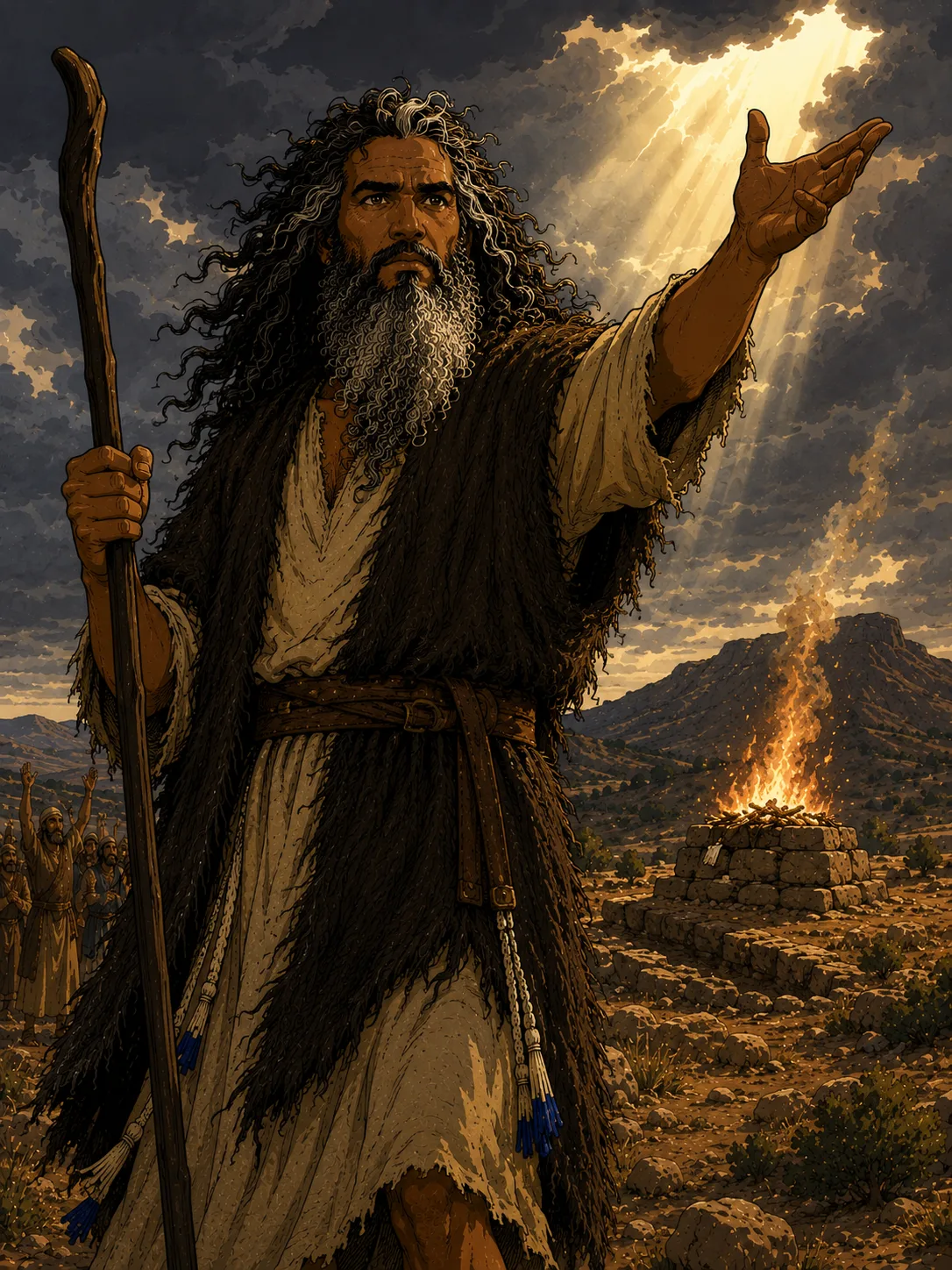 Elijah