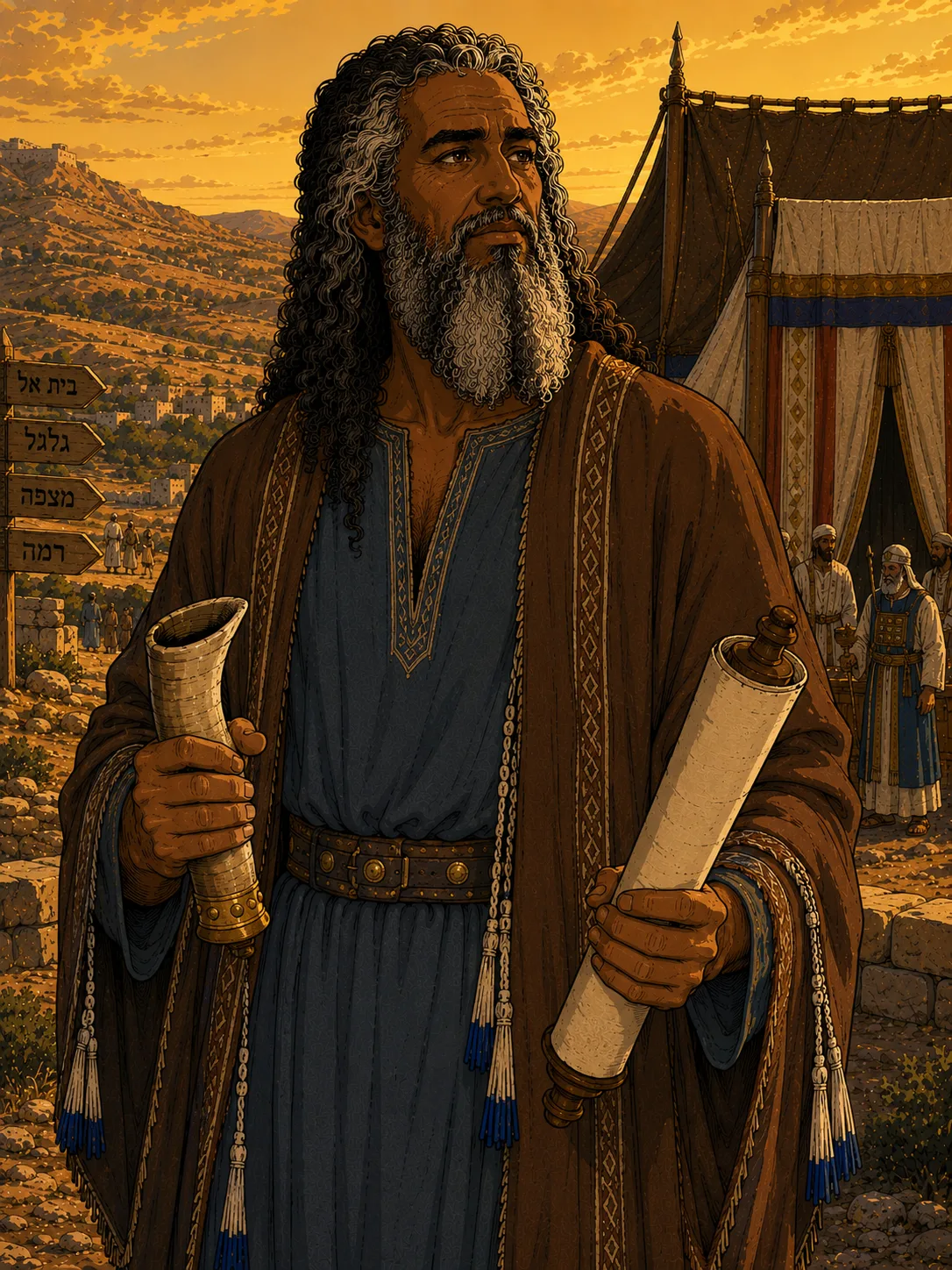
Eliyahu the Tishbite enters Scripture abruptly, with no genealogy at all — simply “Eliyahu the Tishbite, of the inhabitants of Gilad,” announcing a drought to King Achav of Israel: “there shall be no rain… but according to my word” (1 Kings 17:1). During the drought that follows, Eliyahu is fed by ravens at the brook Cherith, then sustains a widow of Tzarfat through famine — her flour and oil miraculously not running out — and later raises her son from death (1 Kings 17:2–24).
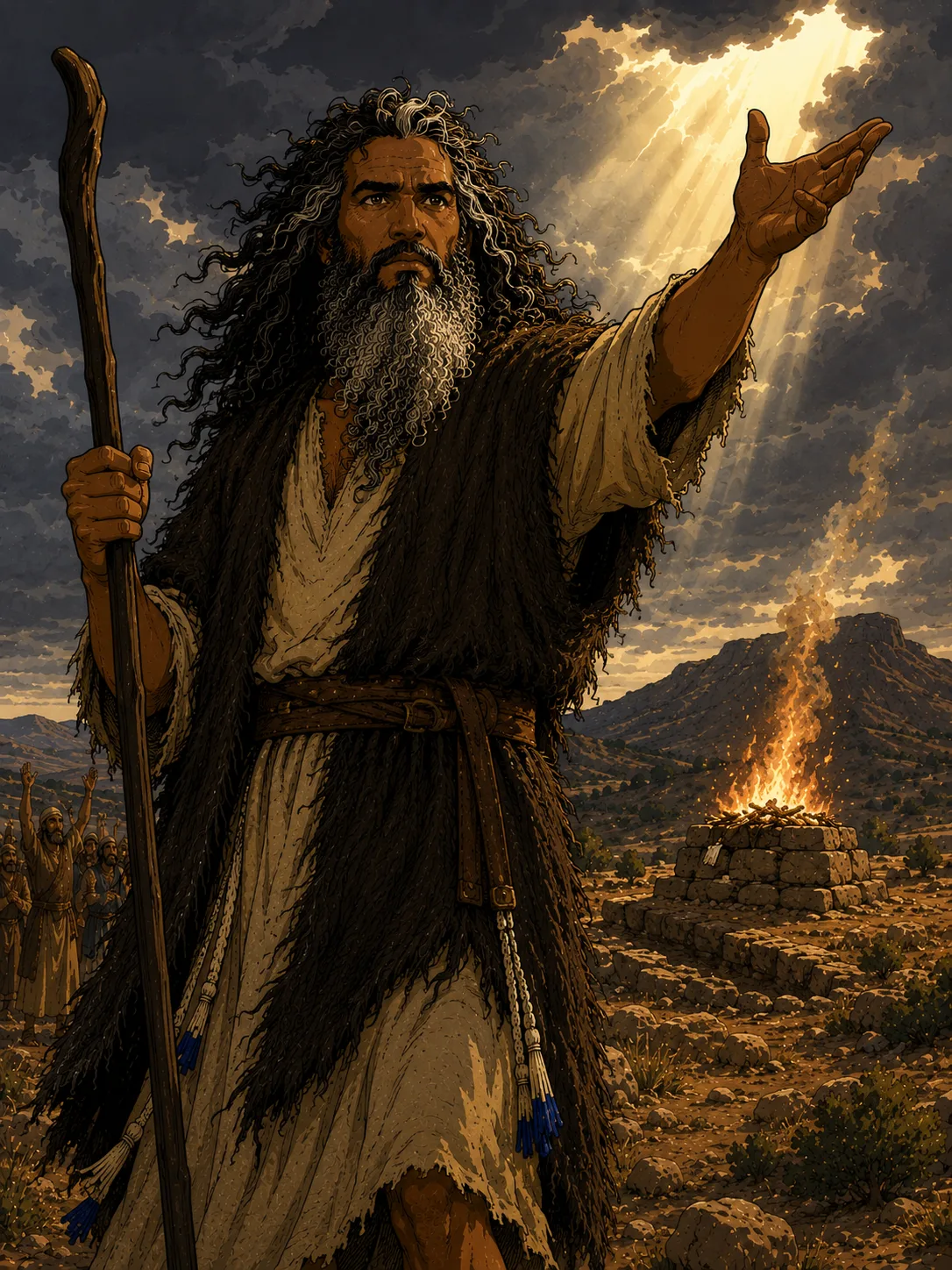
1 Kings 18 stages the contest most associated with his name: on Mount Carmel, Eliyahu alone confronts 450 prophets of Ba’al, challenging Israel — “How long will you waver between two opinions?” — to watch which god answers by fire. After the prophets of Ba’al fail through a full day of frenzied appeal, Eliyahu repairs the altar, drenches it with water, and prays a single short prayer; fire falls from heaven and consumes the offering, the wood, the stones, and the water itself. The people fall on their faces: “Yah, He is God! Yah, He is God!” (1 Kings 18:39).
Victory gives way almost immediately to despair. Fleeing Izevel’s wrath into the wilderness, Eliyahu asks to die — and instead encounters Yah at Horeb not in the great wind, the earthquake, or the fire, but in “a still small voice” (1 Kings 19). From there he is sent back with new commissions: anoint Chazael over Aram, Yehu over Israel, and Elisha as his own prophetic successor. 1 Kings 21:17–24 shows him still confronting Achav directly, this time over the judicial murder of Naboth for his vineyard — and 2 Kings 1 records a final confrontation with Achav’s son Achazyahu.
Eliyahu’s departure is unlike any other prophet’s: 2 Kings 2:1–15 describes him taken up in a whirlwind, in a chariot of fire, without dying — witnessed by his successor Elisha, who receives a “double portion” of his spirit at the moment of his ascension. Malachi 4:5–6 promises that Yah will send Eliyahu again before “the great and terrible day of Yah” — a promise the New Testament returns to directly: Eliyahu appears beside Moshe at Yeshua’s Transfiguration (Matthew 17:1–8), and the question of his return frames the Gospels’ discussion of Yochanan the Immerser.

 Elisha