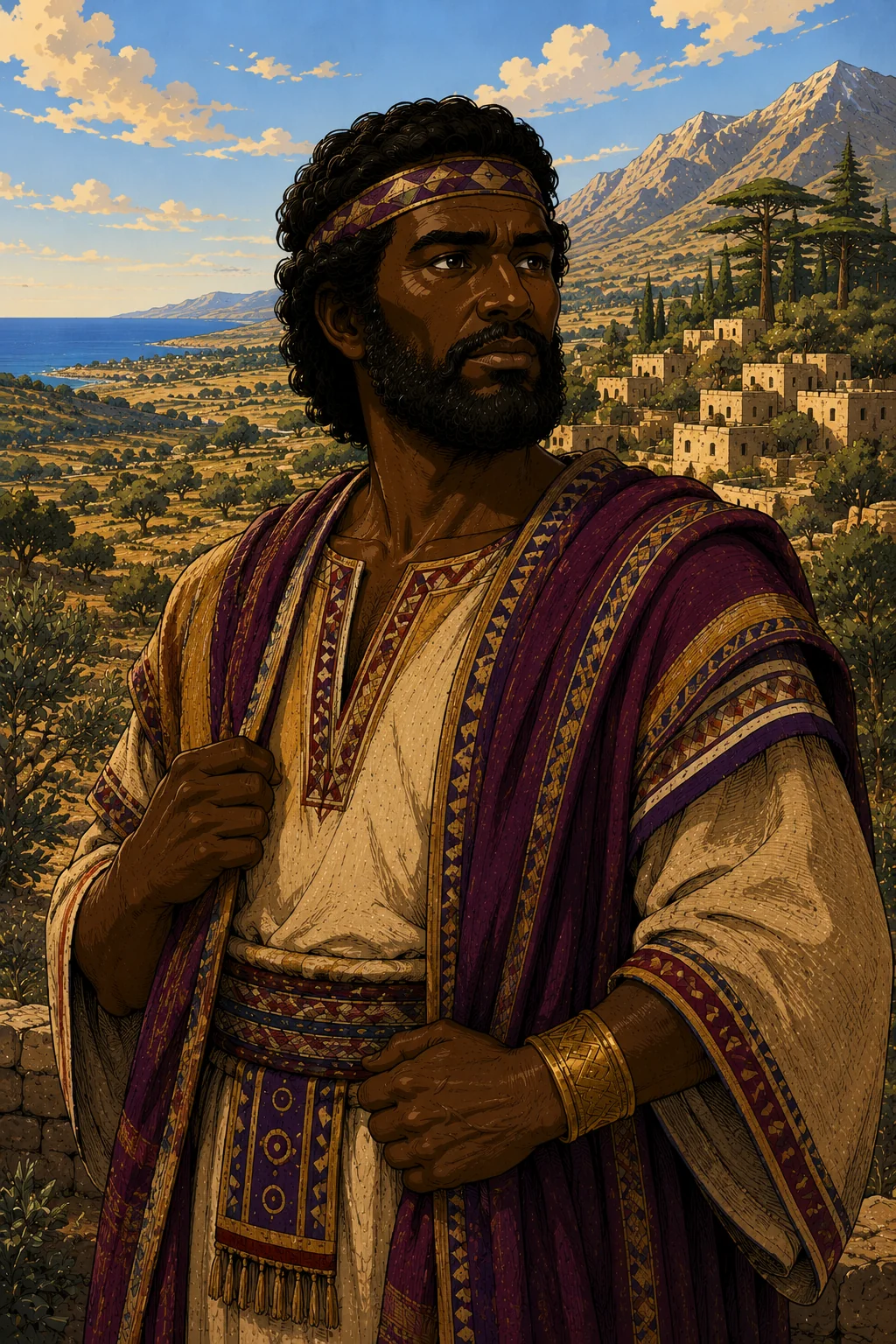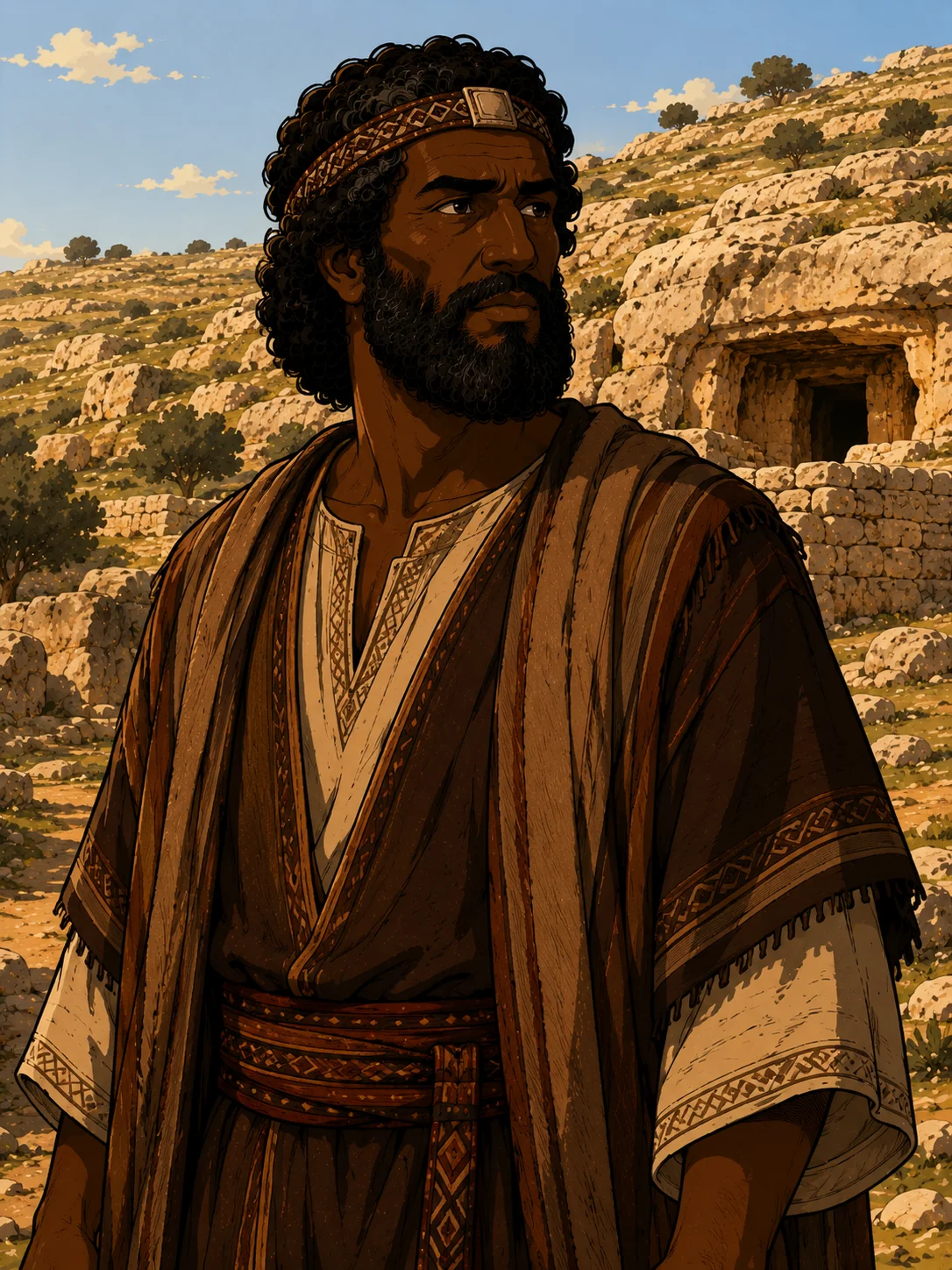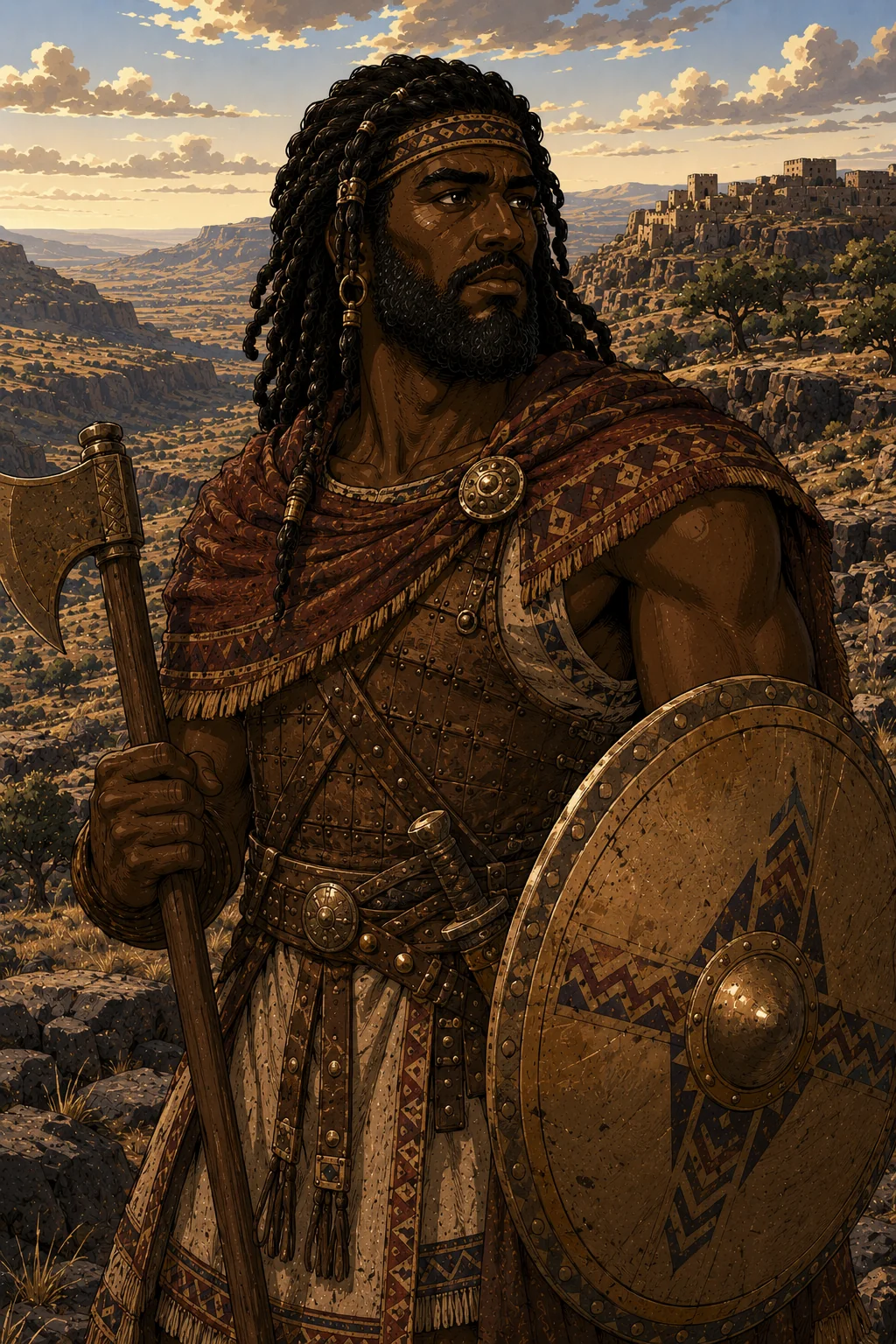
The Amorite (הָאֱמֹרִי) is the fifth son of Canaan, and the Amorites were arguably the most powerful and widespread of all the Canaanite peoples. In ancient Near Eastern sources they appear as the Amurru — "westerners" in Akkadian — a broad grouping of Semitic-speaking peoples who dominated the Syrian highlands and eventually established major kingdoms across Mesopotamia, including the First Babylonian Dynasty of Hammurabi himself.
In the biblical narrative, the Amorites represent Israel's primary military obstacle east of the Jordan. Sihon king of the Amorites, whose capital was Heshbon, refused Israel passage and attacked them — Israel defeated him and took his territory (Numbers 21:21–31). Og of Bashan, the last of the Rephaim whose iron bed measured nine cubits, was also classified among the Amorite kings (Deuteronomy 3:11). These two eastern Amorite kings — Sihon and Og — became touchstones of victory in later Israelite worship: "Give thanks to him who struck down great kings... Sihon, king of the Amorites, and Og, king of Bashan" (Psalm 136:17–20).
The iniquity of the Amorites features explicitly in God's covenant with Abraham: "The iniquity of the Amorites is not yet complete" (Genesis 15:16) — explaining the four-hundred-year gap between the promise and its fulfillment. This phrase frames the entire period of Israel's sojourn in Egypt as a waiting period in God's moral economy, until the Amorite civilization had run its course. The Amorites thus stand as both Israel's primary military adversary and a theological example of divine patience and judgment on schedule.