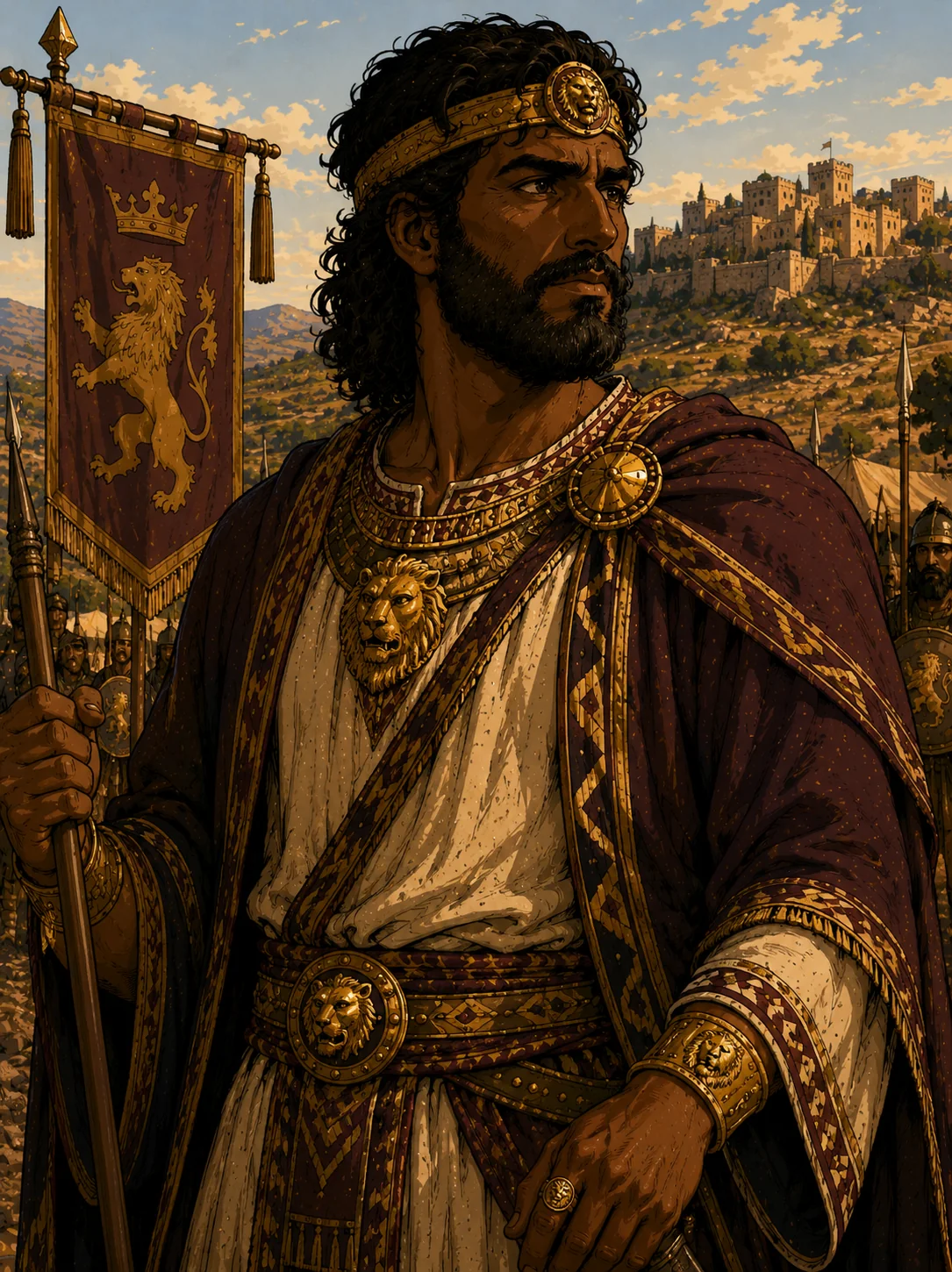
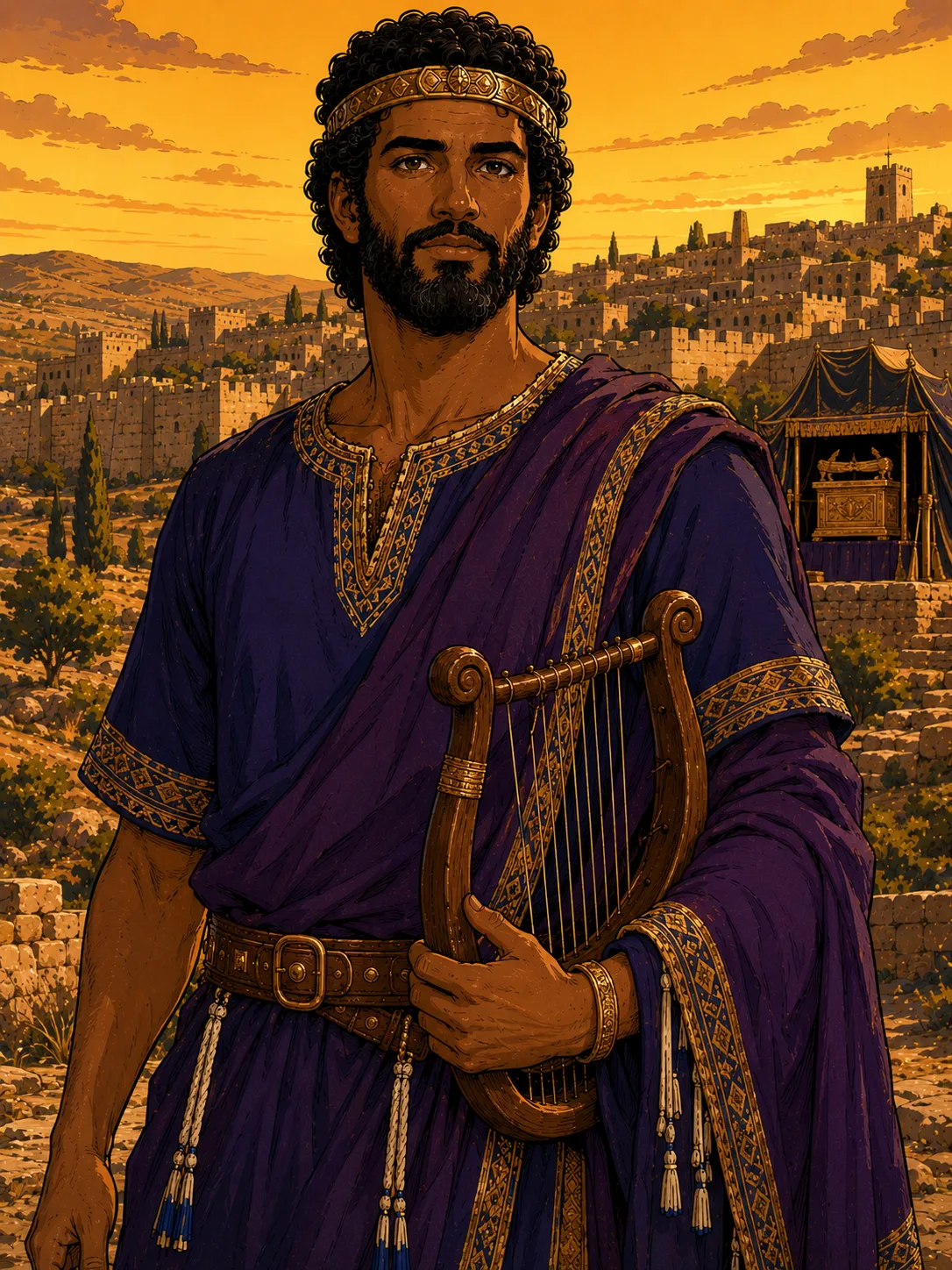
Son of Aminadav, father of Salmon
Brother of Elisheva, who married Aharon (Exodus 6:23) — Nachshon was therefore Aharon's brother-in-law
Appointed nasi (prince/chieftain) of the tribe of Yehudah during the wilderness census and encampment (Numbers 1:7, 2:3)
Brought Yehudah's offering at the dedication of the altar — first of all twelve tribal princes to do so (Numbers 7:12, 17)
When the camp set out from Sinai, the standard of Yehudah's camp went first (Numbers 10:14) — a position of leading the march that later rabbinic tradition develops further (see note)
Direct ancestor of David and Yeshua (Ruth 4:20, Matthew 1:4, Luke 3:32)
“Prince of Yehudah; his tribe's standard marched first — brother-in-law of Aharon”
Traditional note: Numbers 10:14 establishes, as Primary scripture, that Yehudah's standard (under Nachshon's leadership as its nasi) marched first when the camp set out from Sinai. A separate and well-known rabbinic tradition (Mekhilta de-Rabbi Yishmael, elaborated in the Talmud, Sotah 36b–37a) holds that Nachshon was specifically the first individual to step into the Sea of Reeds before it parted at the Exodus — demonstrating faith by action while others hesitated. This specific 'first into the sea' tradition is not in the Exodus 14 narrative itself and is 'Tradition' for this dataset; the Numbers 10:14 'first standard to march' detail, by contrast, is Primary.