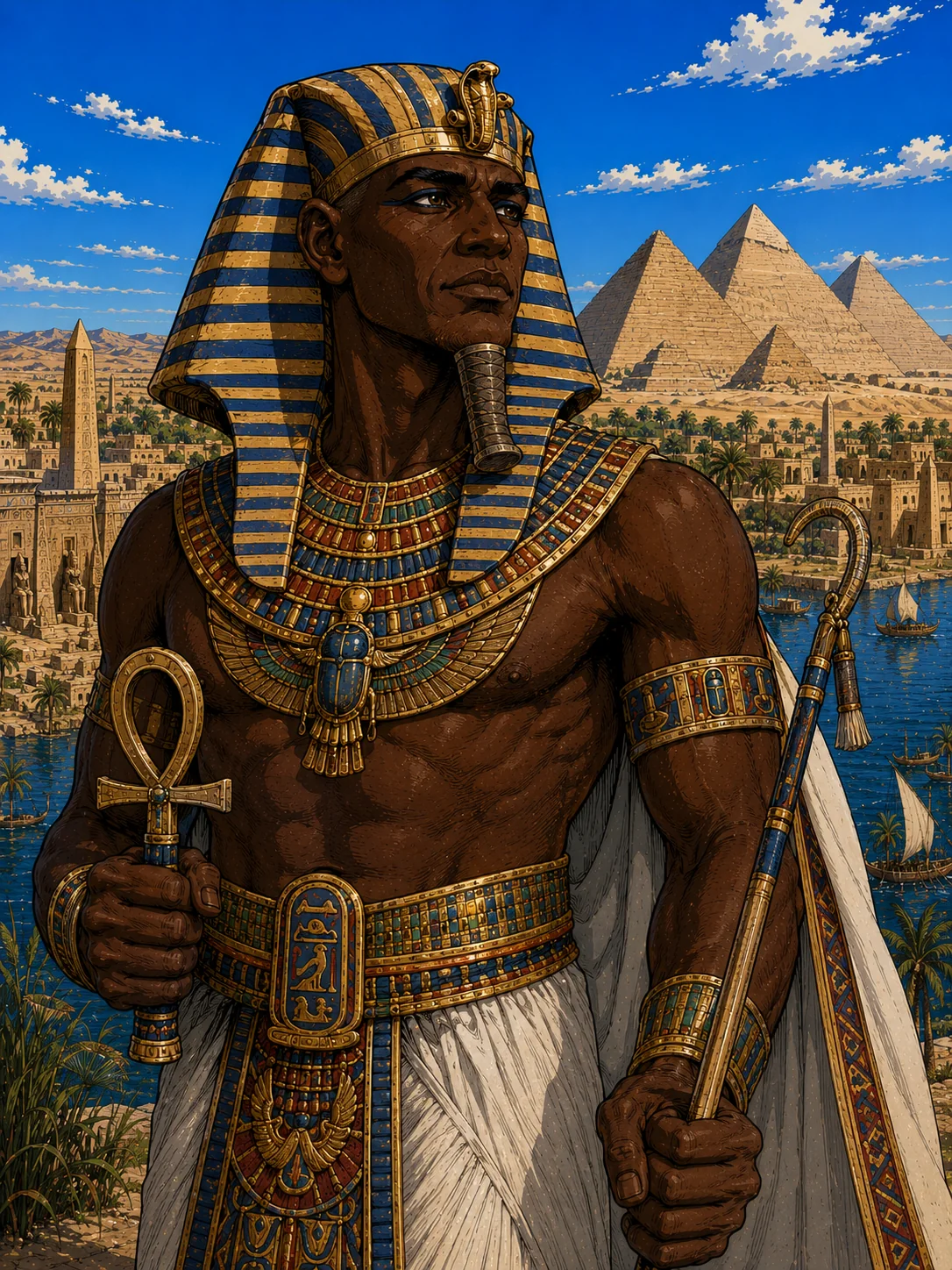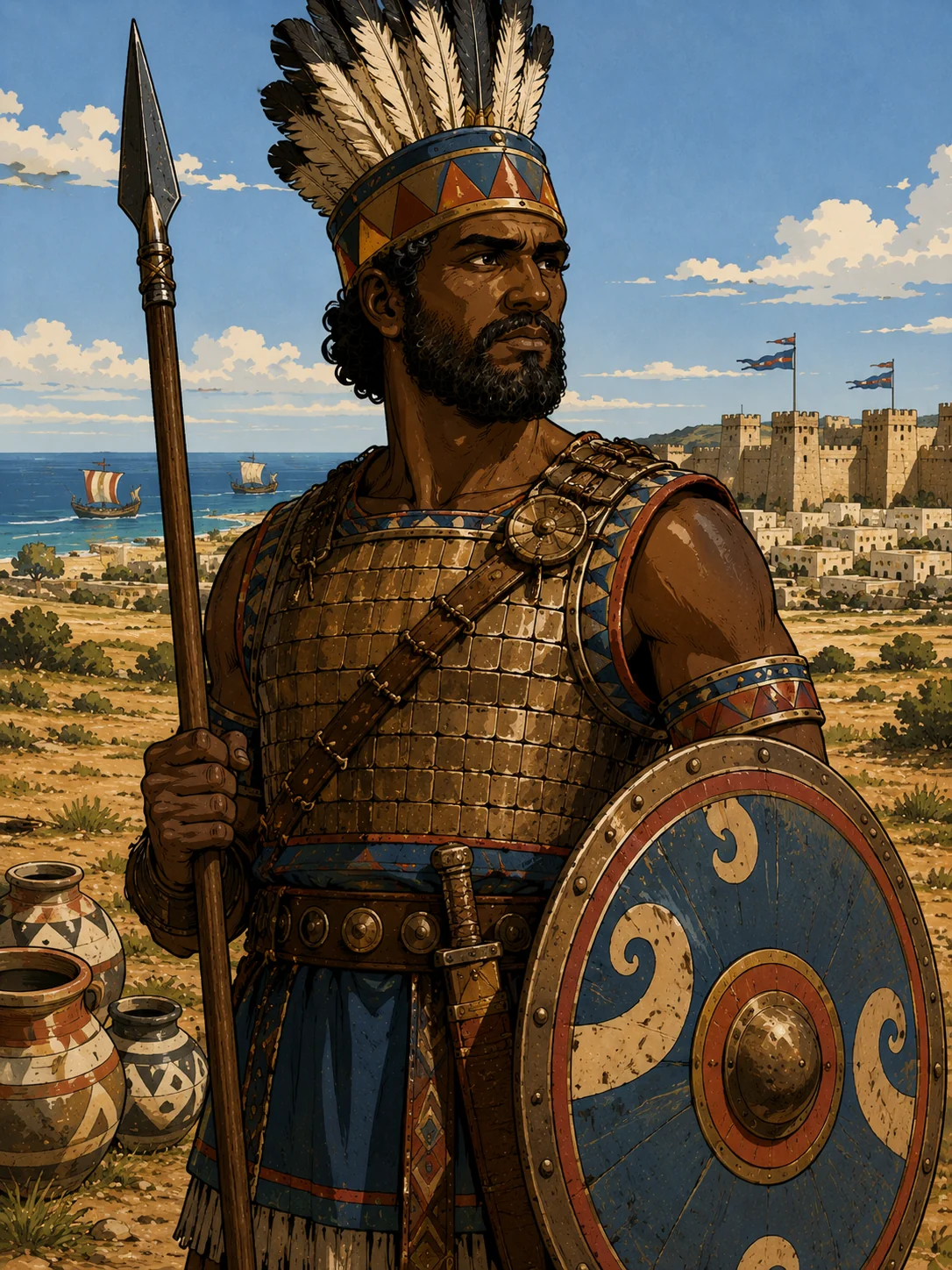
The Philistines (פְּלִשְׁתִּים) are traced in Genesis 10:14 to Casluhim, a son of Mizraim — "from whom the Philistines came forth." They are therefore of Ham's line through Egypt, not of Japheth's line as is sometimes assumed. Amos 9:7 adds that God brought the Philistines from Caphtor (Crete or the Aegean), which archaeological evidence supports: the Sea Peoples who settled the Canaanite coast around 1200 BCE arrived by sea from the Aegean world, bringing a distinct material culture that became archaeologically identifiable as Philistine.
The five Philistine city-states — Gaza, Ashkelon, Ashdod, Ekron, and Gath — form the political framework of Philistine civilization and the geographic context for the narratives of Samson (Judges 13–16), the capture and return of the Ark (1 Samuel 4–6), and David's long rivalry with Philistia from his youth through his monarchy. Goliath of Gath is the most individually famous Philistine — his confrontation with the young David in the valley of Elah (1 Samuel 17) is one of the most narrated episodes in the Hebrew Bible.
The Philistines possessed iron technology at a time when Israel did not — 1 Samuel 13:19–22 records that there was no blacksmith in all Israel, forcing Israelites to go to Philistine smiths to sharpen their tools. This technological advantage underlies the repeated Philistine military superiority in the early monarchic period. The recurring phrase "the hand of the Philistines" in Judges marks their role as the pressure that shaped Israel's demand for a king. Saul's death at Mount Gilboa came at Philistine hands (1 Samuel 31), and David ultimately ended Philistine dominance — though the cities persisted through the prophetic period.