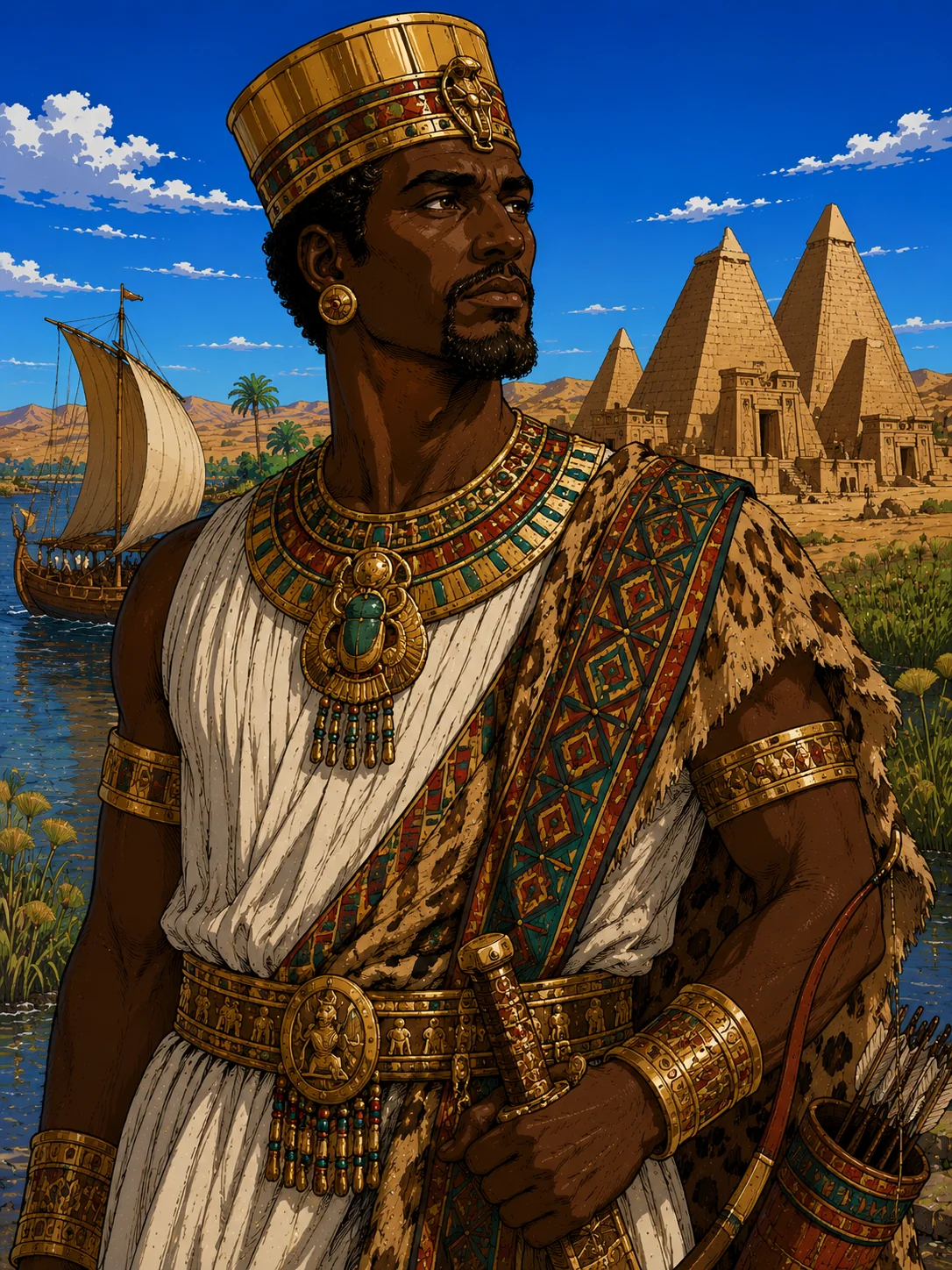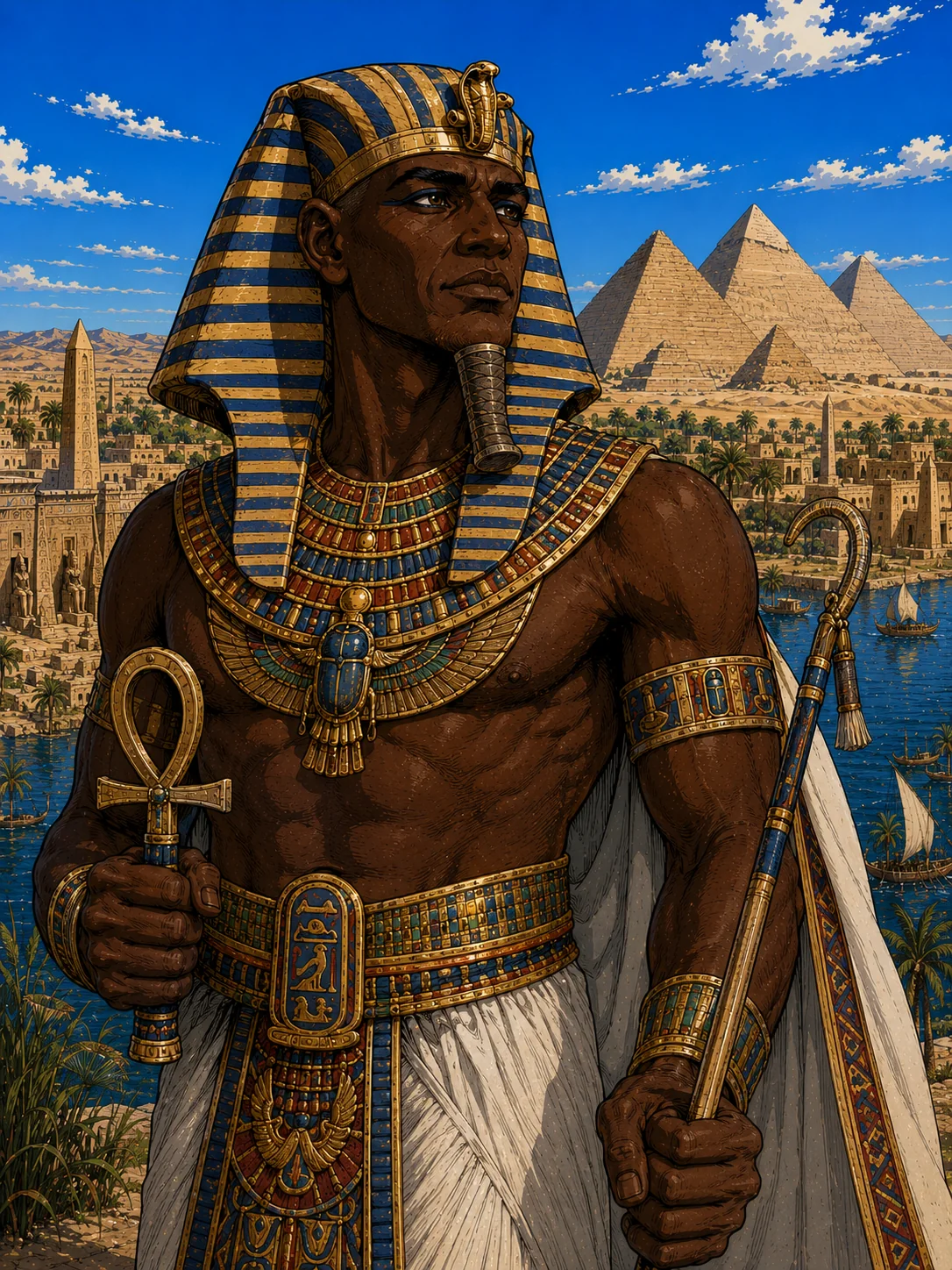
Mizraim (מִצְרַיִם) is one of the most certain identifications in the entire Table of Nations — his name is simply the Hebrew word for Egypt, used without variation throughout the Hebrew Bible. From Genesis to Malachi, every mention of Egypt in the original Hebrew says Mizraim. The dual form of the name (the -ayim ending) likely reflects the ancient Egyptian concept of the Two Lands — upper Egypt and lower Egypt — united under a single pharaoh.
Mizraim fathers seven son-nations whose names trace the various peoples of the Nile Delta and North Africa: Ludim, Anamim, Lehabim, Naphtuhim, Pathrusim, Casluhim, and Caphtorim. From Casluhim came the Philistines — "from whom the Philistines came forth" (Genesis 10:14) — making the chief antagonists of Israel's early monarchy period descendants of Ham through Mizraim.
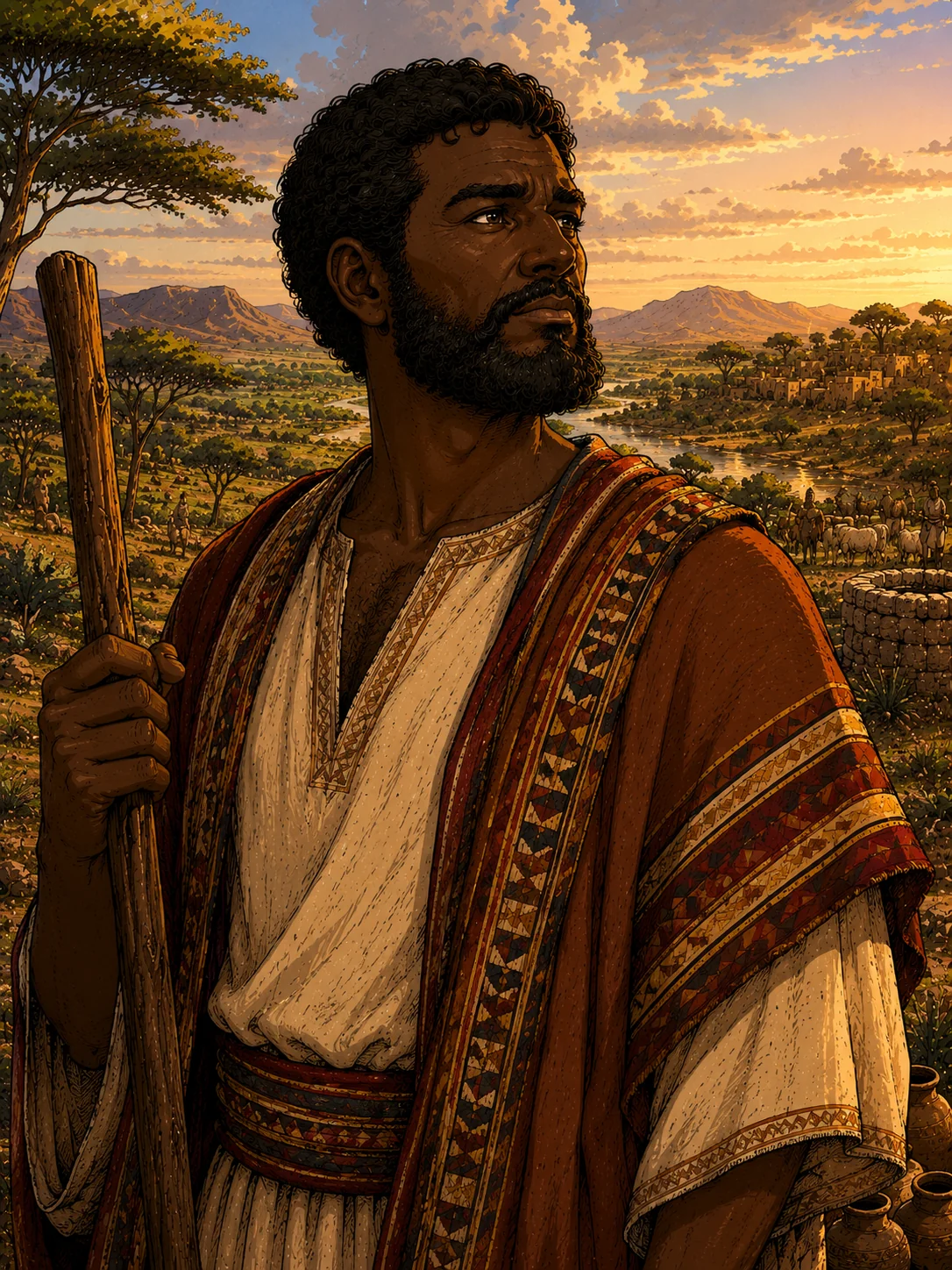
Egypt's role in the covenant story is unparalleled. Abraham sojourned there during famine. Joseph was sold there and rose to second in command. Israel multiplied there across four generations, was enslaved there for centuries, and was redeemed from there in the Exodus — the defining event of Israelite identity. The Passover, the Ten Commandments, the entire legal structure of the Torah flows from the confrontation between God and Pharaoh in Mizraim's land. Isaiah 19 envisions Egypt's ultimate redemption: "Blessed be Egypt my people."