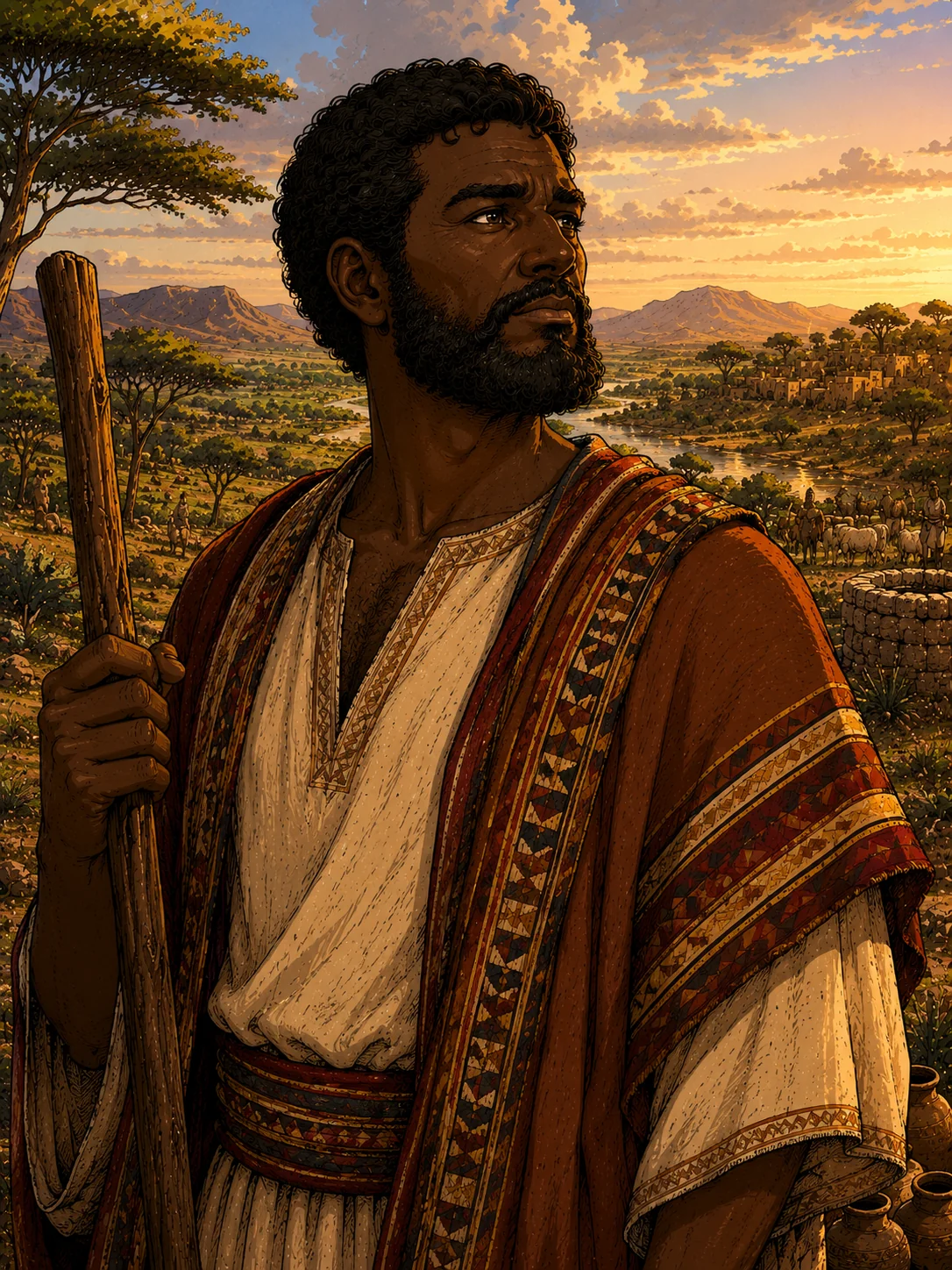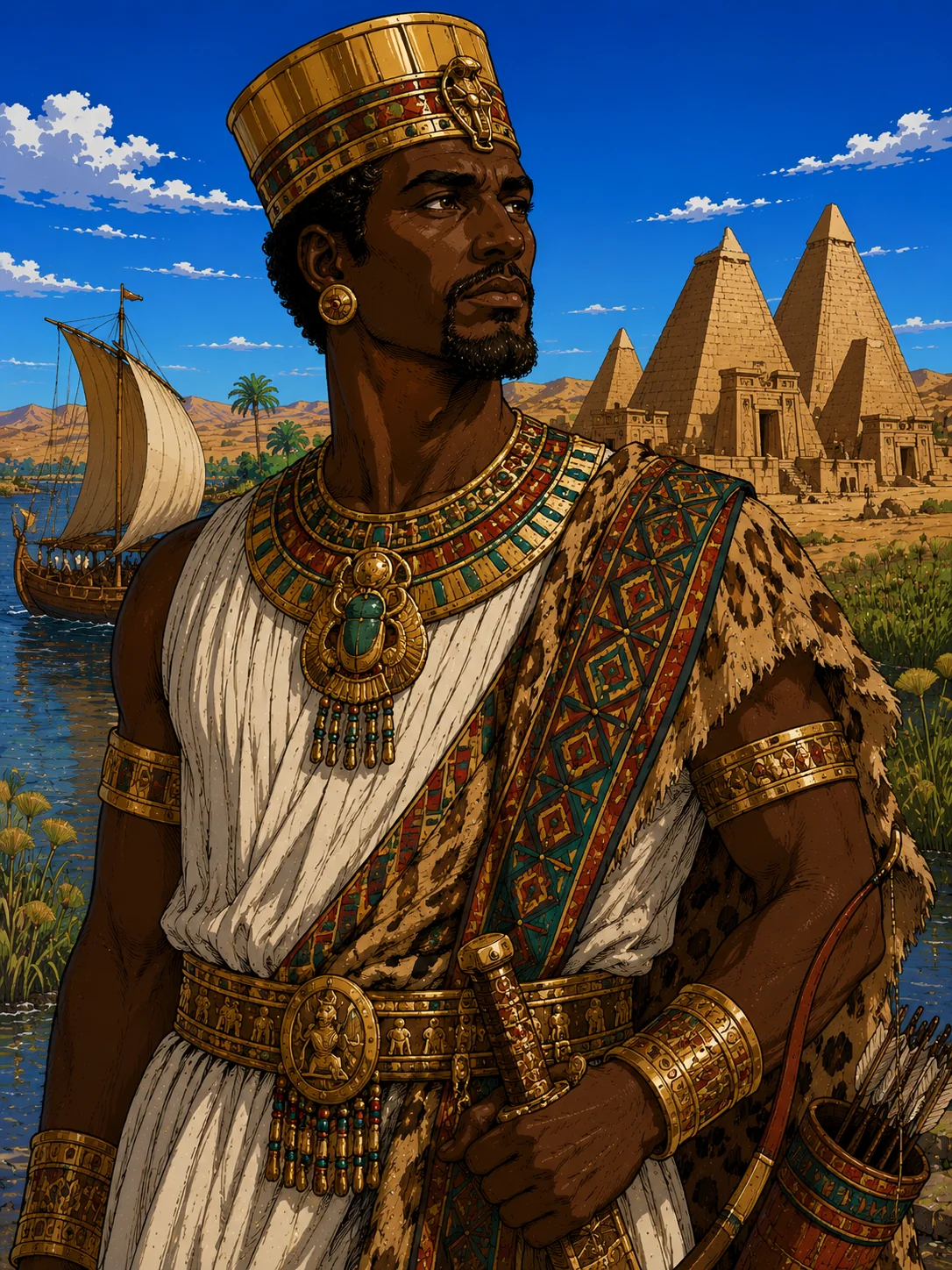
Cush (כּוּשׁ) is the firstborn of Cham and the most extensively referenced Ham-line nation in the Hebrew Bible. His descendants settled the upper Nile valley — the region the ancient Egyptians called Kush and the Greeks called Ethiopia (not identical to modern Ethiopia, though there is geographic overlap). Cush is the standard Hebrew word for this territory, appearing in the books of Isaiah, Ezekiel, Daniel, and the Psalms as a marker of the southern extreme of the known world.
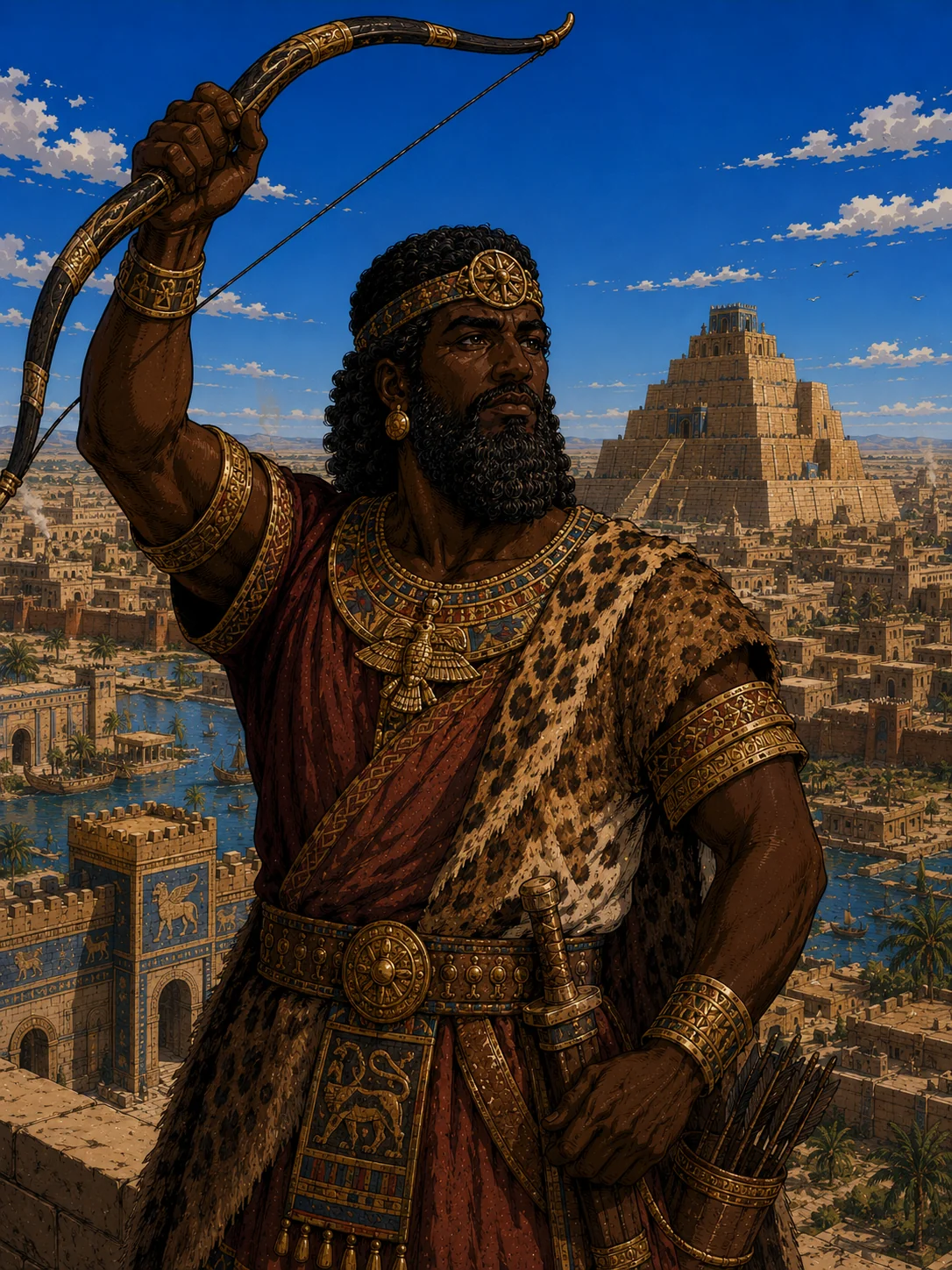
Cush fathers six sons — Seba, Havilah, Sabtah, Raamah, Sabteca, and the most famous of all: Nimrod. Through Nimrod, Cush's line produces the first great post-flood ruler, the builder of Babel and Nineveh. This means the twin imperial centers that would later threaten and ultimately destroy Israel — Babylon and Assyria — both trace directly to Cush through Nimrod.
The Cushite wife of Moses mentioned in Numbers 12:1 is from this line — her marriage to Moses provokes Miriam and Aaron's complaint, and God's sharp defense of Moses. The Ethiopian eunuch of Acts 8, encountered by Philip on the road from Jerusalem to Gaza, is from Cush's territory — the first Gentile convert recorded in Acts is from Ham's line, from Cush specifically. Isaiah 18 and Zephaniah 3:10 both envision Cushites bringing offerings to God from beyond the rivers of Cush in the messianic age.