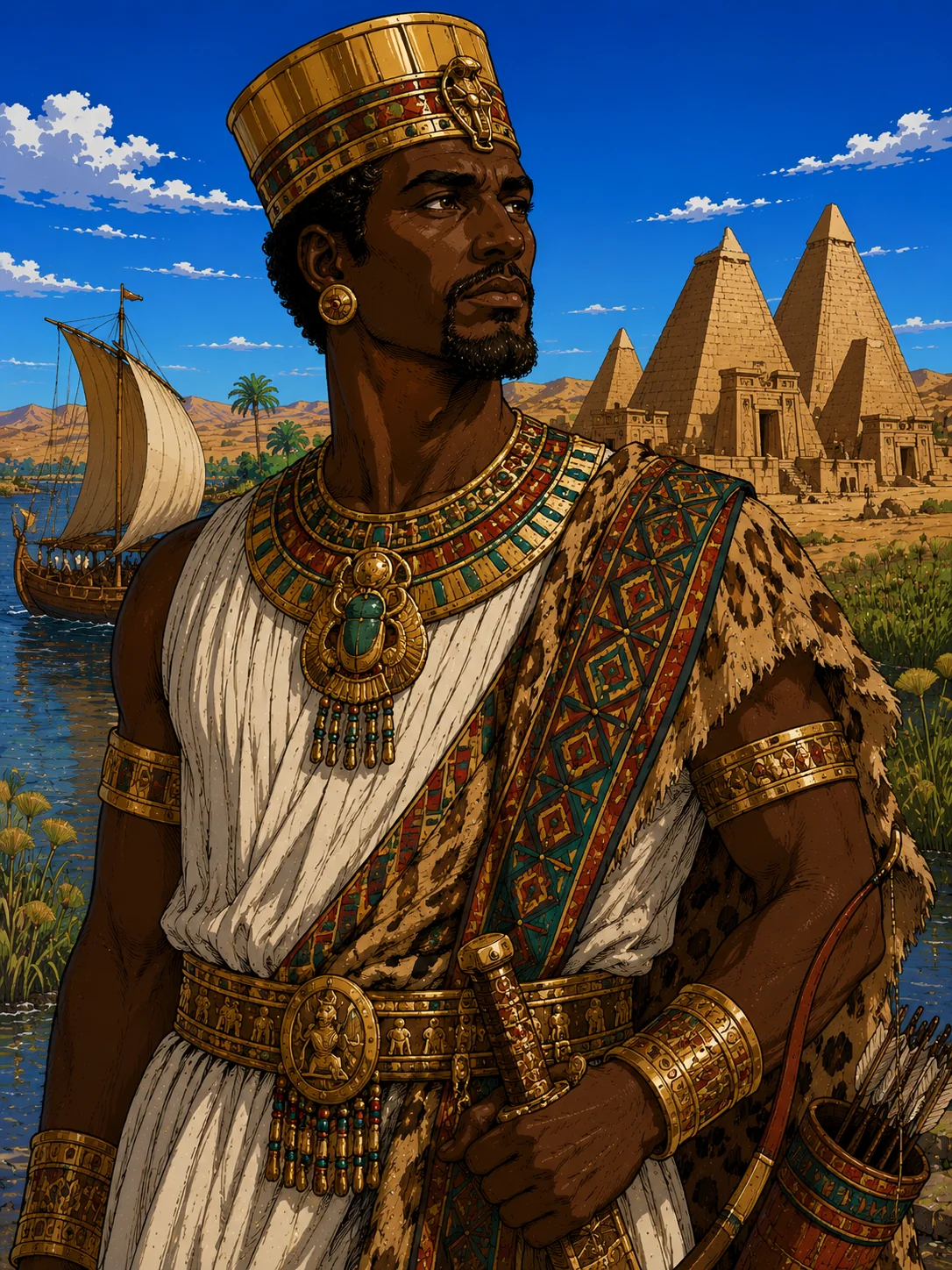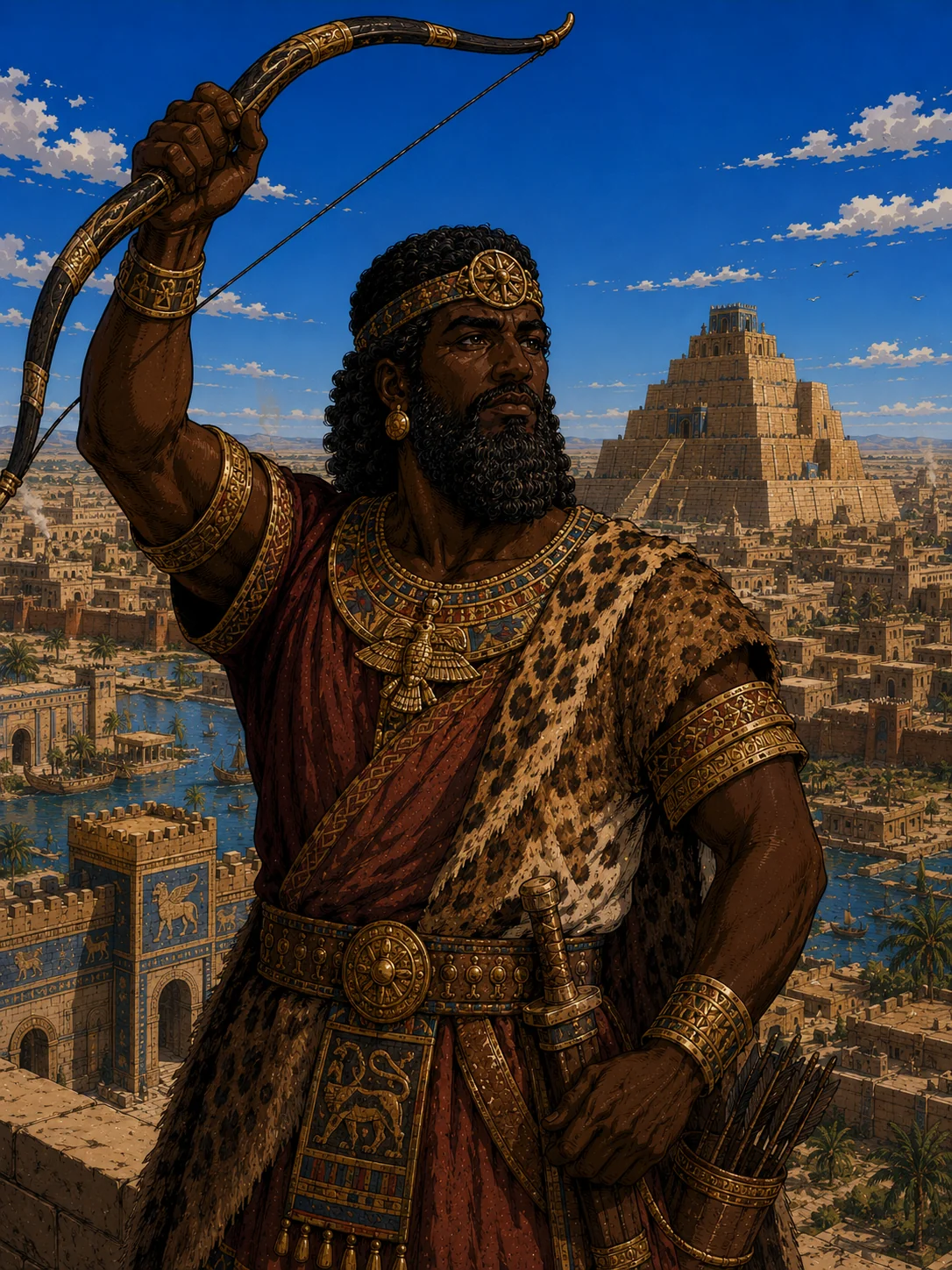
Nimrod (נִמְרֹד) is the most extensively described individual in the Table of Nations — the only person given a biography rather than just a genealogical slot. He is the son of Cush and grandson of Cham, and he becomes "a mighty hunter before the LORD" (gibor tzayid lifnei YHWH) — the first man in the post-flood world described as a gibbor, a mighty one. The phrase "before the LORD" is interpretively contested: it may mean "in defiance of" or simply "renowned before," but its ambiguity has fed centuries of commentary.
Nimrod's kingdom begins in the land of Shinar with four cities: Babel, Erech, Accad, and Calneh. He then extends north into Assyria, building Nineveh, Rehoboth-Ir, Calah, and Resen — "that is the great city." In one generation, Nimrod establishes both the Babylonian and Assyrian imperial cores: the two great powers that would respectively destroy the Northern and Southern Kingdoms of Israel fifteen centuries later. That both trace to Cush through Nimrod — a Ham-line descendant — is a detail the text does not editorialize on but which the prophets will return to repeatedly.
Jewish tradition connects Nimrod to the Tower of Babel — as the instigator of the project if not its architect. The Midrash portrays him as the quintessential king who placed himself between humanity and God, demanding worship and persecuting Avraham. The name Nimrod has become a byword in multiple languages for a tyrant or a hunter. Micah 5:6 refers to "the land of Nimrod" as a synonym for Assyria, confirming the ancient identification that his empire set the template for all subsequent Mesopotamian power.