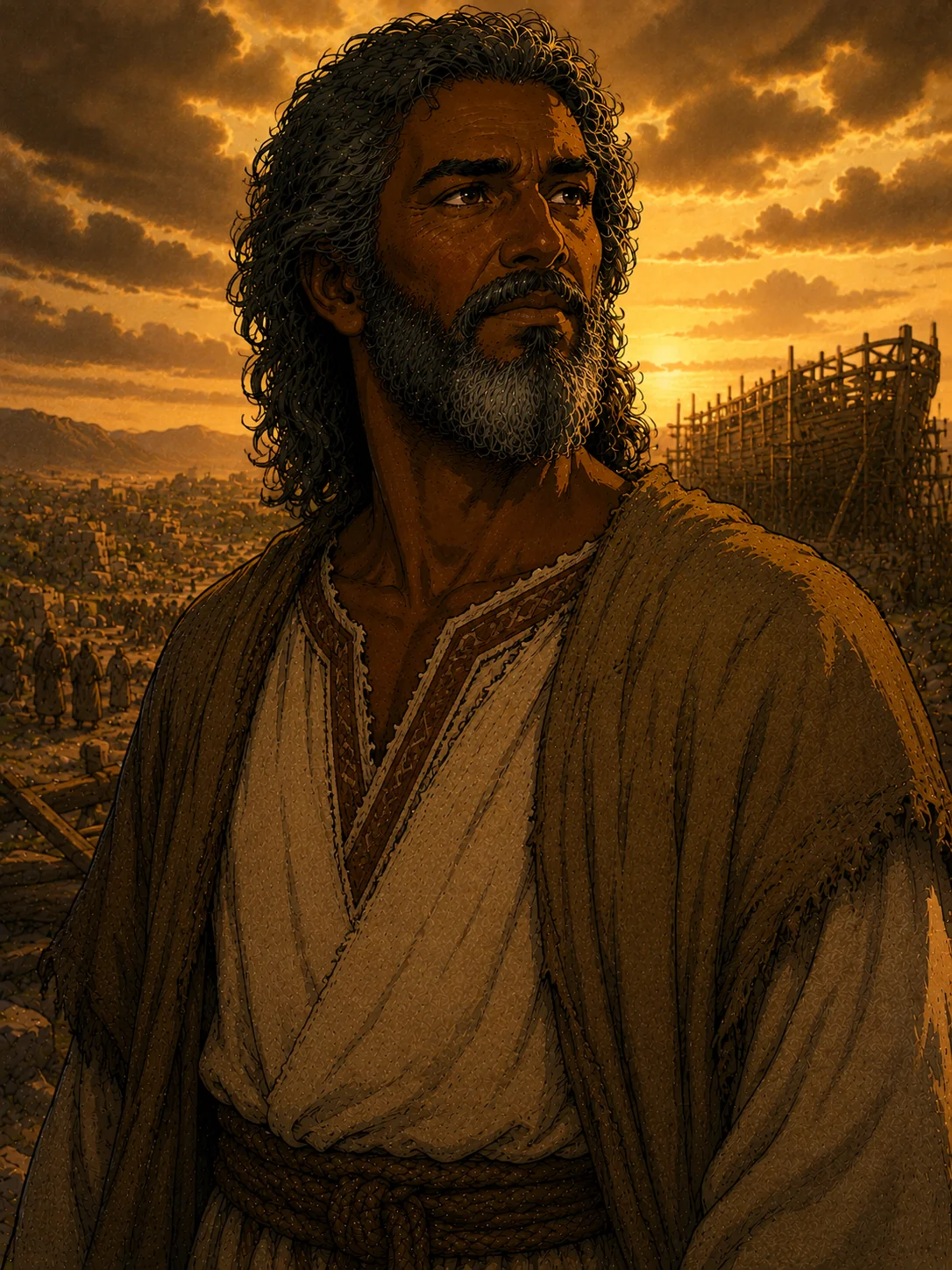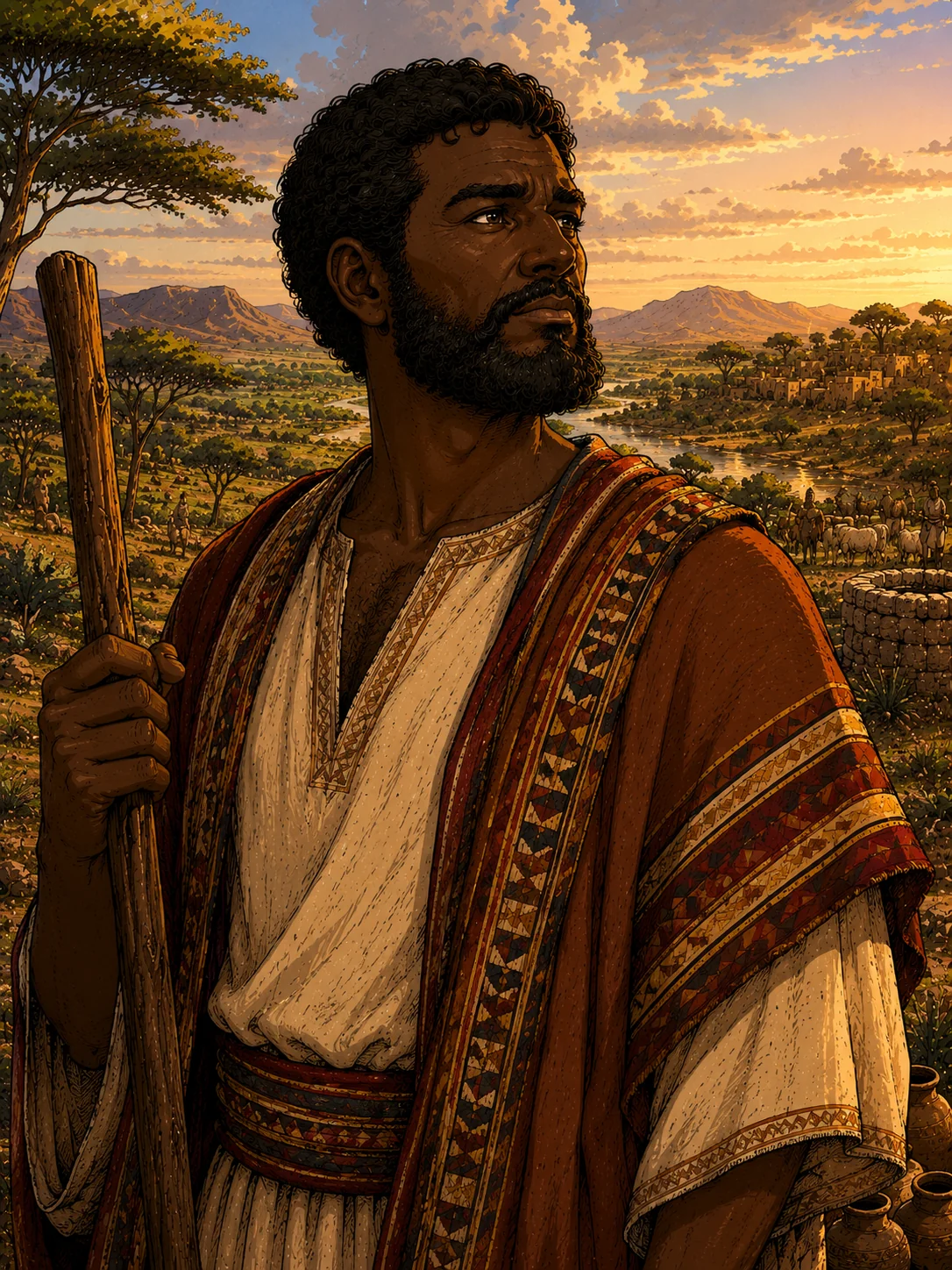
Cham (חָם) is the second son of Noach. He fathers four sons — Cush, Mizraim, Put, and Canaan — who together become the progenitors of some of the most historically significant nations in the biblical world: Ethiopia, Egypt, Libya, and the Canaanite peoples of the Promised Land. No other son of Noah generates a line with such concentrated geographical impact on the covenant story.
The incident that defines Cham's legacy in the text is his seeing of his father's nakedness while Noach lay drunk in his tent — and telling his two brothers outside rather than covering him. When Noach awakens and learns what Cham has done, he pronounces a curse: not on Cham himself, but on Canaan, Cham's son. This distinction is critical: the curse on Canaan does not apply to Cush, Mizraim, or Put. The centuries-long misreading of this text as a divine sanction for the enslavement of African peoples is a profound theological error.
Egypt (Mizraim) plays the central role as the land of Israel's bondage and the stage of the Exodus. Cush (Ethiopia) is one of the most frequently referenced nations in the prophetic literature. Canaan is the land God promises to give Abraham's descendants. And Nimrod — grandson of Cham through Cush — becomes the first great king of the post-flood world, builder of Babel and Nineveh. Cham's line is woven into virtually every major narrative thread of the Hebrew Bible.