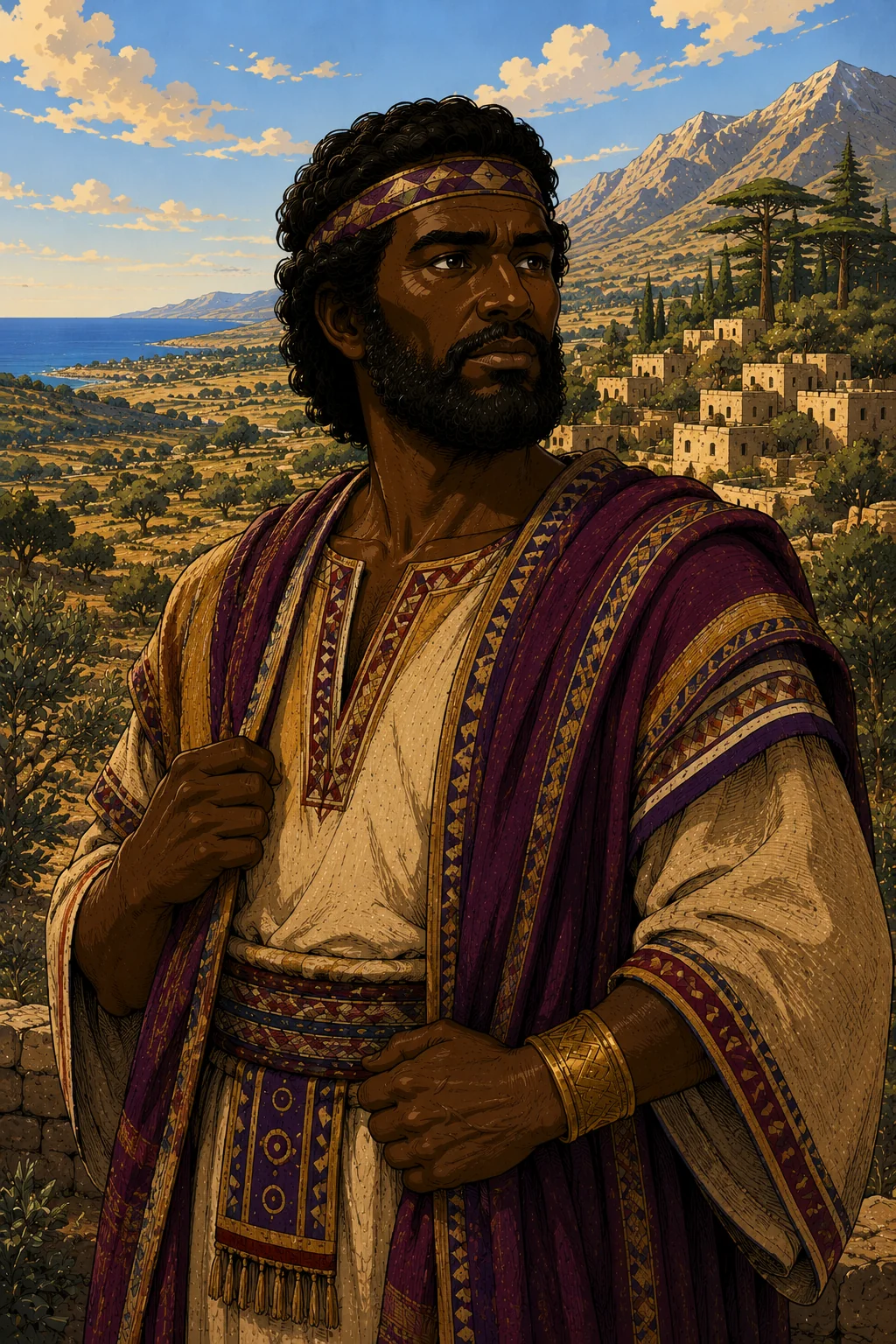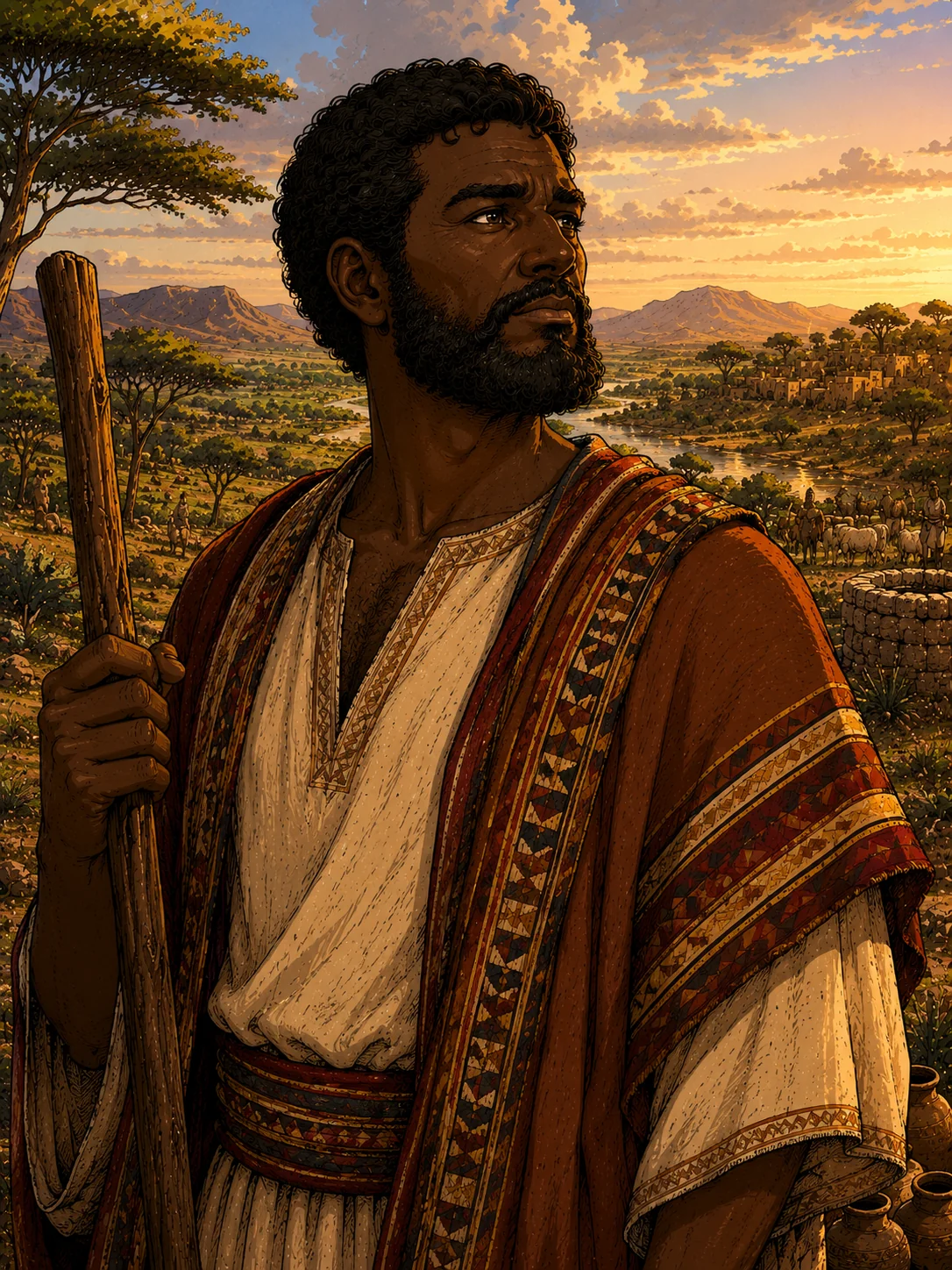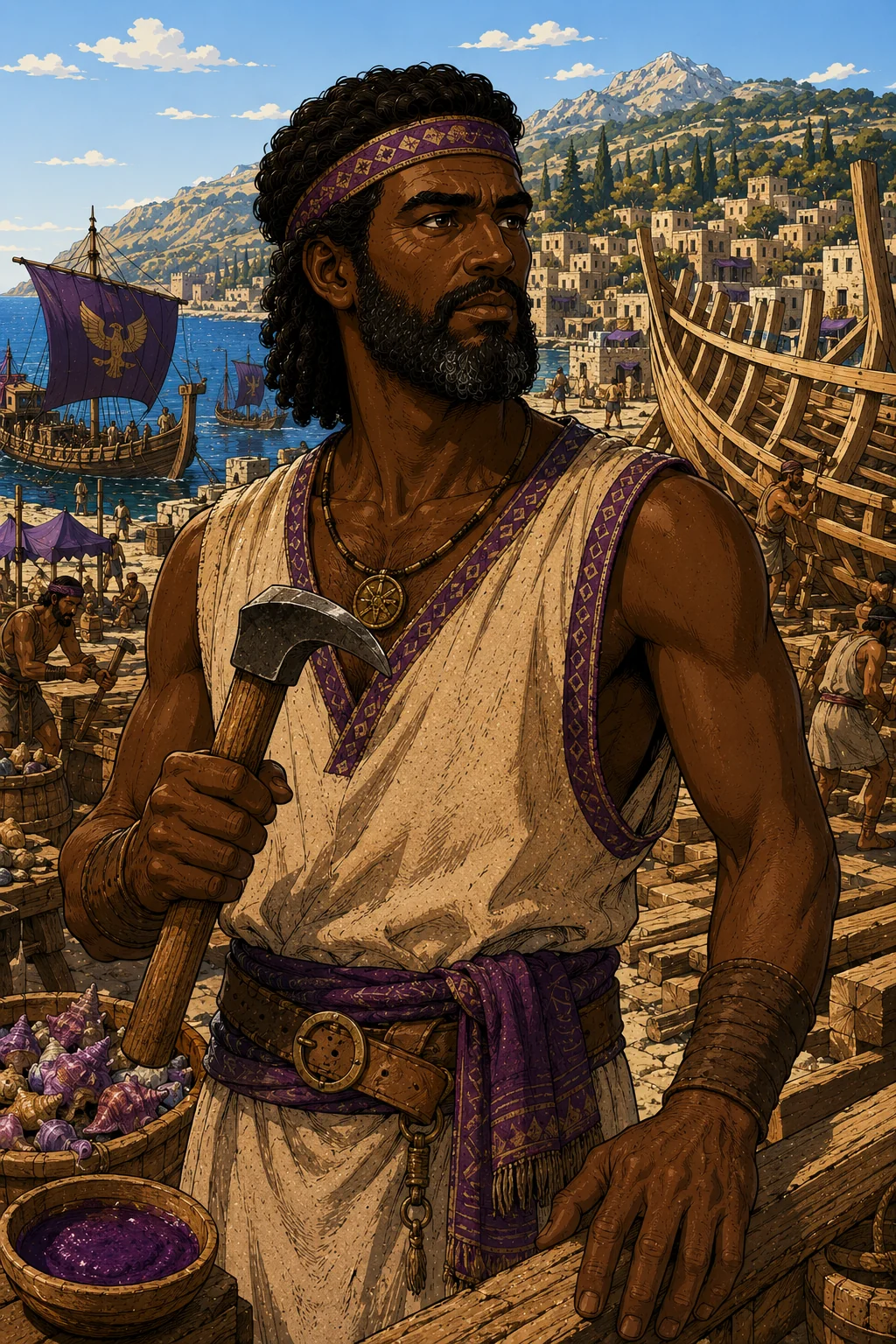
Sidon (צִידֹן) is the firstborn of Canaan and the eponymous ancestor of one of the most important cities of the ancient world. Sidon — the city — was the oldest and for much of the second millennium BCE the most powerful of the Phoenician coastal cities, preceding the rise of Tyre to prominence. It sat on a natural harbor on the Lebanese coast and became famous for its skilled craftsmen, its purple-dye industry, and its sailors who ranged across the entire Mediterranean.
The Bible's "Sidonians" are frequently synonymous with "Phoenicians" as a whole. Solomon brought Sidonian craftsmen and timber for the Temple construction, and Hiram of Tyre — Solomon's principal building partner — is described as having a mother from the tribe of Naphtali and a father of Tyre, but working in a tradition deeply connected to Sidon. Jezebel, the Phoenician queen who brought Baal worship to the Northern Kingdom of Israel, was the daughter of Ethbaal "king of the Sidonians" (1 Kings 16:31).
In the prophetic literature Sidon appears alongside Tyre as a symbol of maritime pride and commercial power destined for judgment. Ezekiel 28:20–23 delivers a specific oracle against Sidon — "I am against you, Sidon, and I will be glorified in your midst" — promising plague and sword as the instruments of God's judgment on the city's persistent opposition to Israel. Isaiah 23 mourns Tyre and Sidon together as the great commercial civilization of the coast. Yet Joel 3:4 and Zechariah 9:2 confirm that even these cities are within the scope of God's ultimate reckoning with the nations.