Son of Nachor, father of Avram (Avraham), Nachor, and Haran (Genesis 11:26–27)
Took Avram, his grandson Lot (son of Haran), and his daughter-in-law Sarai, and set out from Ur Kasdim toward the land of Canaan — but they came to Charan and settled there (Genesis 11:31)
Died in Charan at 205 years old (Genesis 11:32)
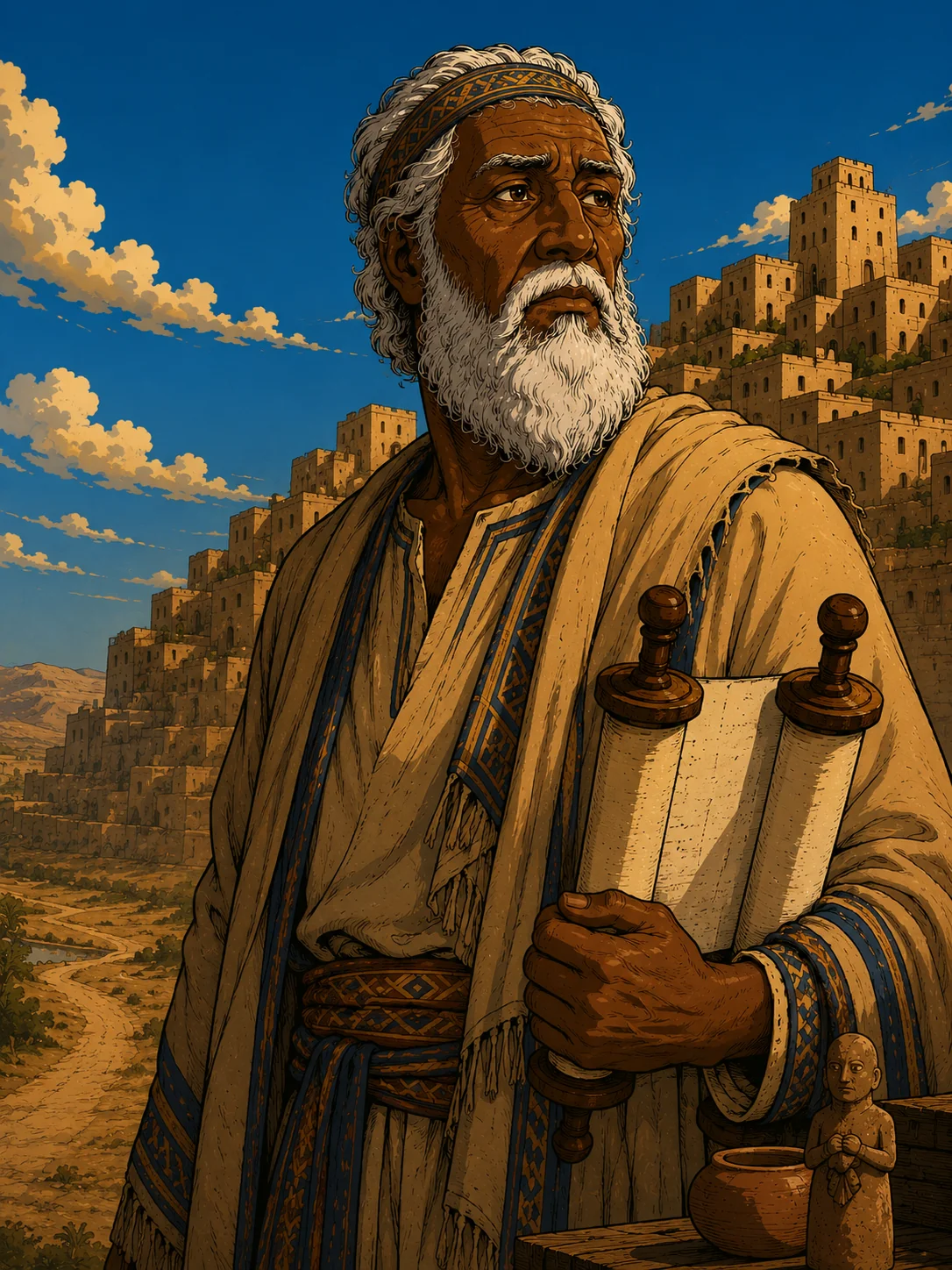
Joshua 24:2 — in Yehoshua's covenant-renewal address at Shechem, Yah states through Yehoshua that 'your fathers dwelt of old time beyond the River, even Terach, the father of Avraham and the father of Nachor: and they served other gods' — the only direct scriptural statement characterizing Terach's religious life
“Father of Avraham; led the family from Ur toward Canaan but settled in Charan”
Traditional note: Terach's other two sons, Nachor (Avraham's brother, ancestor of Rivkah through Betuel — Genesis 22:20–23) and Haran (father of Lot, Milcah, and Yiscah — Genesis 11:27–29), are out of scope for this dataset per its stated boundaries (the Aramean/Lavan side of the family beyond Lavan and Betuel as already-dangling references, and Lot's line). They are noted here for completeness but do not have their own entries. The well-known story of young Avraham smashing his father's idols is NOT in the Hebrew Bible — it originates in later Midrash (e.g., Genesis Rabbah 38) and the Book of Jubilees, and is 'Tradition' for this dataset; it is distinct from, though clearly related in spirit to, the canonical statement in Joshua 24:2 that the fathers 'served other gods.'