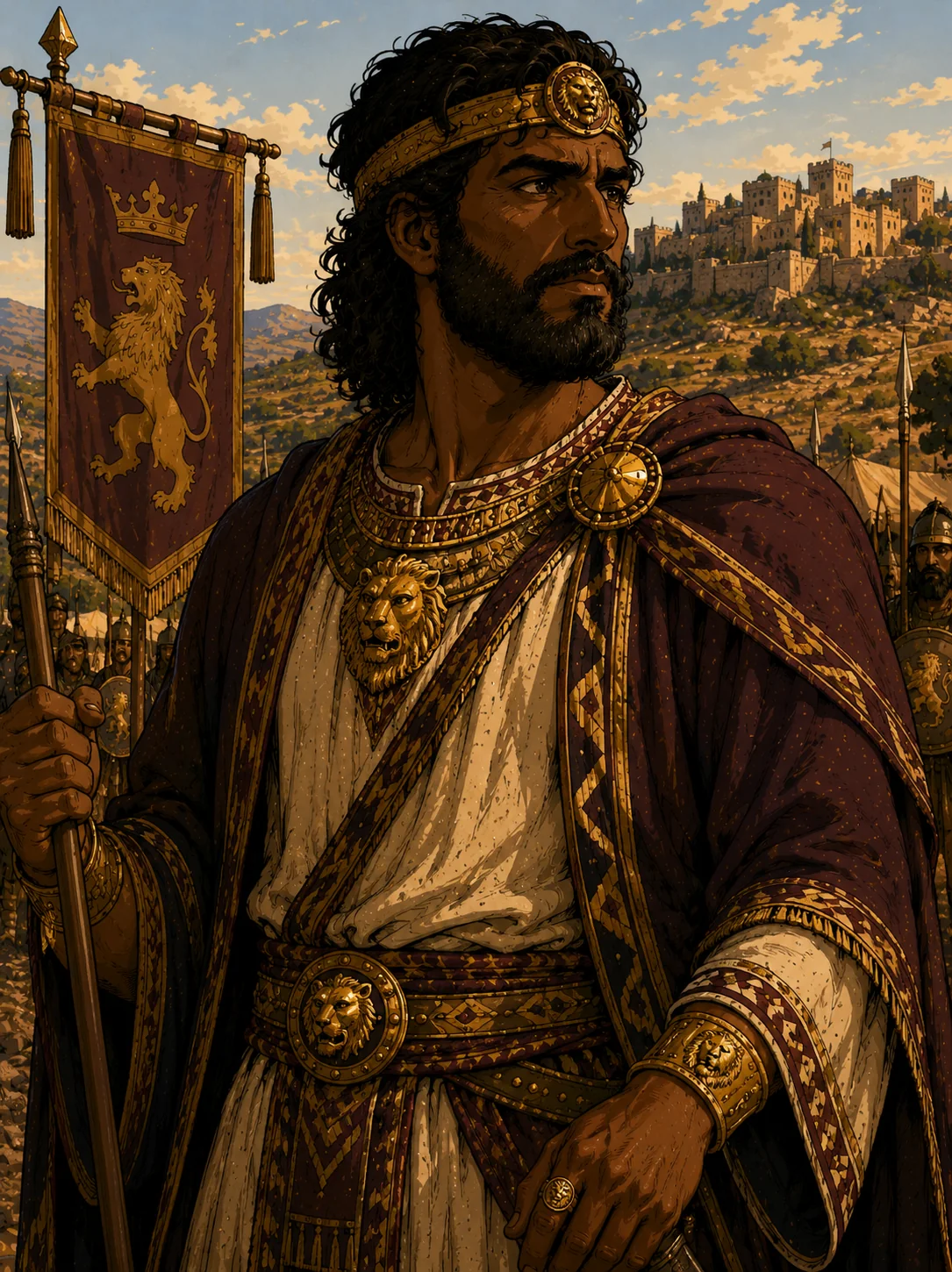
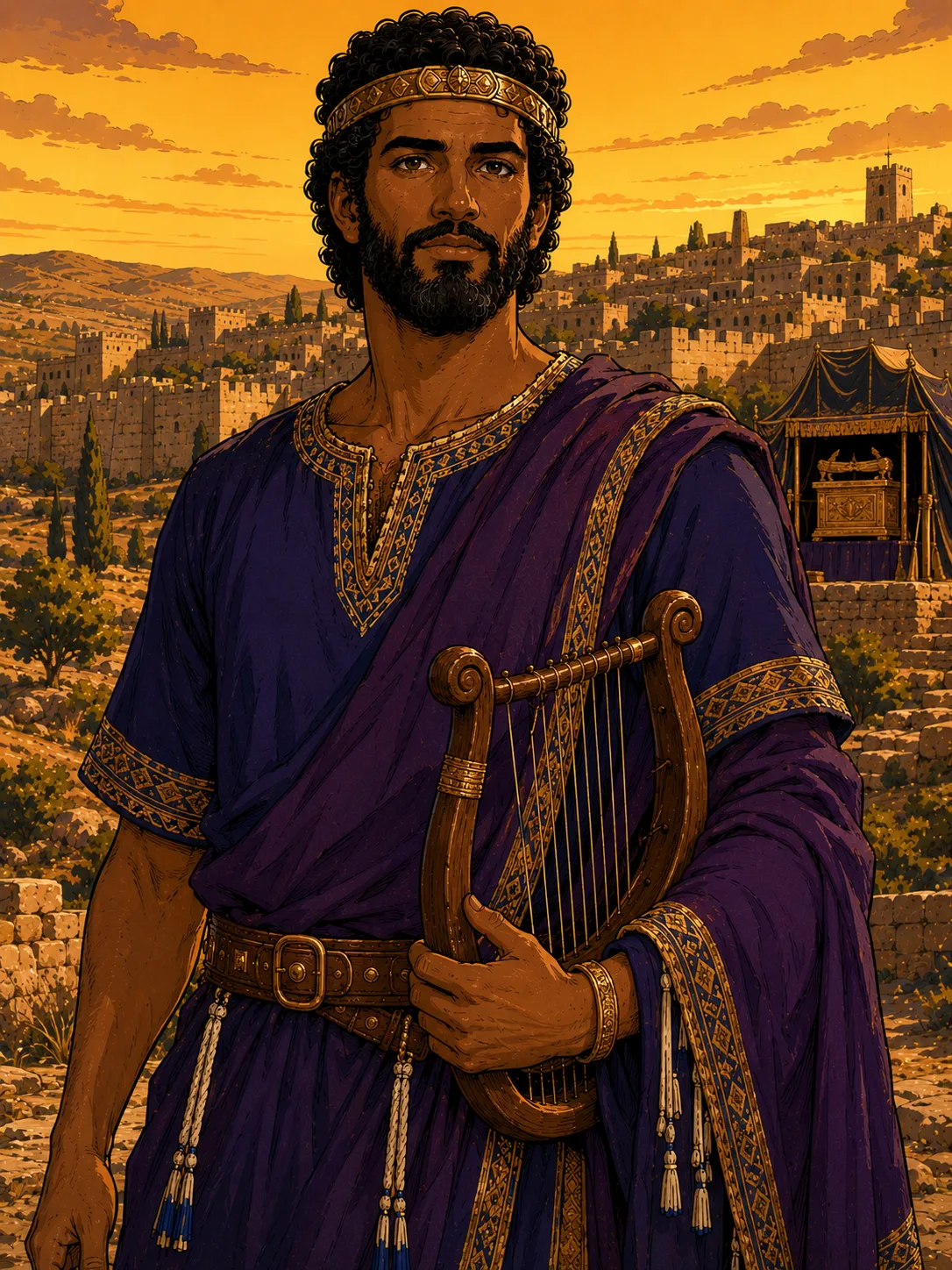
Led the first return from Babylon under Cyrus's decree, alongside Yeshua the high priest, at the head of a list of returnees numbering in the tens of thousands (Ezra 2)
Ezra 3:2 — he and Yeshua the high priest built the altar of the God of Israel upon it, to offer burnt offerings, 'as it is written in the Torah of Moshe the man of God'
Ezra 3:8–13 — in the second year after the return, laid the foundation of the Second Temple; the people responded with a mixture of shouts of joy and weeping, 'for many wept with a loud voice' remembering the splendor of the first Temple, so that the two sounds could not be distinguished from each other
Work was halted by the opposition of the surrounding peoples (Ezra 4:1–5, 24) and resumed roughly fifteen years later under the prophetic urging of Chaggai and Zechariah in the second year of Darius (Ezra 5:1–2, Haggai 1)
Haggai 2:20–23 — a direct prophetic oracle to Zerubavel: 'I will take thee, O Zerubavel... and will make thee as a signet: for I have chosen thee' — language that deliberately echoes, and reverses, the oracle against his grandfather Yechonyahu in Jeremiah 22:24 ('though Coniah... were the signet upon my right hand, yet would I pluck thee thence')
Zechariah 4 — in a vision of a golden lampstand fed by two olive trees, Zerubavel is told 'not by might, nor by power, but by my Spirit, saith Yah of hosts'; the prophecy continues, 'the hands of Zerubavel have laid the foundation of this house, and his hands shall also finish it'
Zechariah 6:9–13 records a symbolic crowning connected to 'the Branch' (tzemach) who 'shall build the Temple of Yah' — the text names Yeshua the high priest as the one crowned in the vision, and this dataset does not assert that 'the Branch' here refers to Zerubavel himself, though some traditions have read the two figures together as a type of the priestly-and-royal Messianic offices
The Second Temple was completed in the sixth year of Darius (Ezra 6:15), continuing the work Zerubavel had begun
Named in Matthew 1:12–13 ('She'altiel begat Zerubavel; and Zerubavel begat Aviud') and Luke 3:27 as the post-exilic hinge figure in both genealogies — the last name the two genealogies share before diverging sharply (see note)
The non-canonical Sirach 49:11 (Ben Sira Ecclesiasticus, 'Tradition') praises him: 'How shall we magnify Zerubbabel? even he was as a signet on the right hand' — directly echoing Haggai 2:23
“Yah took the very word 'signet,' spoken as a curse over his grandfather (Jeremiah 22:24), and gave it back to him as a promise: 'I will make thee as a signet — for I have chosen thee' (Haggai 2:23)”
Traditional note: This entry addresses the Matthew/Luke divergence flagged in 'shealtiel'. From Zerubavel onward, Matthew 1:13–16 and Luke 3:23–27 give almost entirely different sequences of names for the generations down to Yosef. Matthew's list — Aviud, Elyakim, Azor, Tzadok, Achim, Eliud, Elazar, Mattan, then Yaakov, then Yosef — has nine generations from Zerubavel to Yosef. Luke's list for the same span (Rhesa, Yoanan, Yoda, Yosech, Shimi, Mattityahu, Maat, Naggai, Chesli, Nachum, Amos, Mattityahu, Yannai, Melki, Levi, Matat, Eli, then Yosef) has roughly eighteen generations and shares no names at all with Matthew's eight 'silent generation' names. 1 Chronicles 3:19–24 gives yet a third list for Zerubavel's own immediate descendants (Meshullam, Chananyah, Hashuvah, Ohel, Berechyah, Hasadyah, Yushav-Chesed, and several further generations) that matches neither — though Chronicles' line may simply not be the one that led to Yosef of Nazareth. This dataset does not attempt to reconcile these three lists. Per this batch's brief it follows Matthew 1:13–16 as the spine from Zerubavel to Yosef (entries 'aviud' through 'yosef-mi-natzeret'), treating Luke's and Chronicles' names as unmodeled alternative traditions. The standard proposals for why Matthew's and Luke's lists diverge so sharply here — that Luke traces a different biological line through David's son Natan rather than Shlomo, converging with Matthew's royal line only at She'altiel/Zerubavel (itself a disputed point of paternity, see 'shealtiel'); or that Luke records Miryam's ancestry with Yosef inserted as son-in-law — are addressed at 'yosef-mi-natzeret', the next point where both genealogies again name the same person despite disagreeing on his immediate father (Matthew: Yaakov; Luke: Eli/Heli).