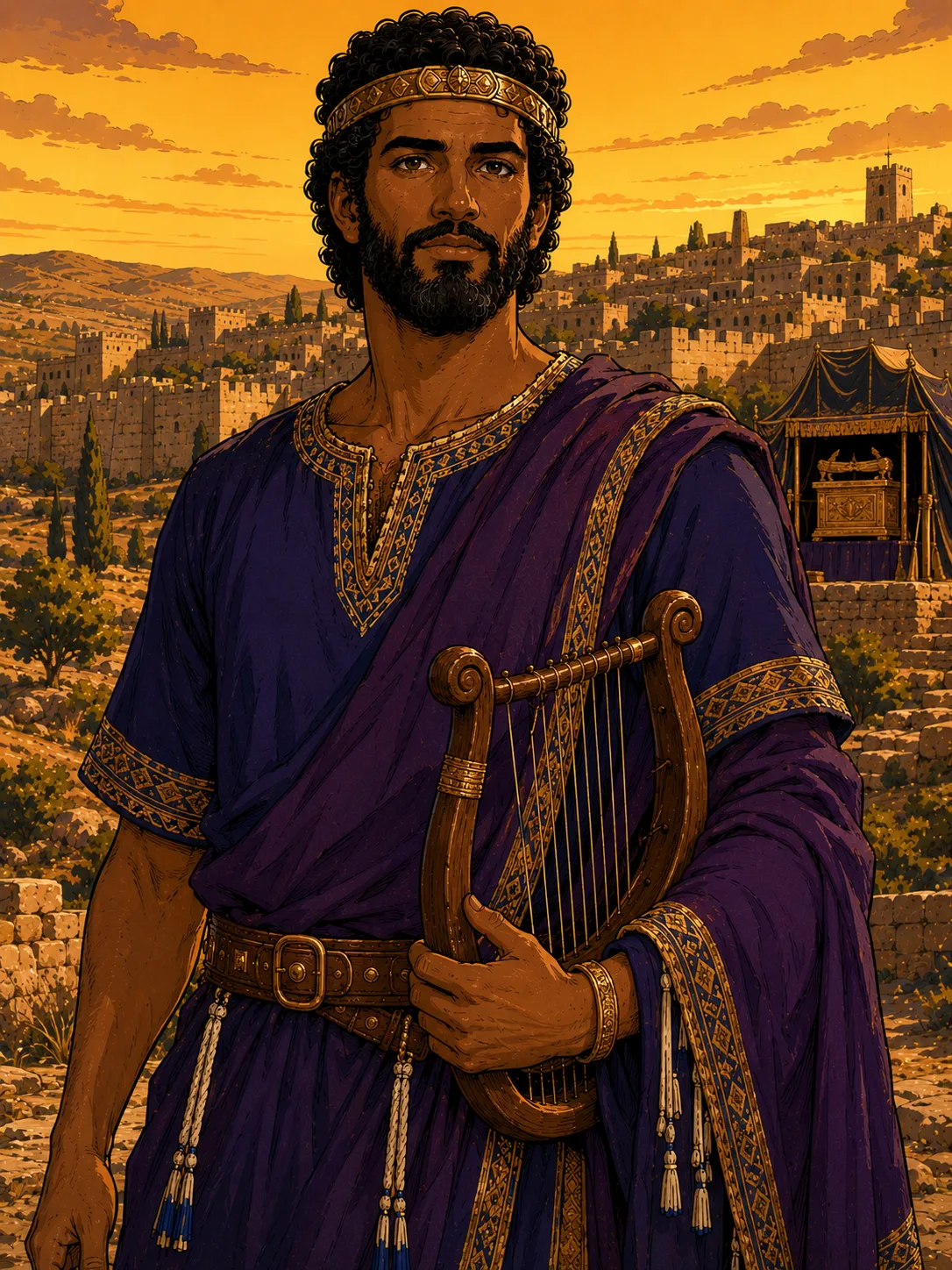
Son of Yotam; reigned 16 years in Yerushalayim
2 Kings 16:2–4 2 Chronicles 28:1–4 — unlike his father and grandfather, Achaz 'did not do what was right in the eyes of Yah... he even made his son pass through the fire,' practicing child sacrifice and worshiping at high places, hills, and under every green tree
When Aram (under Retzin) and Israel (under Pekach) besieged Yerushalayim, the prophet Yeshayahu met Achaz and urged him to trust Yah rather than fear; Yah offered Achaz a sign, which he refused on a pretext of piety — Yeshayahu then gave the sign anyway: 'the almah shall conceive and bear a son, and shall call his name Immanu-El' (Isaiah 7:1–14), a passage central to later Messianic interpretation
Instead of trusting Yah, Achaz appealed to Tiglat-Pileser III of Assyria for help, stripping the Temple and palace treasuries to pay tribute — making Yehudah an Assyrian vassal (2 Kings 16:7–8, 2 Chronicles 28:20–21)
Saw an altar in Damascus, had a copy built in the Temple courtyard, and used it in place of the bronze altar of Shlomo, also rearranging Temple furnishings 'because of the king of Assyria' (2 Kings 16:10–18)
2 Chronicles 28:27 — at his death he was buried in Yerushalayim 'but they did not bring him into the tombs of the kings of Israel'
Named in Matthew 1:9 (as 'Ahaz')
“He refused a sign from Yah and turned to Assyria — yet to him was spoken 'the almah shall conceive... Immanu-El'”
Traditional note: Achaz's mother is not named in 2 Kings or 2 Chronicles — one of the few kings of this era whose mother's name scripture omits; per the schema's convention for unnamed mothers, 'mother' is left null here as a genuine textual gap, not an editorial omission. Isaiah 7:14's 'almah' (rendered 'virgin' in the Septuagint and applied in Matthew 1:23 to Miryam and Yeshua) versus the more general Hebrew sense of 'young woman' is one of the most discussed translation questions in the Hebrew Bible / New Testament relationship; this dataset notes the connection here — as the prophecy is delivered directly to Achaz, this entry's subject — without resolving the translation debate, which belongs more properly to the future 'yeshua' and 'miryam' entries.