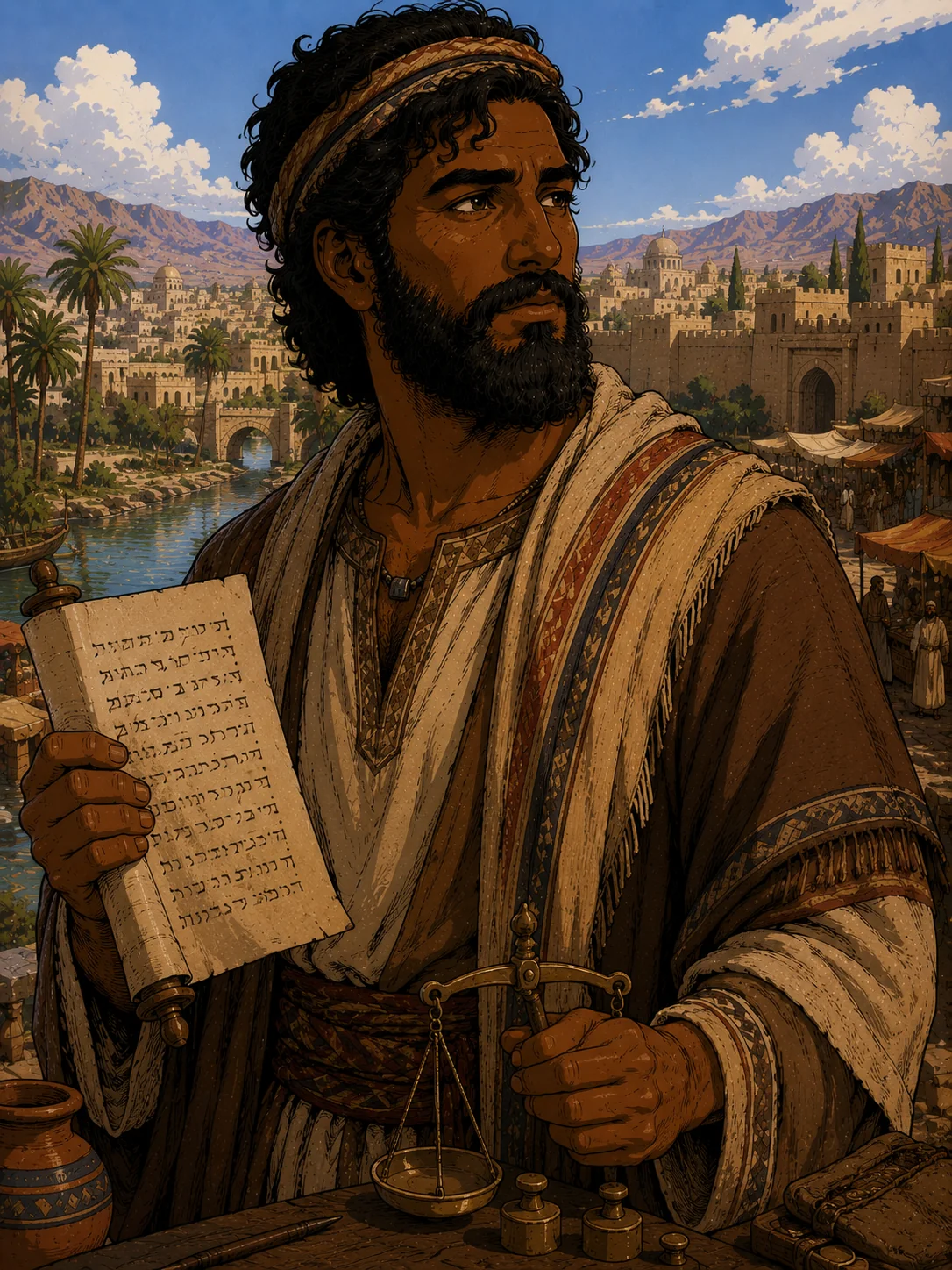
Aram (אֲרָם) is the fifth son of Shem, and his descendants gave the world Aramaic — one of the most historically significant languages in human history. Aramaic became the administrative language of the Assyrian, Babylonian, and Persian empires; it was the diplomatic tongue of the entire ancient Near East by the 8th century BCE; and by the first century CE it was the everyday spoken language of the land of Israel. Yeshua spoke Aramaic. Portions of Daniel and Ezra are written in Aramaic. The Talmud is written in Aramaic. Aram's linguistic legacy outlasted every empire that adopted it.
Paddan-aram — the region around Haran in northern Syria — is the homeland of the patriarchs. Avraham came from Ur but settled in Haran; his family remained there. When Yitzchak needed a wife, Avraham's servant went to Paddan-aram, to the family of Bethuel the Aramean, and returned with Rivkah (Genesis 24). Yaakov fled to Paddan-aram and spent twenty years there with Lavan the Aramean — marrying Leah and Rachel, fathering eleven sons, and building his household before returning to Canaan. The patriarchal period is saturated with Aramean kinship.
The Deuteronomic confession — "A wandering Aramean was my father" (Deuteronomy 26:5, arami oved avi) — is one of the most discussed phrases in the Torah. The "Aramean" ancestor is likely Yaakov himself, given his years in Aram. This confession forms the core liturgy for first-fruit presentation and was adopted as the core Passover Haggadah text, making Aram's name embedded in the annual remembrance of the Exodus. Aram is both geography and genealogy, and his descendants shaped the world in which the entire Second Temple period unfolded.