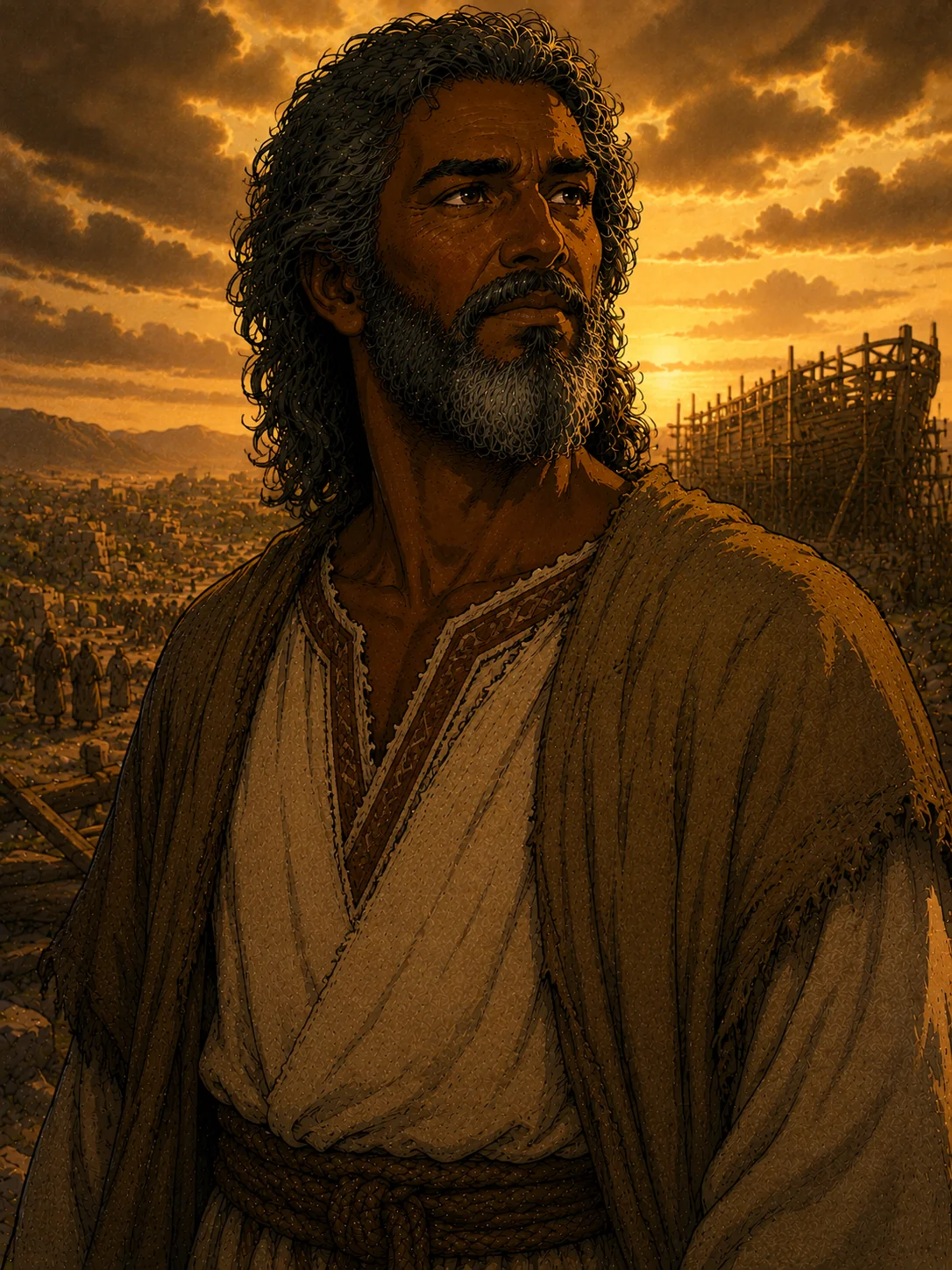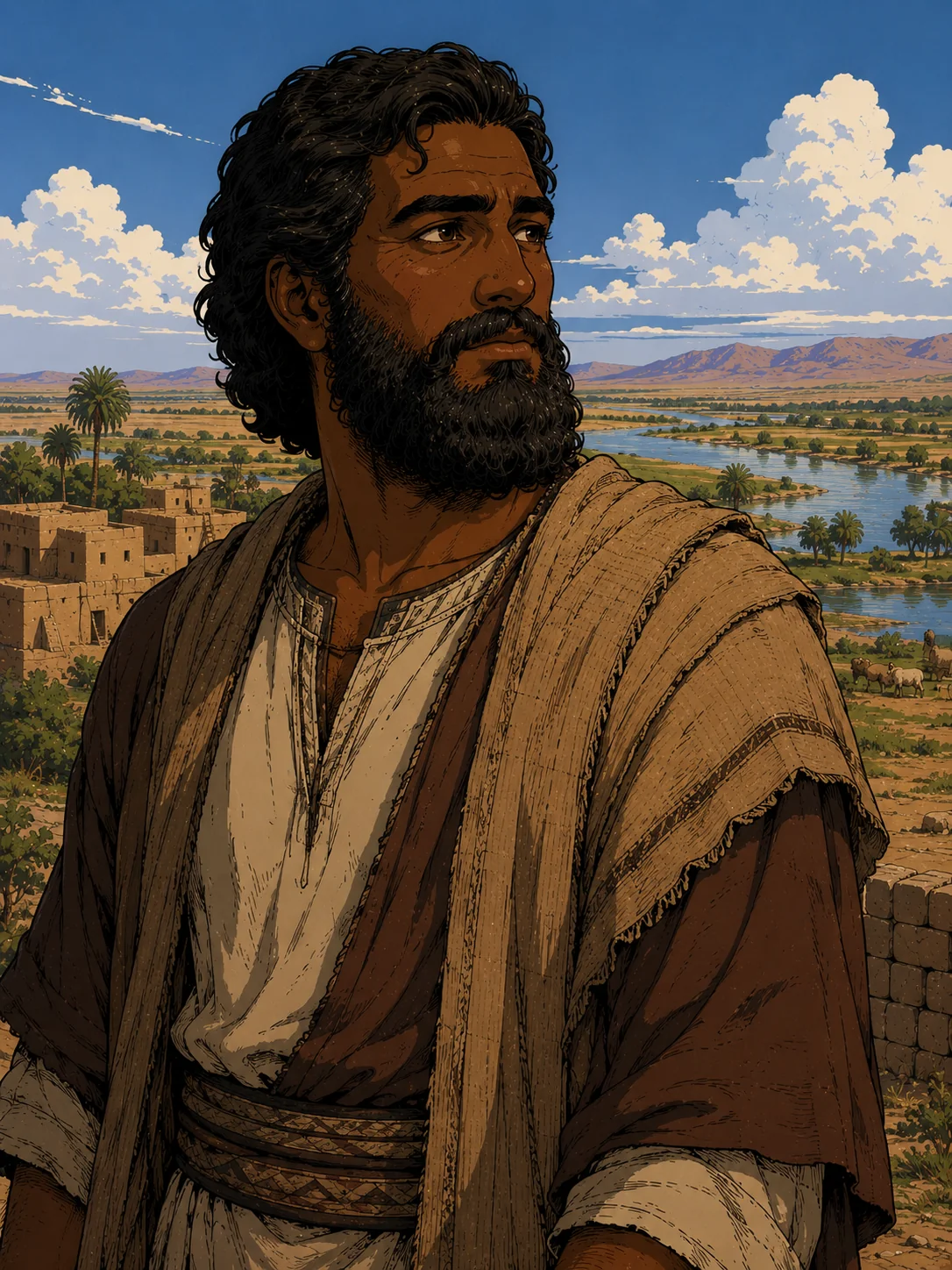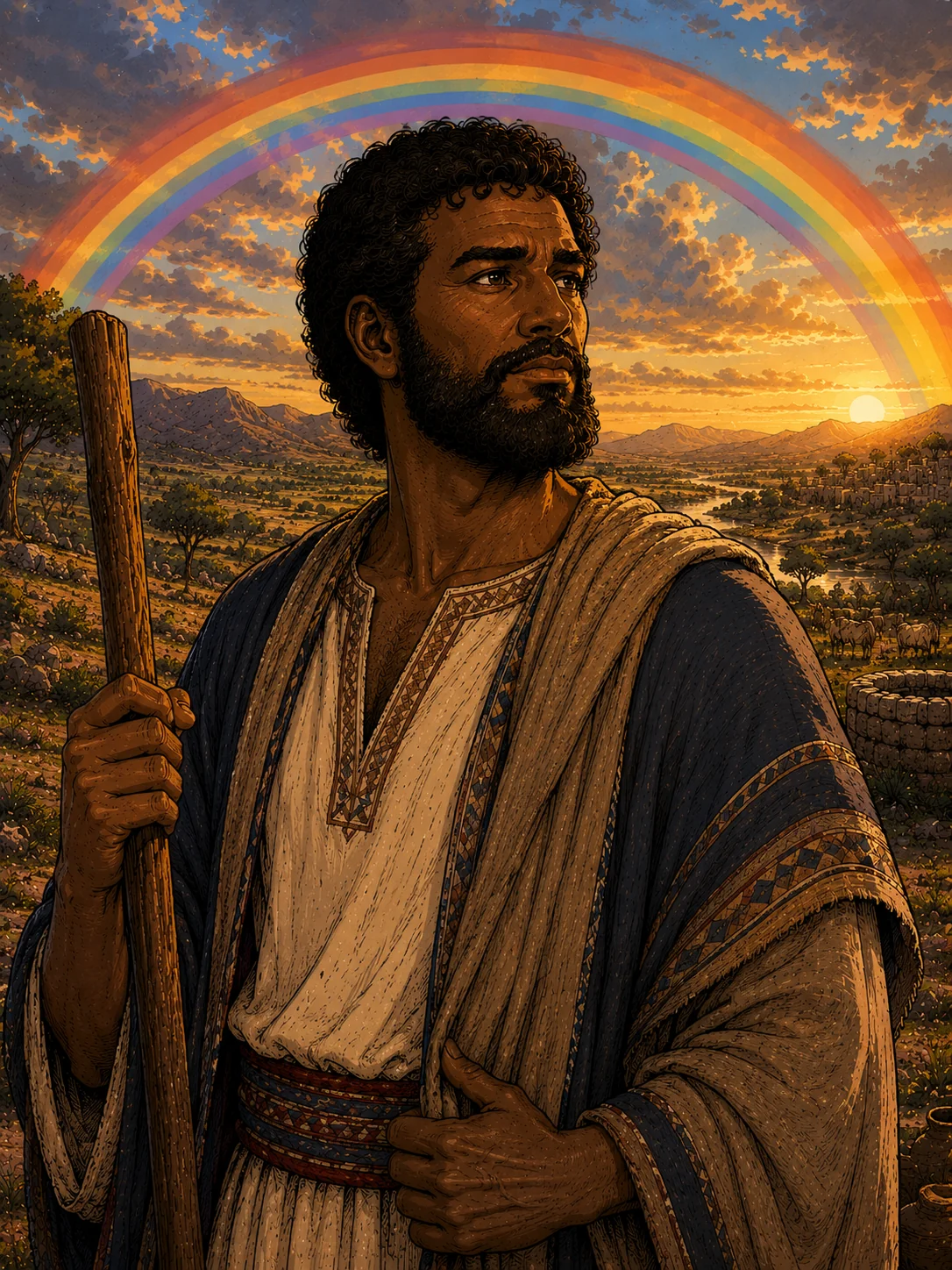
Shem (שֵׁם) is the eldest son of Noach and the progenitor of the Semitic peoples. When Cham sees their father's nakedness and does nothing, Shem and Yefet take a garment, walk backward, and cover him without looking. For this act Noach blesses Shem: "Blessed be the LORD, the God of Shem" — making him the son through whom the covenantal name of God will be carried forward. The very word "Semitic" derives from Shem's name.
Shem fathers five sons: Elam, Asshur, Arphaxad, Lud, and Aram — each becoming the ancestor of a major civilization. Elam becomes Persia, Asshur becomes Assyria, Aram gives rise to the Arameans whose language would become the lingua franca of the Near East. But the most theologically significant line runs through Arphaxad: Arphaxad → Shelach → Ever → Peleg → Re'u → Serug → Nachor → Terach → Avraham.
Shem is listed in the genealogy of Yeshua in Luke 3:36. Jewish tradition identifies Shem with Malkitzedek (Melchizedek), the priest-king of Shalem who blesses Abraham after the battle of the four kings (Genesis 14) — though this identification is midrashic and not stated in the text. Shem outlives Abraham, living 600 years total. He is the linchpin figure connecting the post-flood world to the patriarchal covenant.