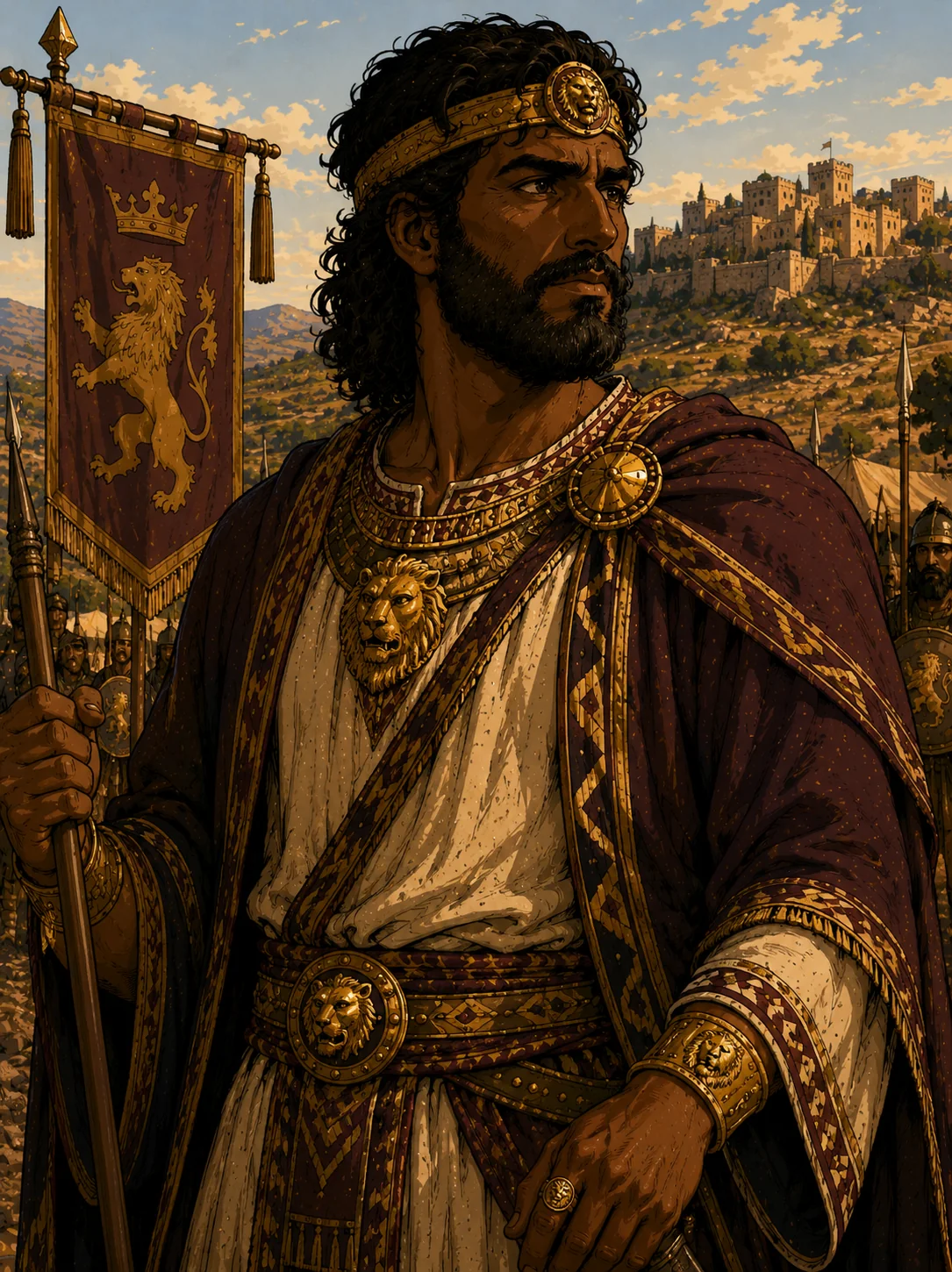
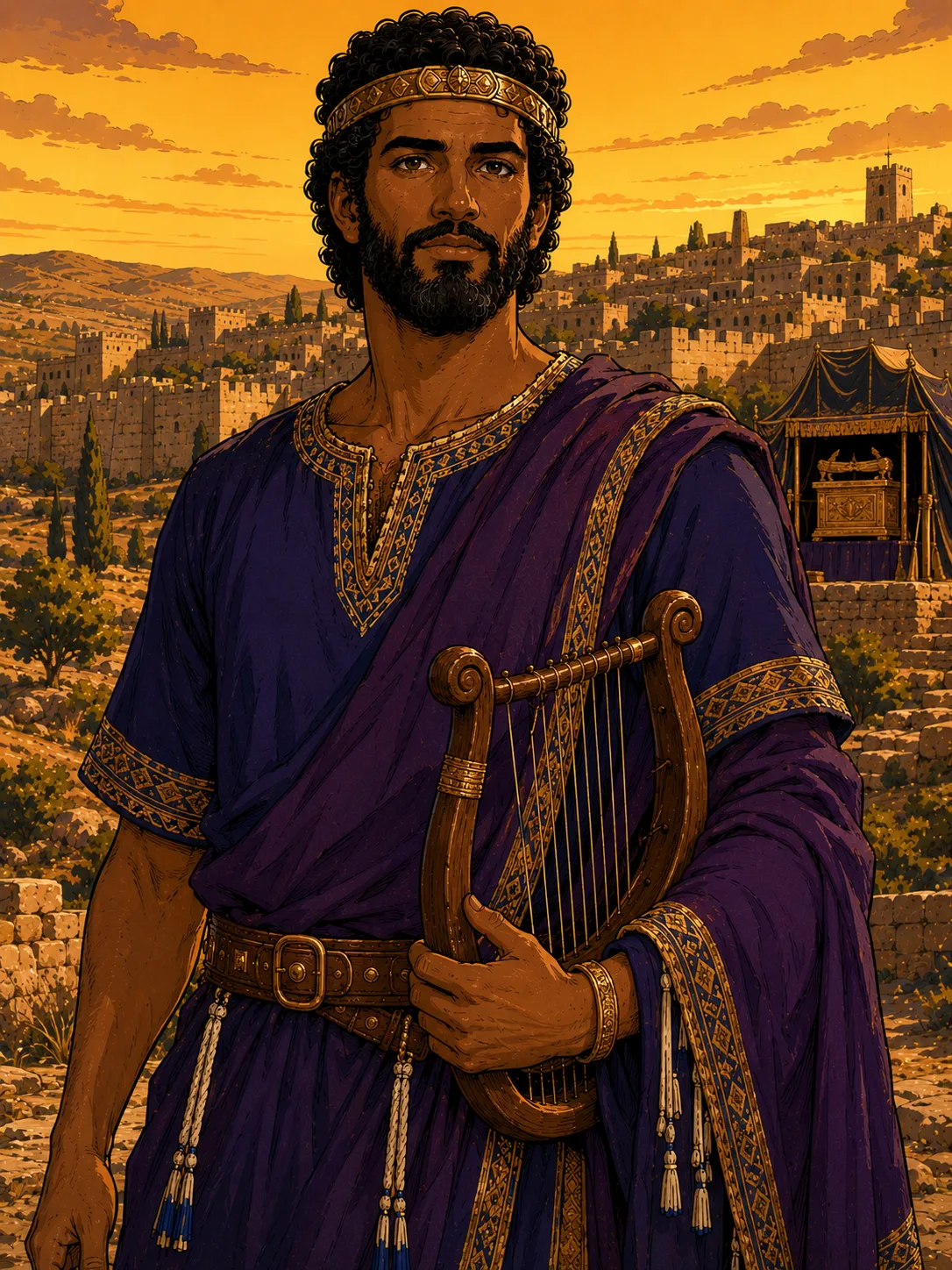
Son of Chizkiyahu; became king at age 12 and reigned 55 years — the longest reign of any king of Israel or Yehudah
2 Kings 21:2–9 — rebuilt the high places his father had destroyed, raised altars to Baal, made an Asherah as Achav had done, worshiped 'all the host of heaven' and built altars to them in the two courts of the Temple, made his son pass through the fire, and practiced soothsaying, divination, and necromancy
2 Kings 21:7 — set the carved image of Asherah in the very house of which Yah had told David and Shlomo it would bear his Name forever — the most direct desecration of the Temple recorded of any king
2 Kings 21:16 — 'Menashe shed very much innocent blood, till he had filled Yerushalayim from one end to another'; Jewish tradition (the apocryphal Ascension of Isaiah) holds that the prophet Yeshayahu was among the victims, sawn in two on Menashe's order — many identify this tradition as the background to Hebrews 11:37, 'they were sawn asunder'
2 Chronicles 33:11–13 — uniquely in Chronicles, absent from Kings: Assyrian commanders took Menashe captive 'with hooks, bound him with bronze fetters, and carried him to Babylon'; in his distress he 'entreated the favor of Yah his God and humbled himself greatly,' and Yah brought him back to Yerushalayim and his kingdom
2 Chronicles 33:15–16 — after his return, Menashe removed the foreign gods and the idol from the Temple, restored the altar of Yah, and commanded Yehudah to serve Yah — though 2 Kings records none of this, and 2 Kings 21:11–15 23:26–27 24:3–4 still hold Menashe's sins responsible for the judgment to come on Yehudah
2 Chronicles 33:18–19 references a prayer of Menashe's repentance recorded in lost royal annals — the surviving apocryphal 'Prayer of Manasseh' is a later composition that claims to be (or expand on) this prayer
Named in Matthew 1:10 (as 'Manasses')
“The longest reign of any king — and by 2 Kings' account, the worst; yet 2 Chronicles alone records that even Menashe humbled himself and was restored”
Traditional note: Disambiguated as 'menashe-melech-yehudah' to distinguish this Davidic king from Menashe son of Yosef, the patriarch of the tribe of Menashe (a separate entry in this dataset) — both bear the same name and meaning ('causing to forget,' Genesis 41:51), a coincidence scripture itself never remarks on. 2 Kings 21:1 names his mother — Chizkiyahu's wife — as 'Hephzibah' (see 'chizkiyahu'); she is not modeled as a separate entry (see the general note on queen mothers in 'rechavam' and 'maakah-bat-avshalom'). The 2 Kings / 2 Chronicles divergence on Menashe's repentance is one of the starkest source-tensions in this dataset: 2 Kings, whose theology holds Menashe's sins alone responsible for dooming Yehudah to exile regardless of any later kings' righteousness, records only evil; 2 Chronicles, with its theology of individual repentance and restoration, records both the evil and a genuine return to Yah. This dataset presents both without resolving the tension, per the standing instruction to flag rather than smooth over scriptural divergences. The 'Prayer of Manasseh' is flagged as 'Tradition' — it is not part of the Hebrew Bible or the Protestant canon, though some editions include it among the Apocrypha.