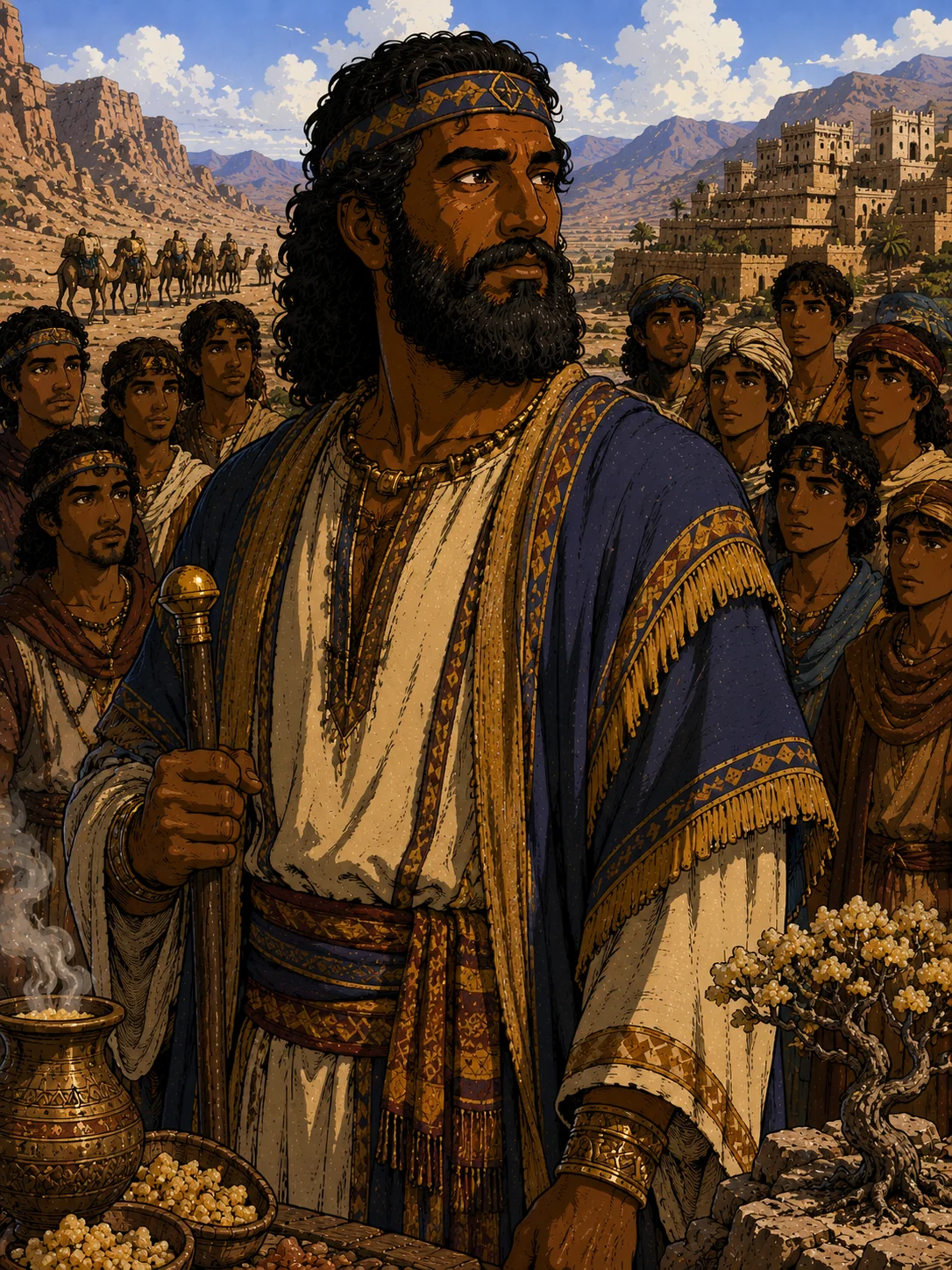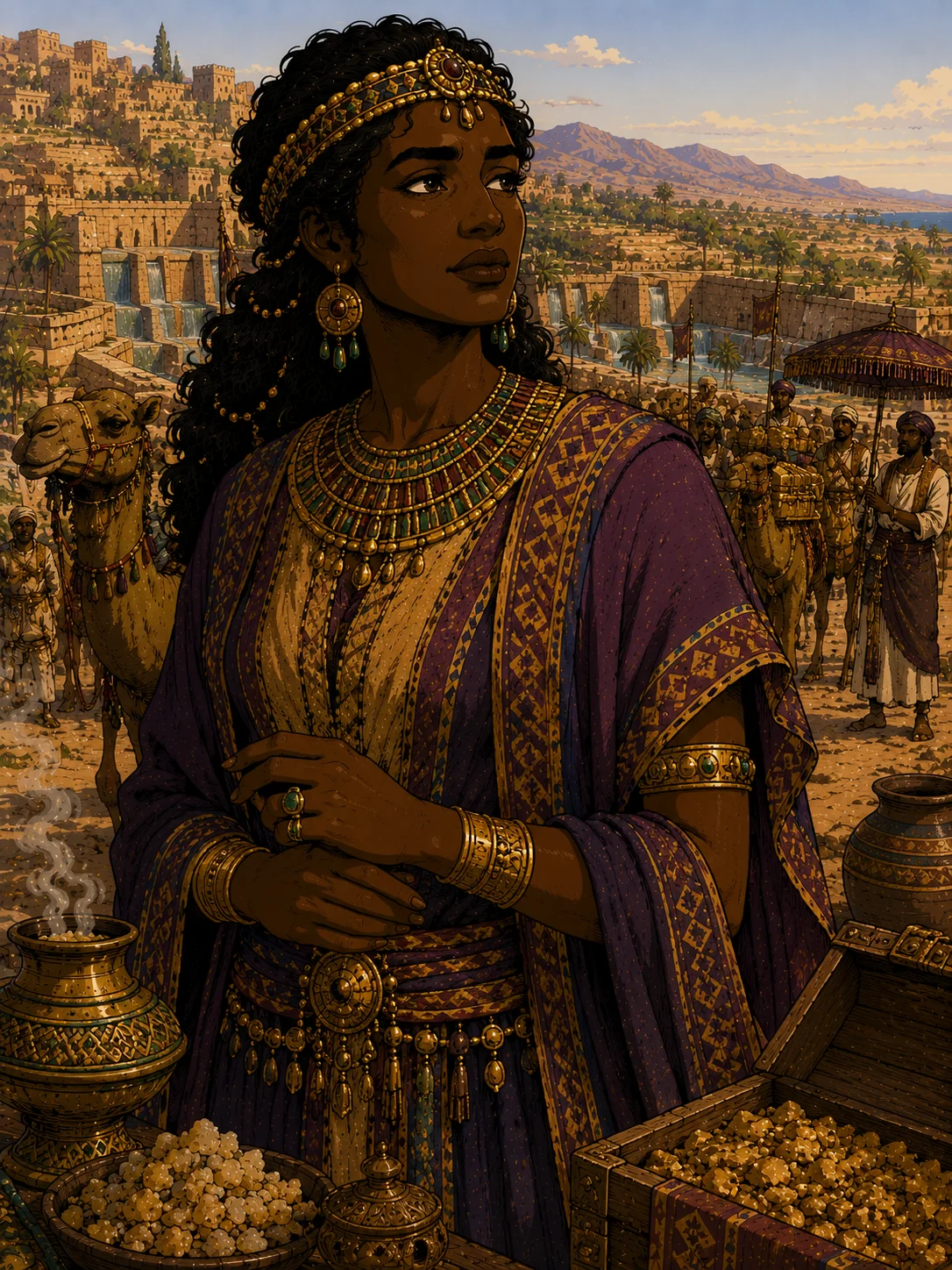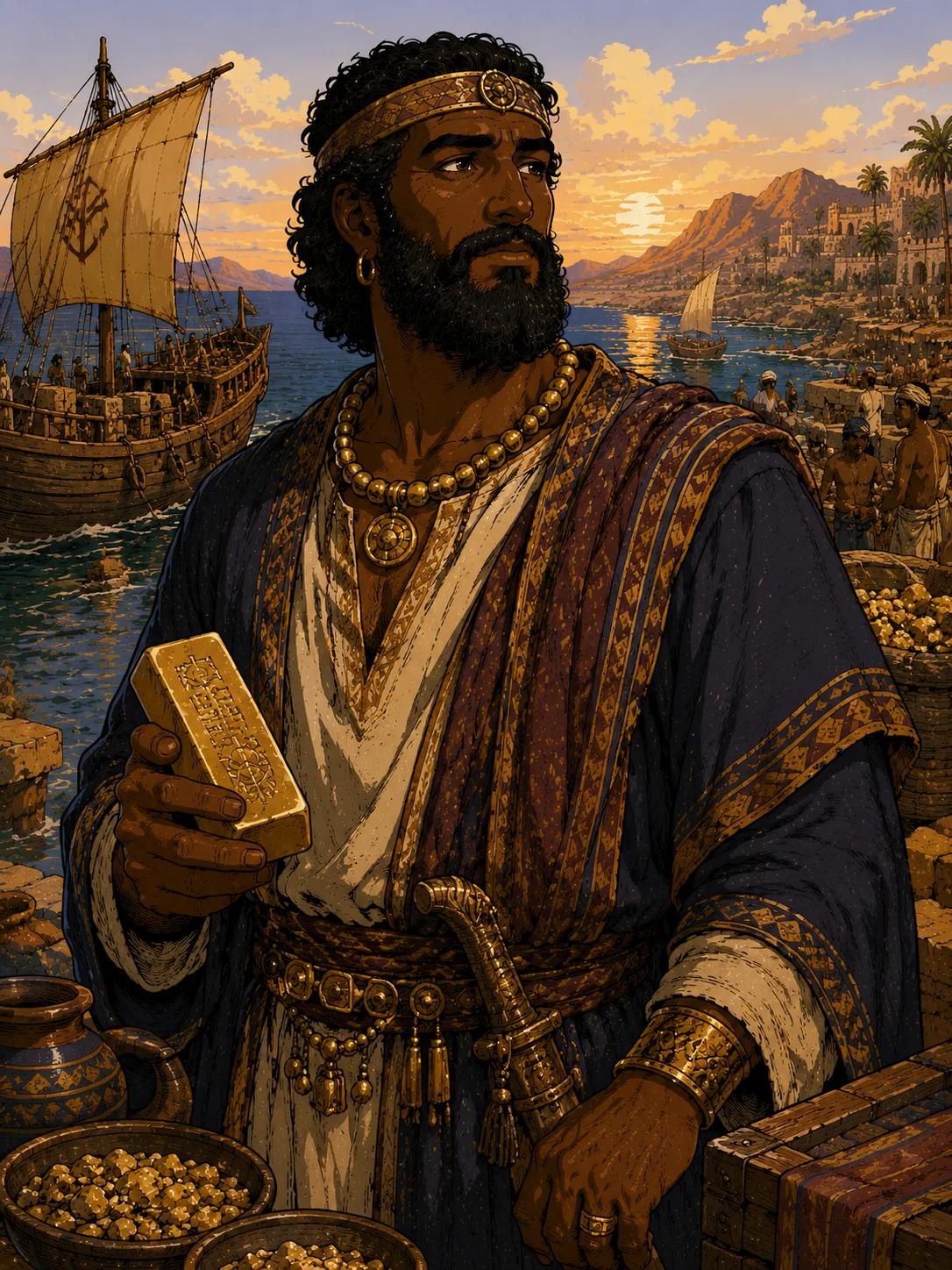
Ophir (אוֹפִיר) is listed among the sons of Joktan in Genesis 10:29, but his name is far more famous as a place than as a person. "Gold of Ophir" became the premier marker of quality in the Hebrew Bible — comparable to what we mean today by "24-karat." Job 22:24 uses Ophir gold as a metaphor for the highest value; Psalm 45:9 dresses a queen in gold of Ophir; Isaiah 13:12 compares a rare man to "fine gold... the gold of Ophir."
Solomon's fleet, built at Ezion-geber on the Red Sea with Hiram of Tyre's skilled sailors, made the three-year voyage to Ophir and returned with 420 talents of gold — an enormous quantity used in the construction and furnishing of the Temple (1 Kings 9:26–28, 10:11). When the Temple was built, 1 Chronicles 29:4 records David's personal contribution of 3,000 talents of Ophir gold. The gold of Ophir was not merely decorative; it was the material through which Israel's holiest space was clothed.
The location of Ophir has never been definitively settled and is one of the most debated questions in biblical geography. The three-year voyage and the cargo list — gold, silver, ivory, apes, and peacocks — suggest a distant destination: India (the Sanskrit for peacock is toka, close to the Hebrew tukki), East Africa (the ancient land of Punt or medieval Sofala in Zimbabwe), or South Arabia are the main candidates. A potsherd discovered at Tell Qasile in Israel bears the inscription "Gold of Ophir for Beth-Horon — 30 shekels" — the only extra-biblical artifact mentioning Ophir, confirming it was a real trading destination in Solomon's era even if its exact location remains unknown.