Sheba (שְׁבָא) appears in the Table of Nations in two places — as a son of Joktan (Genesis 10:28) and also as a son of Raamah who is a grandson of Cush (Genesis 10:7). This double genealogical placement reflects the complexity of South Arabian ethnography in ancient memory: the Sabean people were perceived as having multiple tribal origins, or the name covered related but distinct peoples. The Joktan-Sheba line represents the Arabian Sabean civilization; the Cush-Raamah-Sheba line may represent East African Sabean influence.
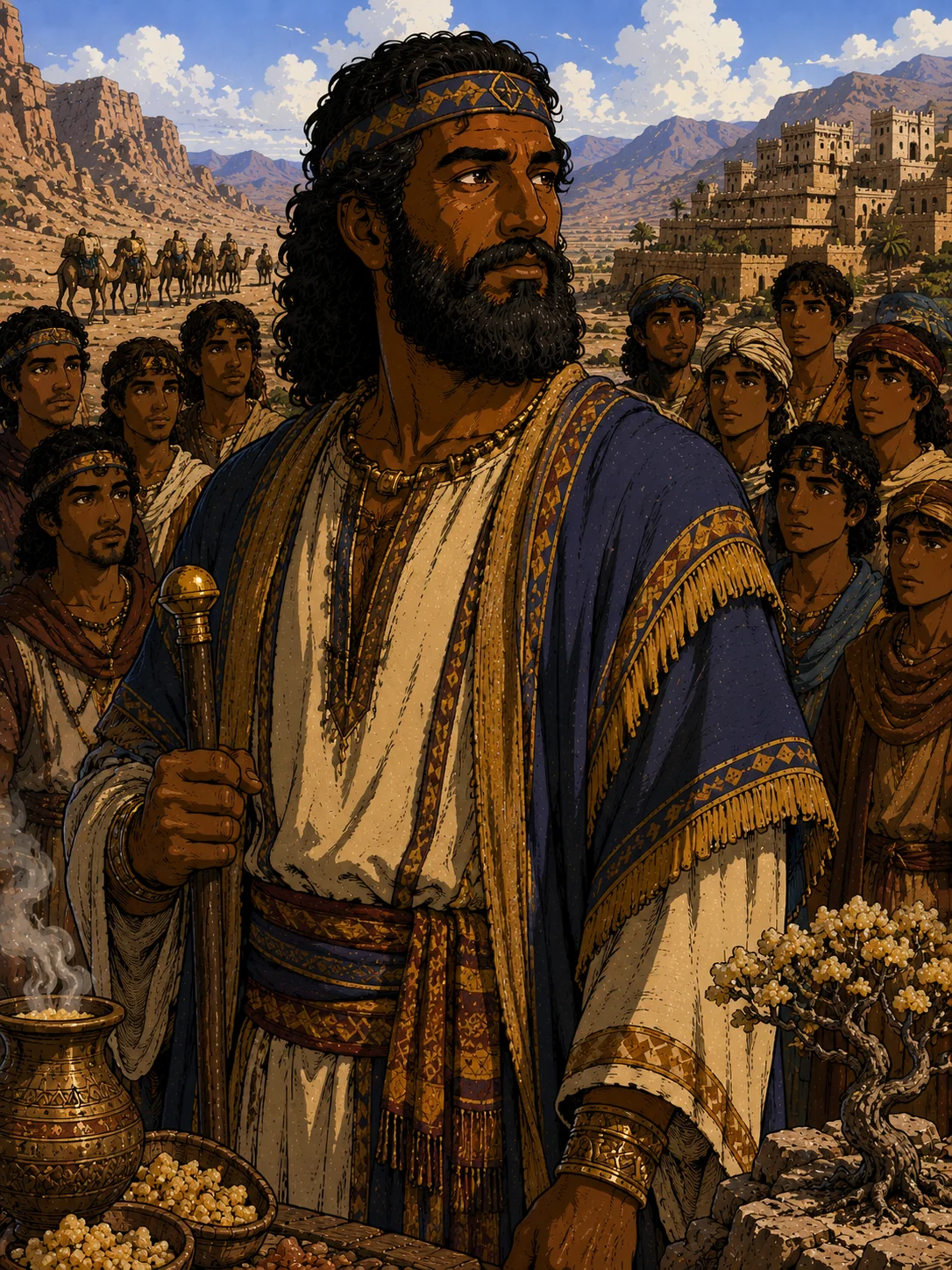
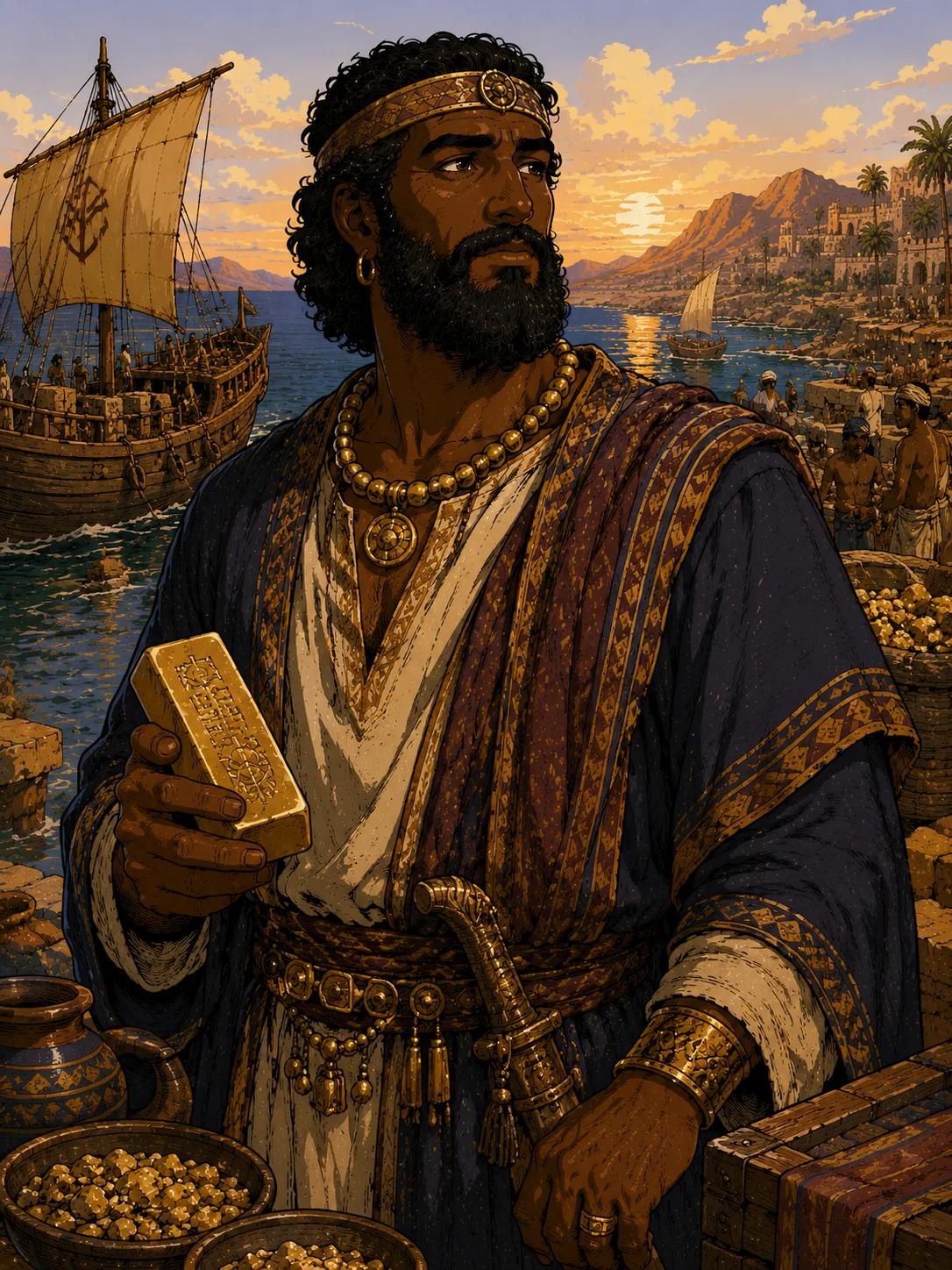
The kingdom of Sheba — the Sabeans — was one of the wealthiest civilizations of the ancient world. Centered at Marib in modern Yemen, with its famous ancient dam that irrigated the surrounding desert, the Sabean kingdom controlled the overland incense trade routes that carried frankincense, myrrh, gold, and spices from Arabia and East Africa to Egypt, Israel, and the Mediterranean. Job's cattle are raided by Sabeans (Job 1:15). Isaiah 60:6 prophesies that "a multitude of camels shall cover you, the young camels of Midian and Ephah; all those from Sheba shall come. They shall bring gold and frankincense." The wealth of Sheba is biblical shorthand for incomprehensible abundance.
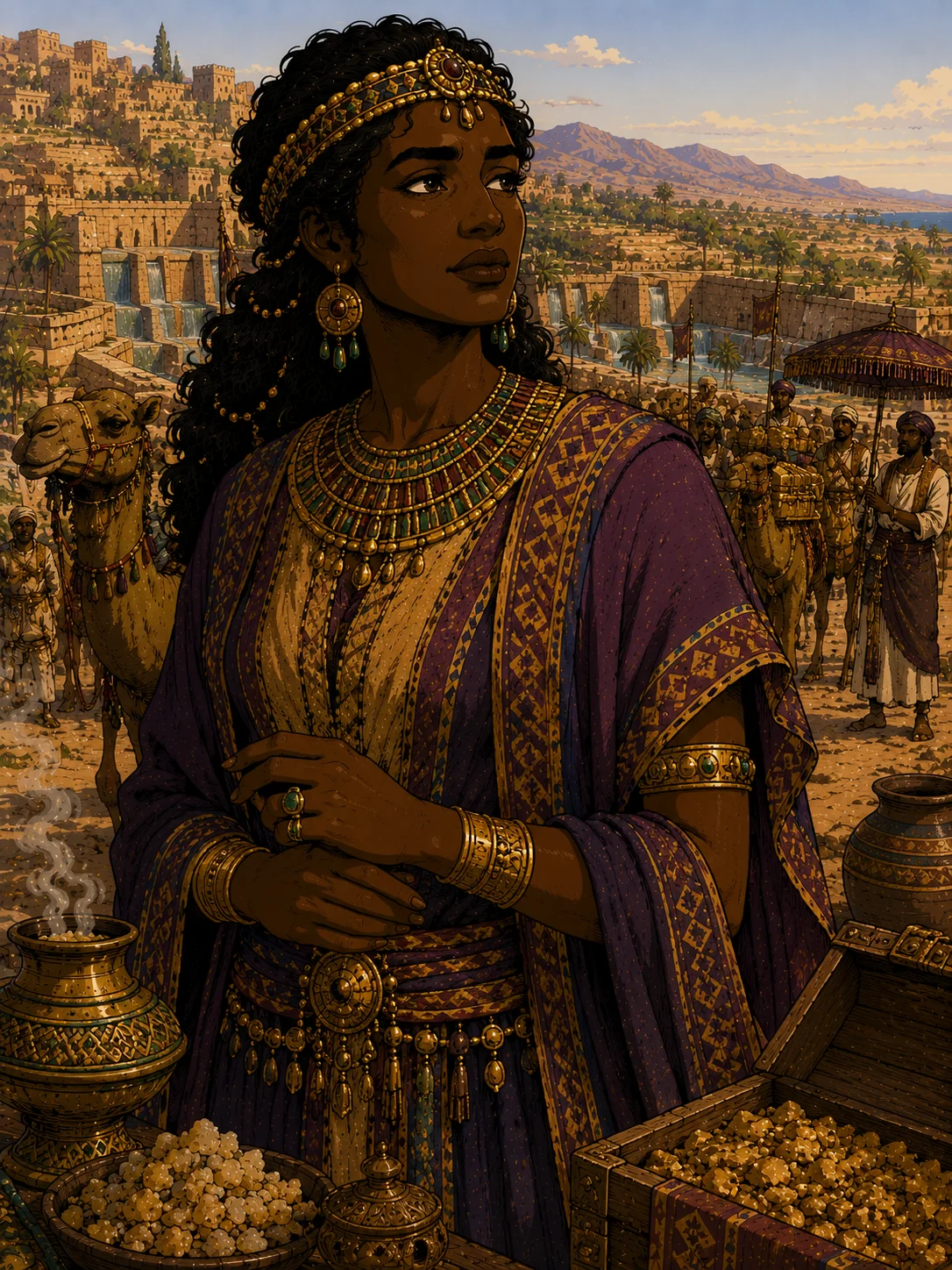
The Queen of Sheba's visit to Solomon (1 Kings 10:1–13) is the defining Sheba narrative — she comes with "a very great retinue, with camels bearing spices, and very much gold, and precious stones," tests Solomon with hard questions, and concludes that "the half was not told me." Ethiopian tradition (the Kebra Nagast) identifies her as Makeda, Queen of Ethiopia, and holds that she bore Solomon a son — Menelik I — founding the Solomonic dynasty. Whether the Queen of Sheba was from Yemen or Ethiopia is a question that has generated centuries of scholarship, with the geographic double-entry of Sheba in Genesis itself perhaps encoding both answers.