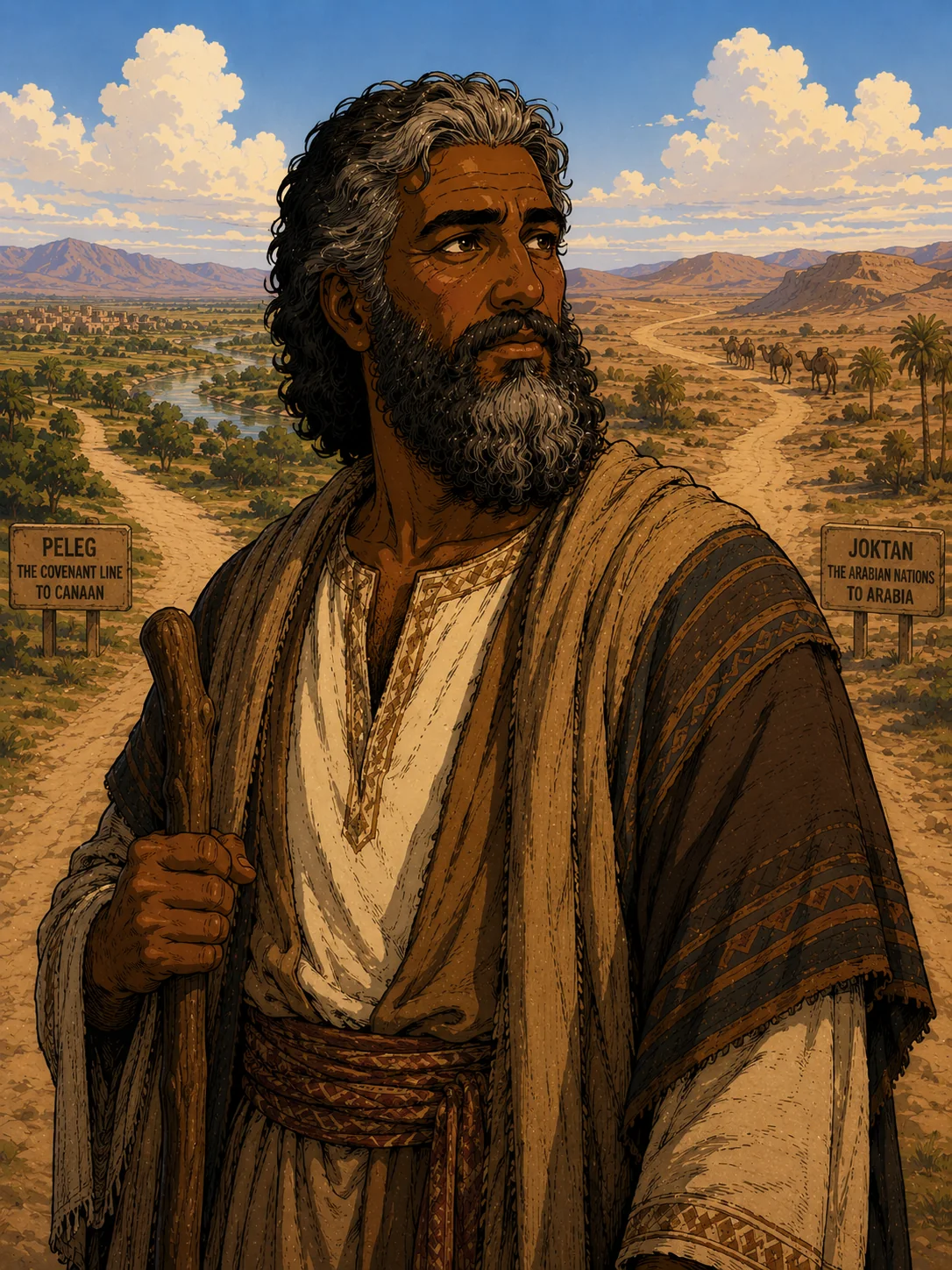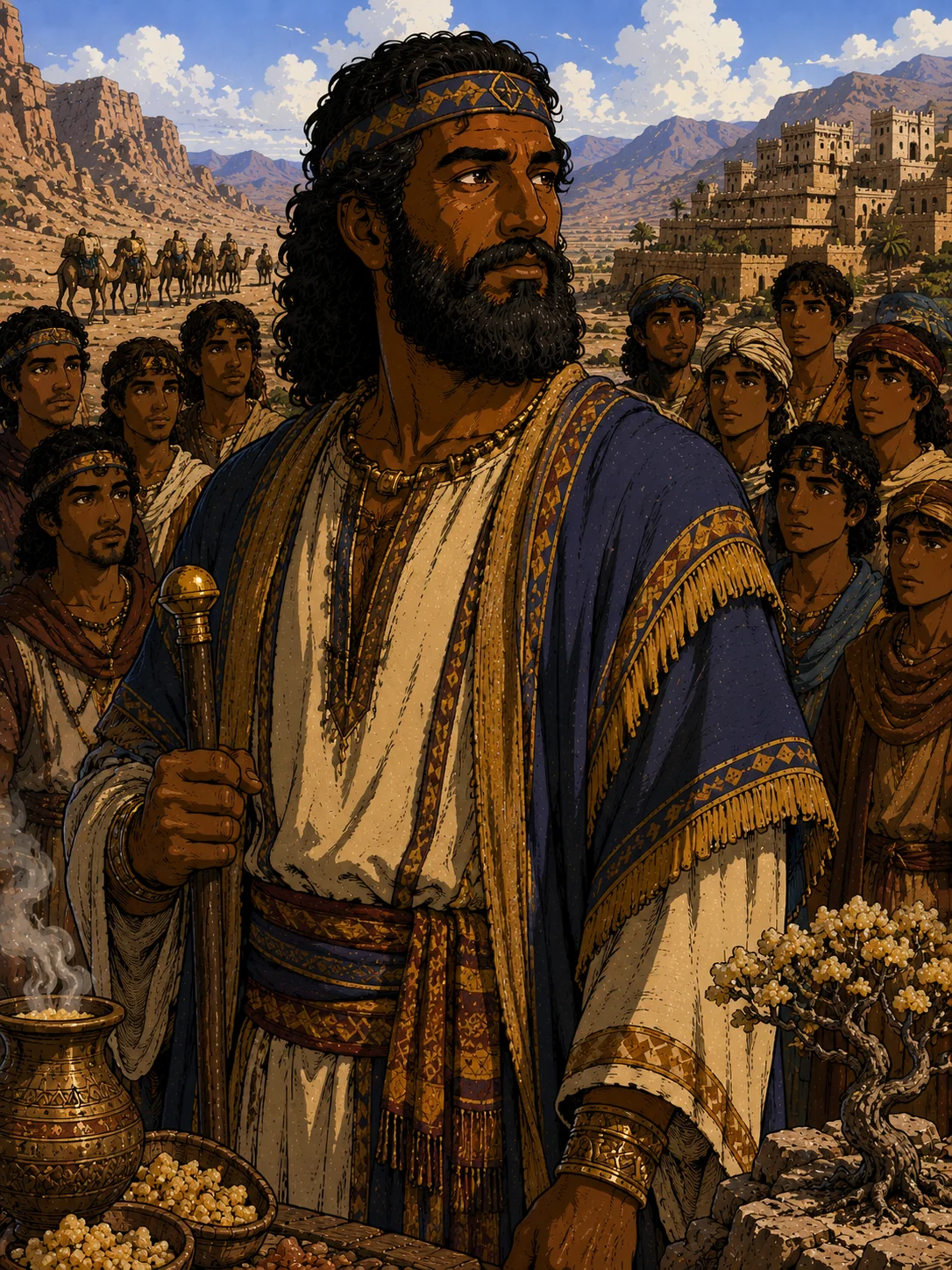
Joktan (יָקְטָן) is one of the two sons of Eber — the other being Peleg, in whose days "the earth was divided" (Genesis 10:25). While Peleg's line leads through Reu, Serug, Nahor, Terah, and Abraham to the Hebrew people, Joktan's line fans out into thirteen sons who populate the Arabian Peninsula and the eastern highlands. Joktan is thus the genealogical counterpart to Abraham — a great patriarch of a different branch, the progenitor of Arabia in the same generation.
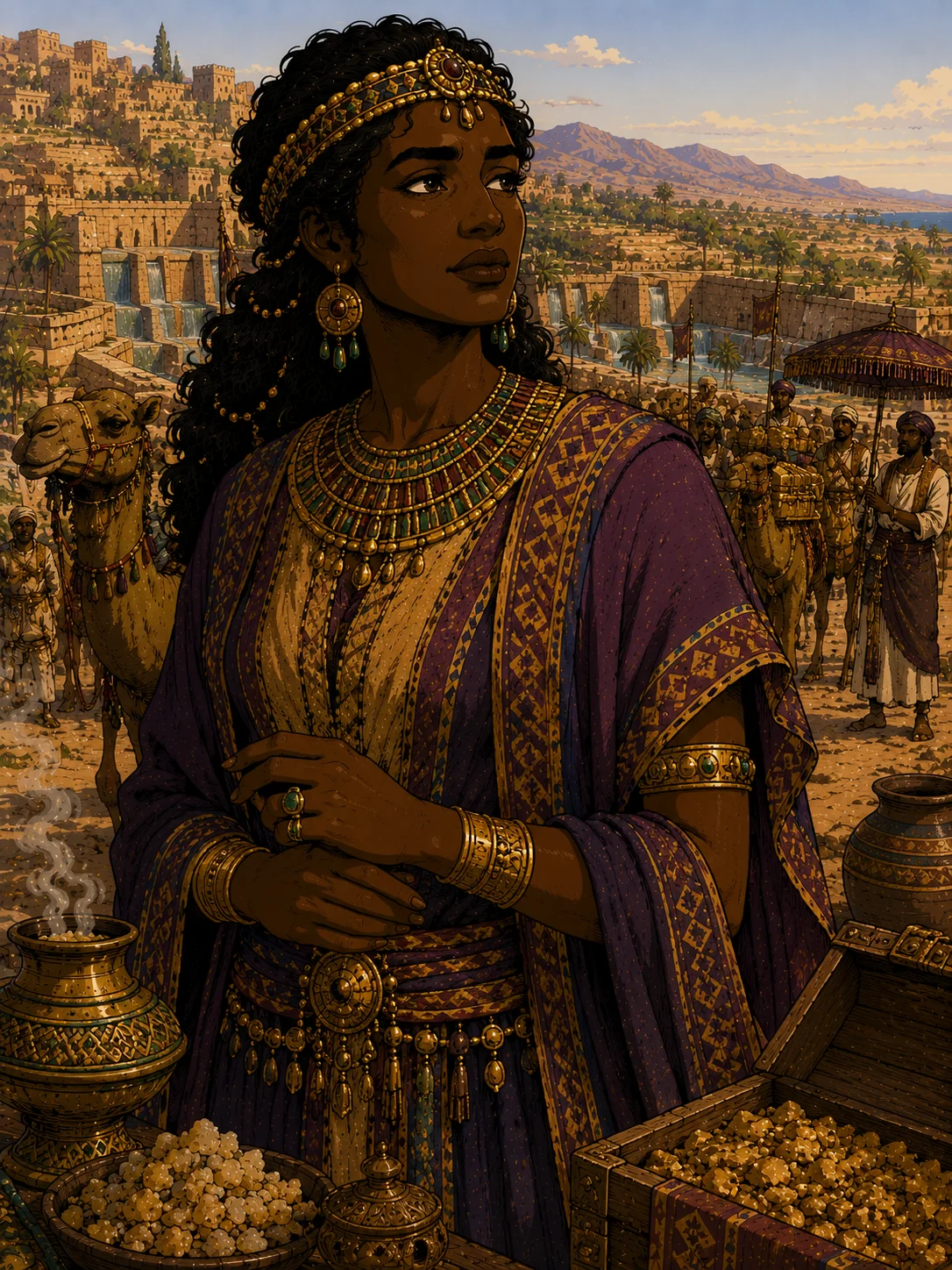
His thirteen sons are: Almodad, Sheleph, Hazarmaveth, Jerah, Hadoram, Uzal, Diklah, Obal, Abimael, Sheba, Ophir, Havilah, and Jobab. Several of these are identifiable with known regions: Hazarmaveth corresponds to Hadramaut in modern Yemen; Uzal is associated with Sanaa, Yemen's capital; Sheba is the kingdom of the Sabeans in southern Arabia whose queen visited Solomon. Genesis 10:30 places Joktan's people's territory "from Mesha in the direction of Sephar, to the hill country of the east" — a geographic marker that points consistently to southern Arabia.
The significance of Joktan in the Table of Nations is structural: he demonstrates that Shem's line is not a single track toward Israel but a broad family encompassing the entire Arabian world. Arabia and Israel share the same genealogical grandfather in Eber. The distinction comes at Joktan and Peleg — one line toward the Arabian peoples, one line toward the Hebrew patriarchs — both emerging from the same root, in the same generation, in the era just before the division of the earth.