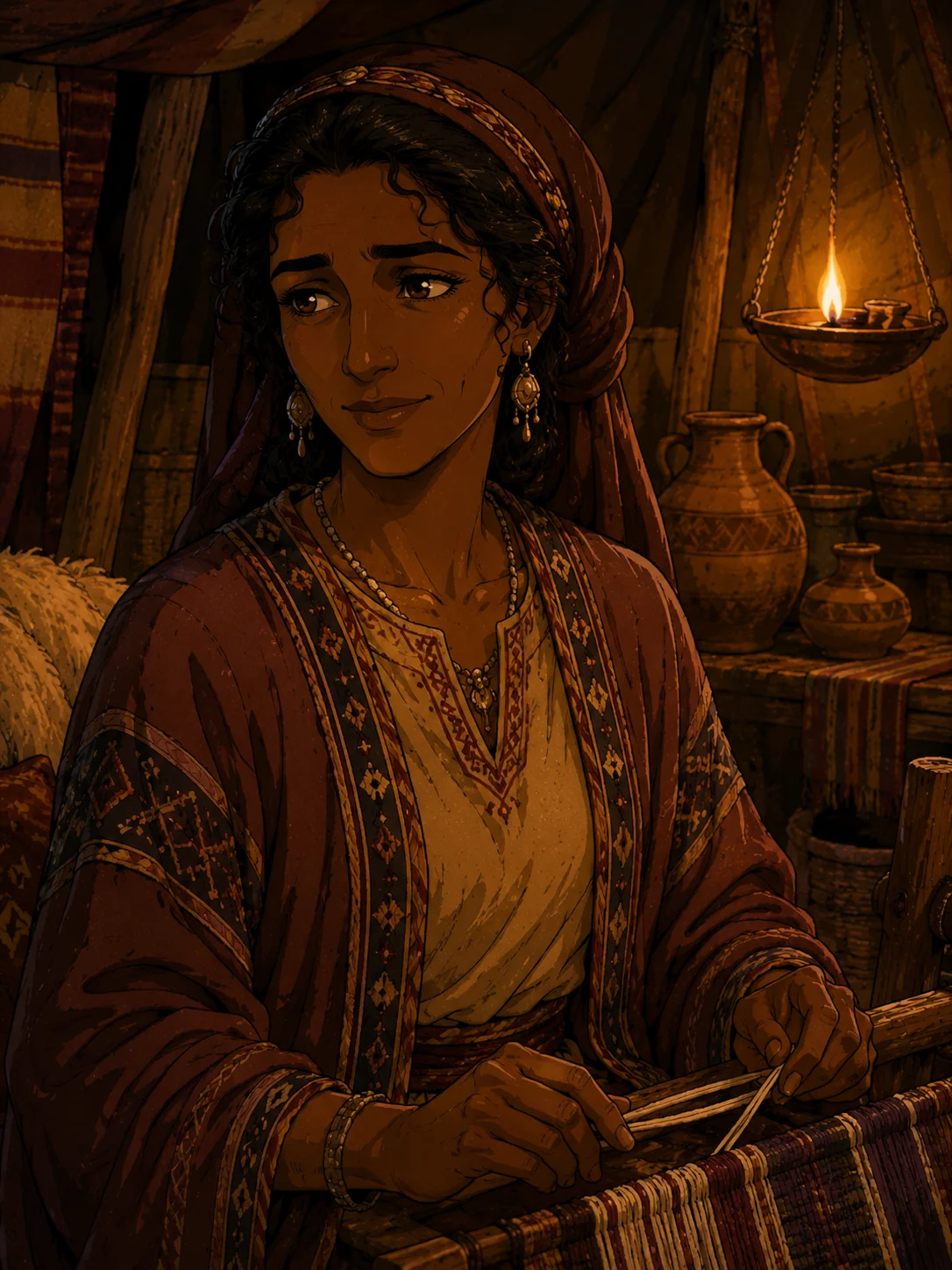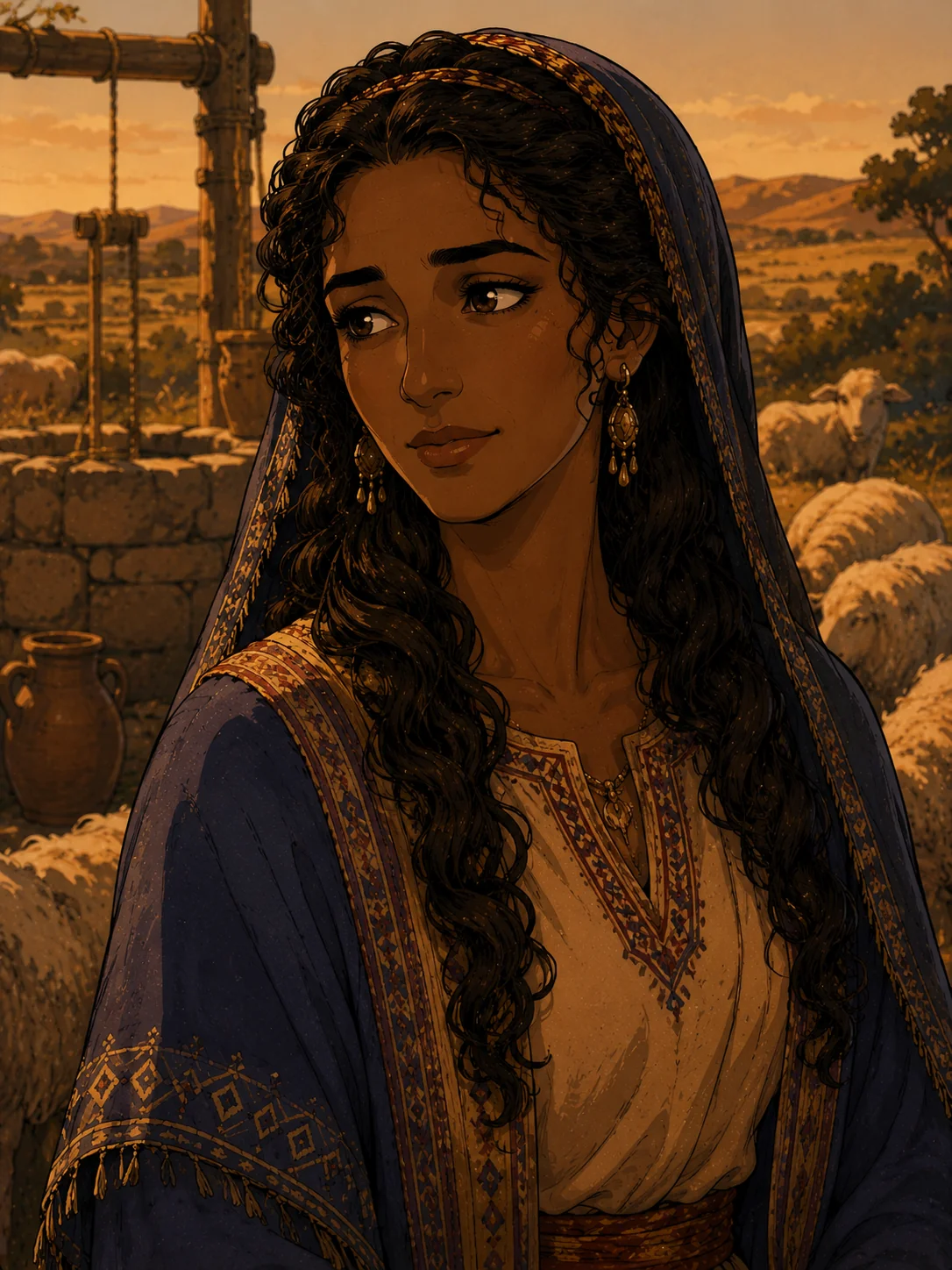
Rachel (רָחֵל) is introduced at a well. Yaakov arrives in Paddan-aram and asks the local shepherds if they know Lavan. They do — and while they speak, Rachel arrives with her father's flock. Yaakov sees her, rolls the stone from the mouth of the well single-handedly, waters her flock, kisses her, and weeps. He tells her he is her father's nephew. Lavan runs to meet him. The emotion of the scene is unusual in the Torah — a patriarch weeping at first sight of a woman, doing labor that normally required a group. The narrative never explains the tears, which makes them more moving.
Rachel is barren while Leah bears son after son. "When Rachel saw that she bore Yaakov no children, Rachel envied her sister, and said to Yaakov: Give me children, or I die!" (Genesis 30:1). Yaakov's response is sharp: "Am I in the place of God, who has withheld from you the fruit of the womb?" She gives him her maidservant Bilhah; Dan and Naphtali are born. In the mandrakes episode she trades a night with Yaakov for Leah's mandrakes — and Leah conceives Yissachar from that night while Rachel, with the mandrakes, does not conceive. Then, in God's timing: "God remembered Rachel, and God listened to her, and he opened her womb." Yosef is born, and his name means "may he add" — "May the LORD add to me another son."
Rachel dies giving birth to that other son. On the road from Bethel toward Bethlehem, in hard labor, she names the boy Ben-Oni — "son of my sorrow" — and dies. Yaakov renames him Binyamin — "son of the right hand." He buries her there on the road and sets up a pillar over her tomb. Jeremiah 31:15 gives Rachel her voice in exile: "A voice is heard in Ramah, mourning and great weeping — Rachel weeping for her children, refusing to be comforted, because they are no more." And God answers her directly: "Restrain your voice from weeping... there is hope for your future... your children shall return." Her tomb on the road to Bethlehem became a place of prayer across the centuries.