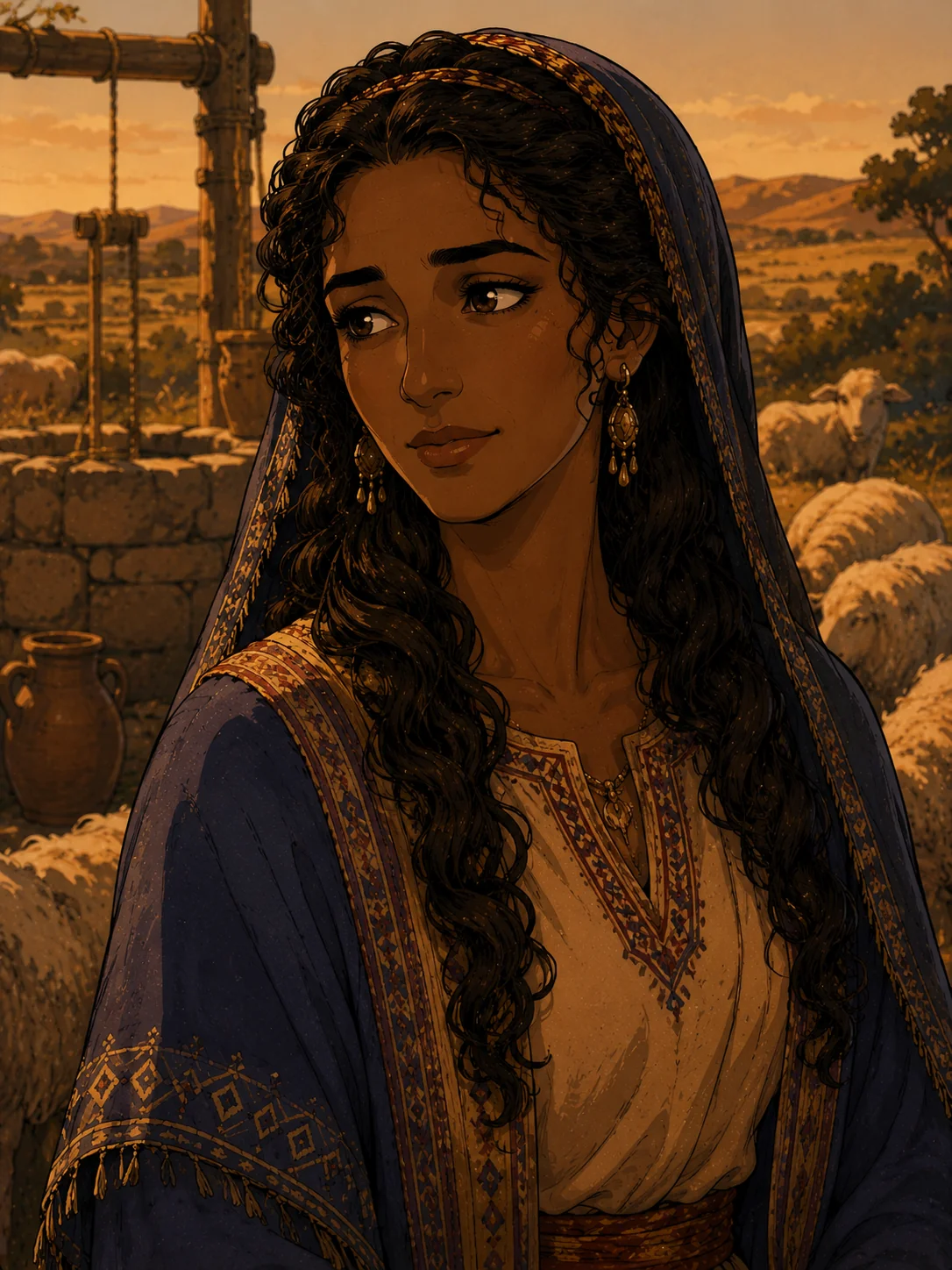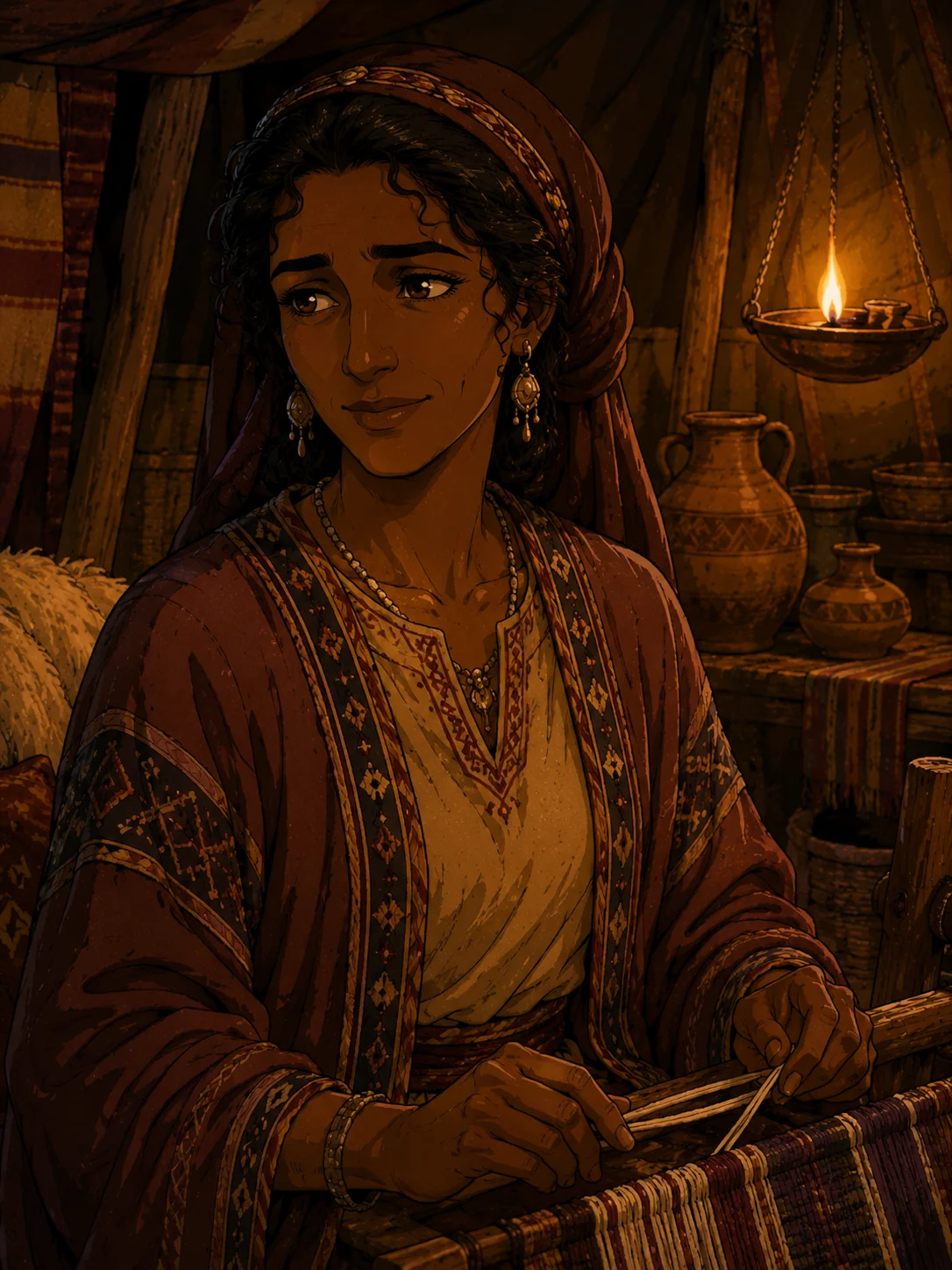
Leah (לֵאָה) enters the narrative as the elder daughter of Lavan — "her eyes were tender" (Genesis 29:17), a phrase that has been interpreted as either weak/delicate or gentle/lovely, set in deliberate contrast with Rachel who is "beautiful of form and beautiful of appearance." Yaakov loves Rachel and works seven years for her. At the wedding feast, Lavan brings Leah veiled to the tent in the dark. Only in the morning does Yaakov see. "What is this you have done to me?" Lavan's answer is custom: the elder before the younger.
The competition that follows between the sisters is the engine of the twelve tribes' birth. God sees that Leah is unloved and opens her womb. She bears Reuven, Shimon, Levi, and Yehudah in sequence — each name a record of her emotional state. Reuven: "The LORD has seen my affliction; now my husband will love me." Shimon: "The LORD has heard that I am unloved." Levi: "Now this time my husband will be joined to me." Yehudah: "This time I will praise the LORD." At Yehudah's birth she stops asking for love and begins giving thanks.
Leah's sons carry the weight of Israel's institutional history. Levi becomes the priestly tribe — Moshe and Aaron are his descendants. Yehudah becomes the royal tribe — David, Solomon, and the messianic line descend from him. Yissachar and Zevulun fill out the sixth and seventh sons. Leah also gives Yaakov her maidservant Zilpah, whose sons Gad and Asher become two more of the twelve. Leah is the only matriarch buried in the cave of Machpelah alongside the other patriarchs and matriarchs — she is there before Rachel, whose tomb is on the road to Bethlehem. The Torah's final accounting of Machpelah (Genesis 49:31) lists Leah's burial there as a fait accompli.