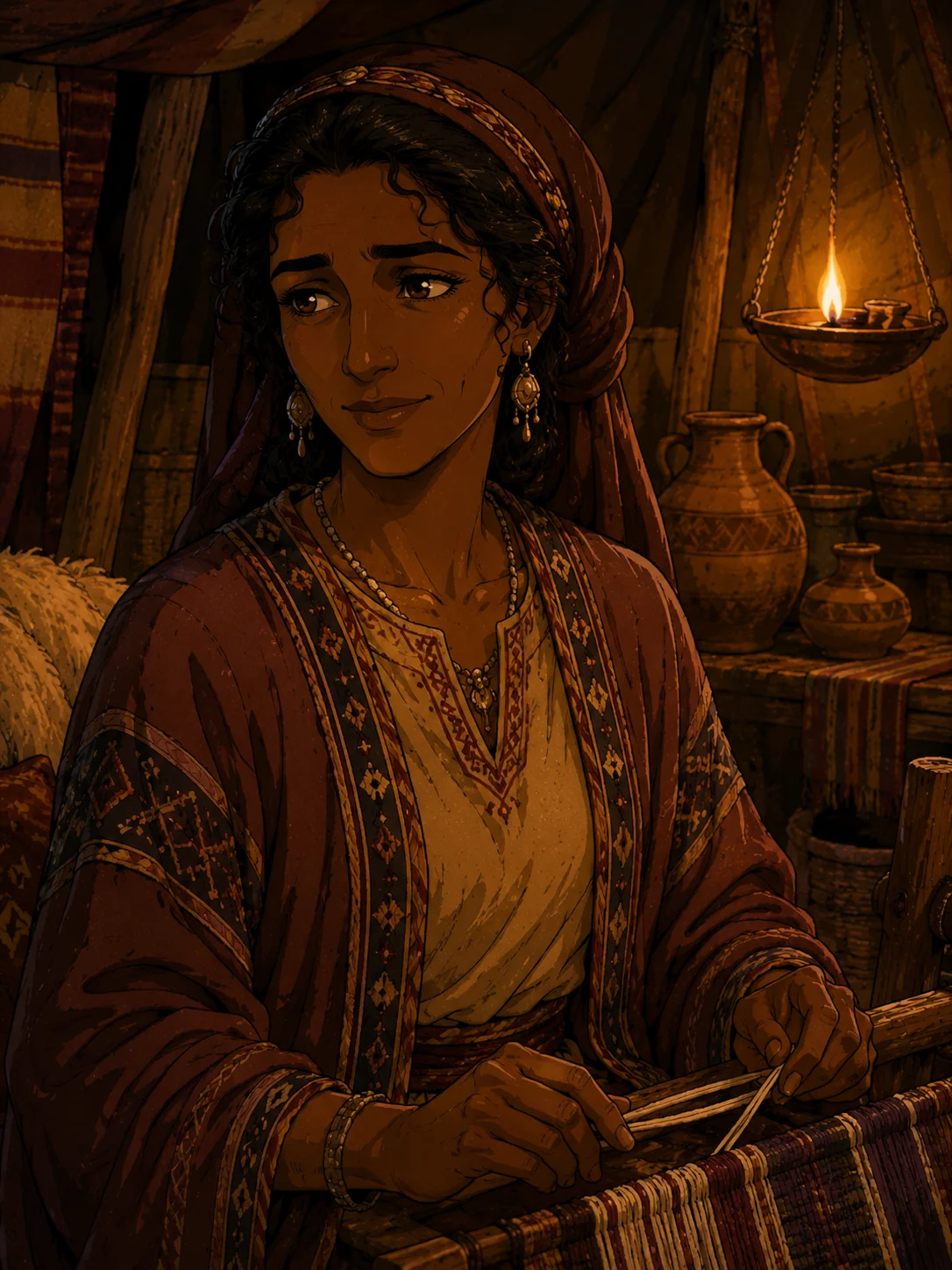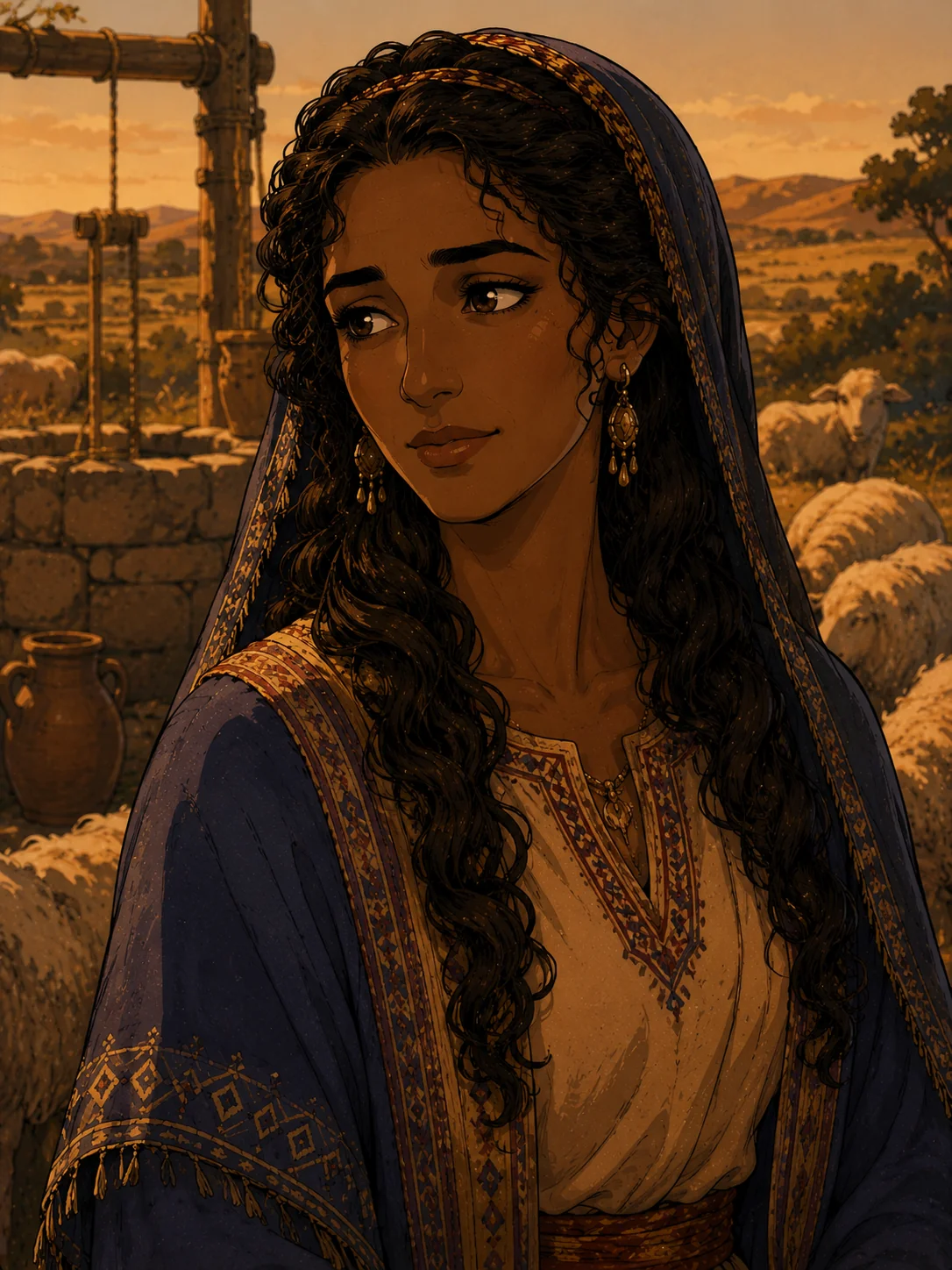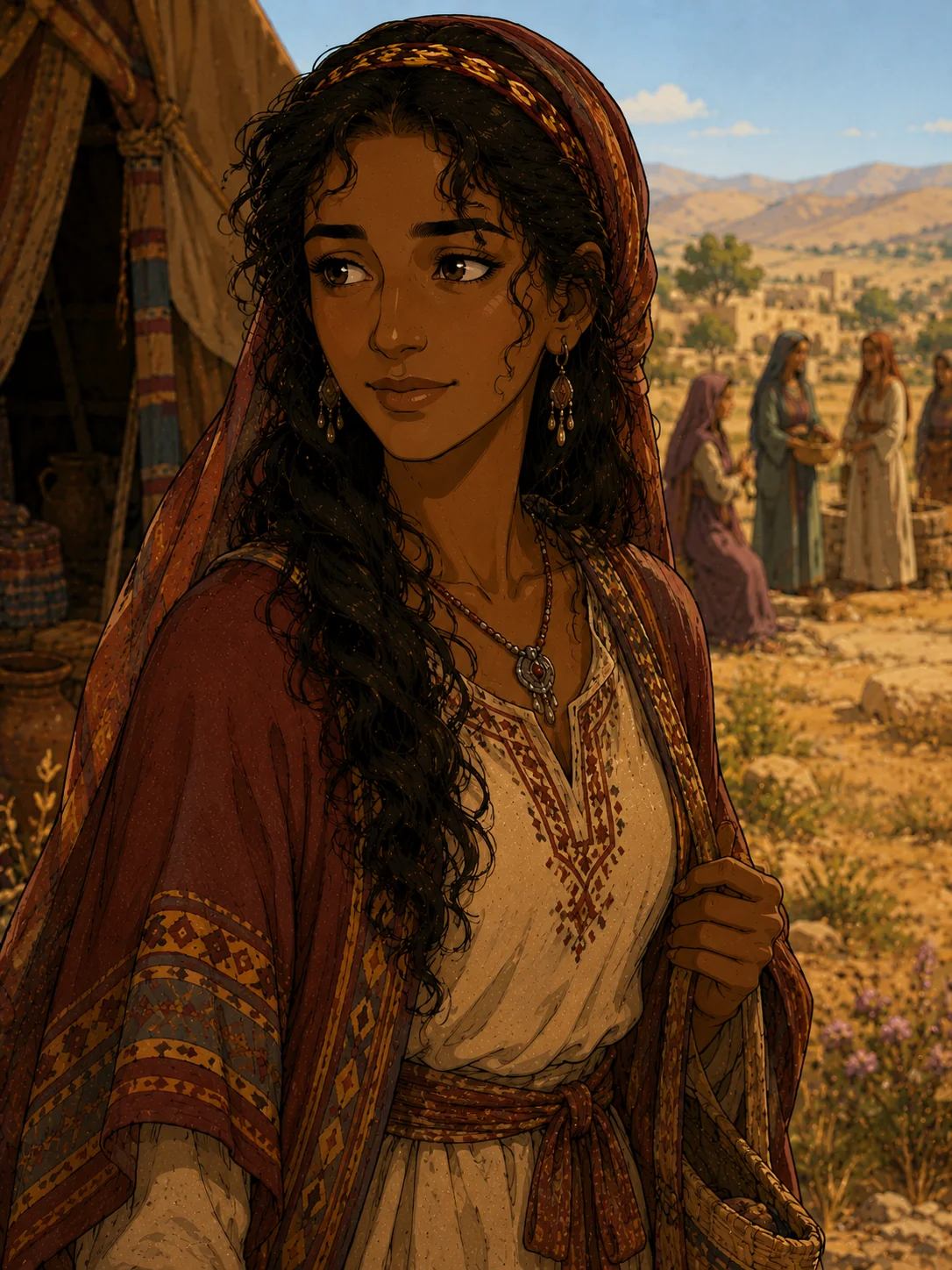
Dinah (דִּינָה) is introduced in a single verse — "And afterward she bore a daughter, and called her name Dinah" (Genesis 30:21) — sandwiched between the births of Yaakov's sons. She is the only daughter named in the twelve-tribe genealogy. Her name, from the root din (to judge), is itself a quiet statement: justice, or the one who will be judged.
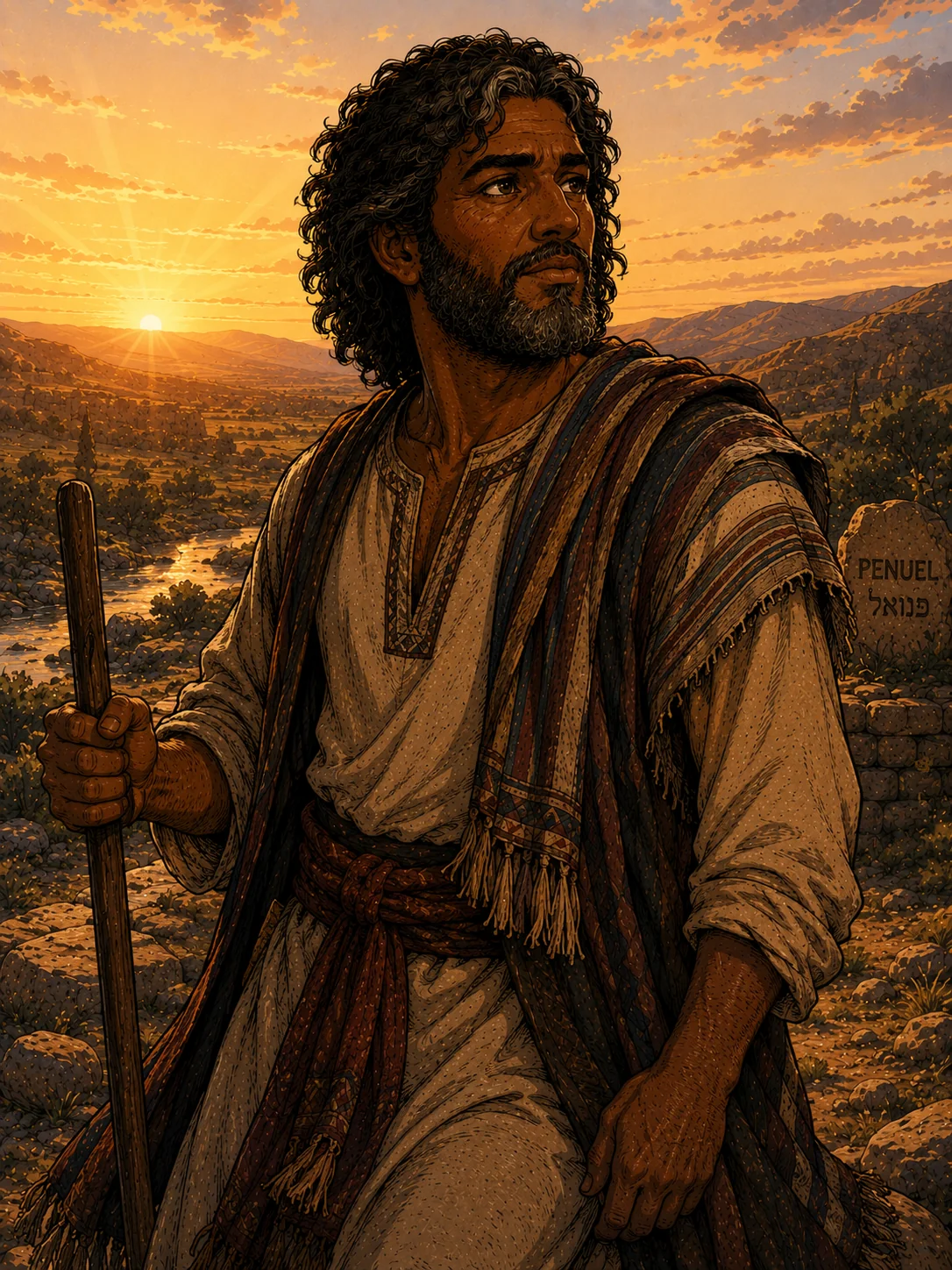
When the family settles near Shechem in Canaan, Dinah "goes out to see the daughters of the land" (Genesis 34:1) — the only autonomous action attributed to her in the text. Shechem son of Hamor the Hivite sees her, takes her, and lies with her by force. Then, the text records, he loves her and wants to marry her. His father Hamor comes to negotiate with Yaakov and his sons. The sons respond with deceit: they will agree to intermarriage only if all the males of the city are circumcised. Hamor and Shechem accept, and the entire city undergoes circumcision. On the third day, while the men are in pain, Shimon and Levi take their swords, enter the city unchallenged, and kill every male. They take Dinah from Shechem's house and leave.
Yaakov's rebuke of his sons is immediate: "You have troubled me by making me a stench to the inhabitants of the land" (Genesis 34:30). Their answer is the last word of the chapter: "Should he treat our sister like a prostitute?" The tension between Yaakov's pragmatic fear and his sons' fierce honor is left unresolved in Genesis 34. But in Genesis 49, Yaakov's final blessing returns to Shimon and Levi — "Cursed be their anger for it was fierce, and their wrath for it was cruel; I will divide them in Jacob, and scatter them in Israel." Levi becomes the priestly tribe with no territorial inheritance; Shimon's territory is absorbed into Judah. The events at Shechem echo across the rest of the Torah.