Tarshish (תַּרְשִׁישׁ) is the second son of Yavan and one of the most frequently mentioned place-names in the Hebrew prophets. As a geographic entity Tarshish represents the far end of the known world — a distant maritime port at the edge of the Mediterranean, so remote that Jonah chose it as his destination when fleeing from God's call (Jonah 1:3). The precise identification is debated: candidates include Tartessos in southern Spain, Sardinia, and Carthage in North Africa.
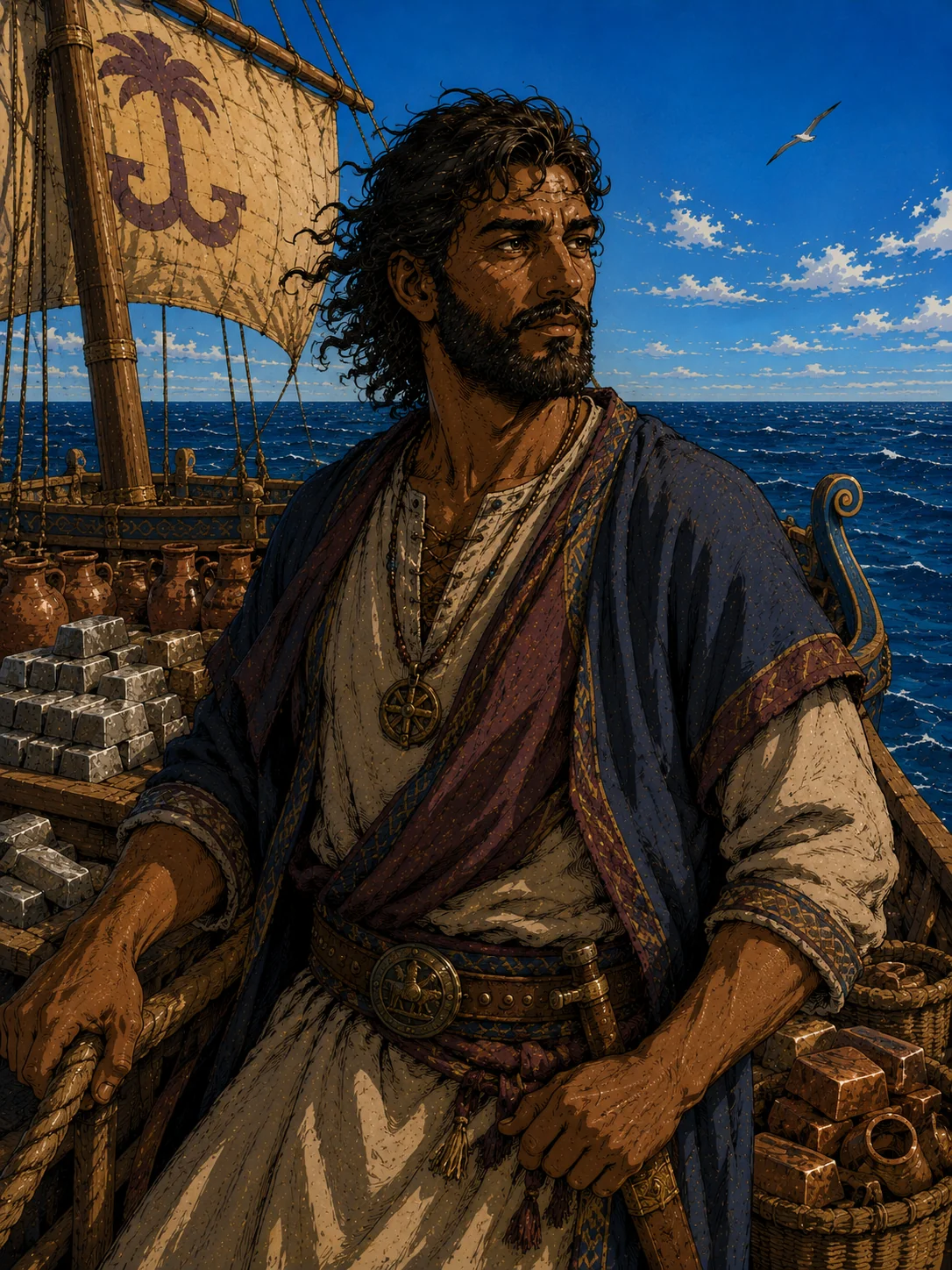
In the commercial world of the ancient Near East, "ships of Tarshish" became a byword for large ocean-going vessels capable of long-distance trade. Solomon partnered with Hiram of Tyre to send ships of Tarshish on three-year voyages returning with gold, silver, ivory, apes, and peacocks (1 Kings 10:22). Isaiah 2:16 lists "all the ships of Tarshish" alongside cedars of Lebanon and the high towers as symbols of human pride that will be humbled on the day of the LORD.
In Ezekiel 27:12, Tarshish trades silver, iron, tin, and lead with Tyre — metals of industry and armament, befitting a western mining and smelting region. In Ezekiel 38:13, "Tarshish with all her young lions" questions Gog's invasion of Israel from a position of protest — suggesting a western maritime power sufficiently distant from the conflict to observe rather than participate. Psalm 72:10 envisions the messianic king receiving tribute from "the kings of Tarshish and the coastlands."