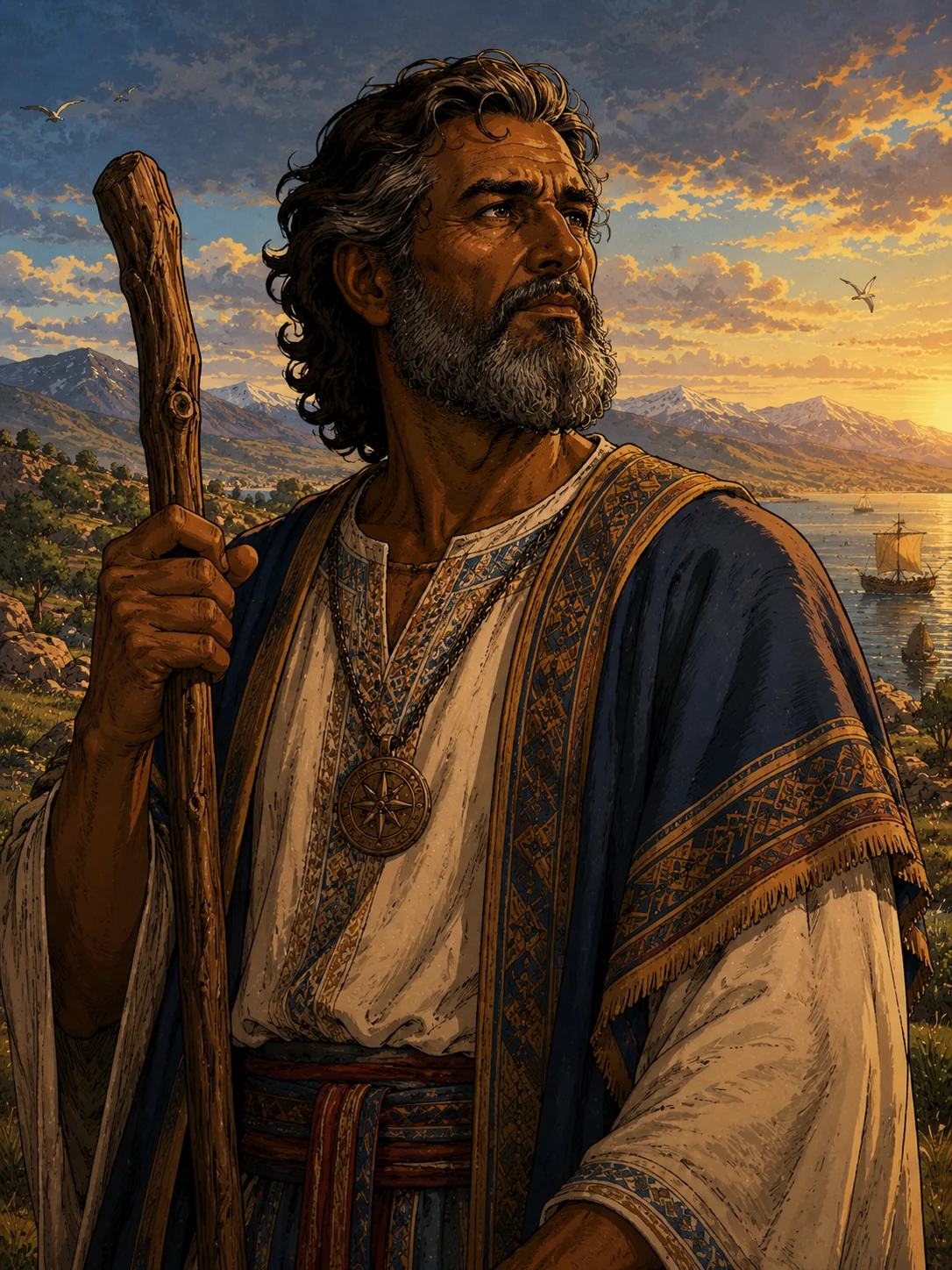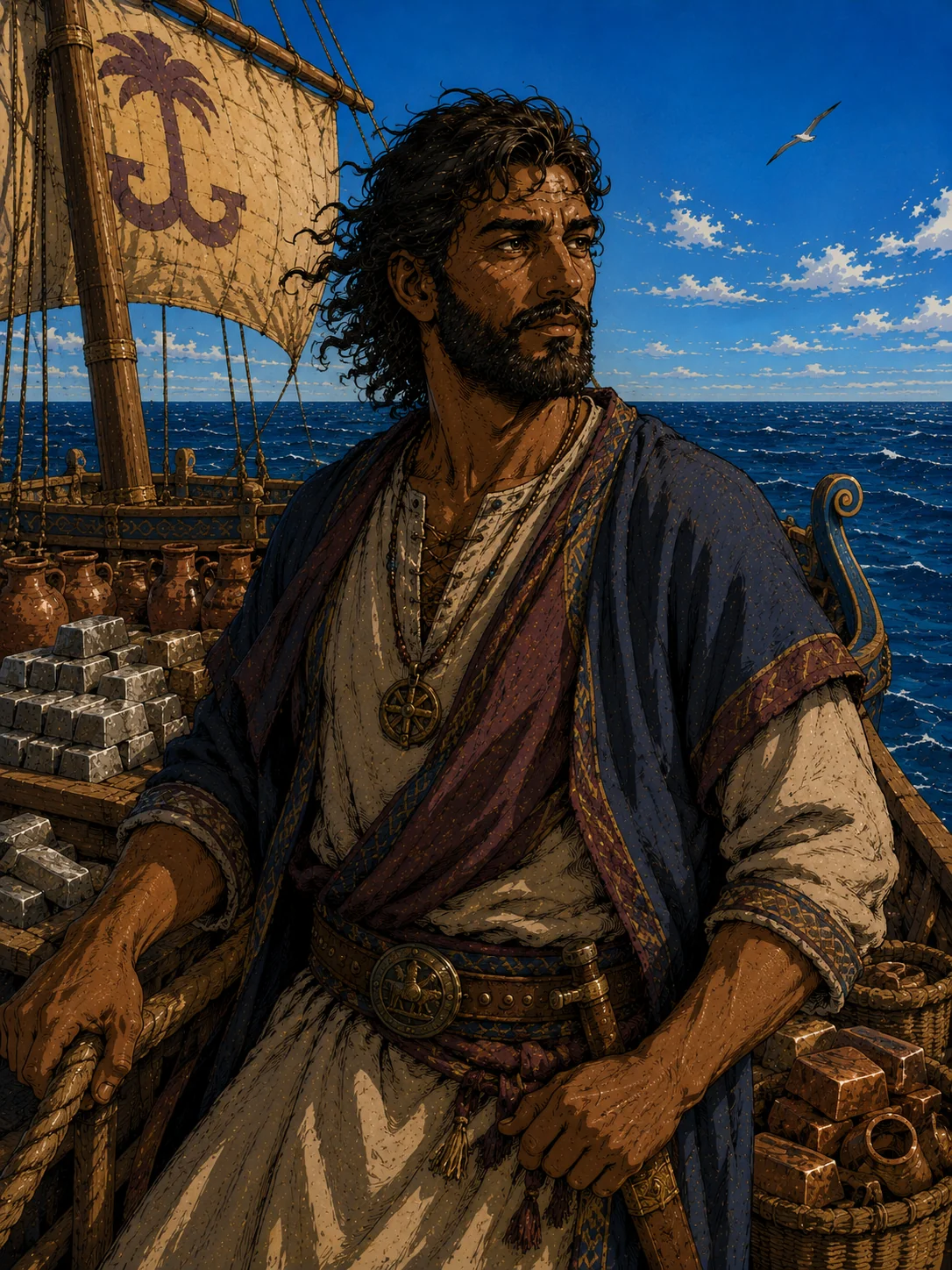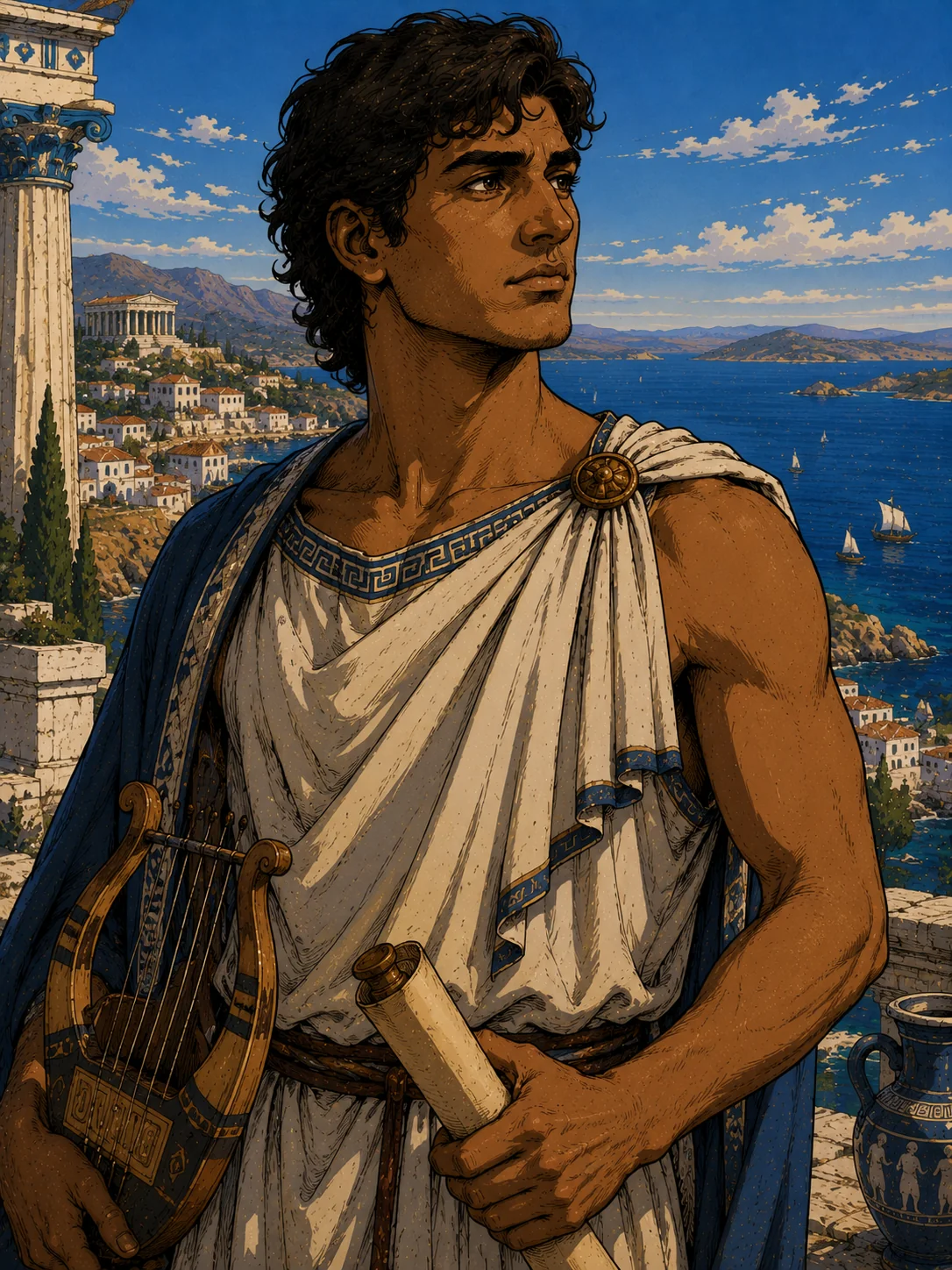
Yavan (יָוָן) is the fourth son of Yefet and the ancestor of the Greeks — specifically the Ionians, the Greek-speaking peoples of the Aegean coast. Yavan is the standard Hebrew word for Greece used throughout the Old Testament and remains the Hebrew and Arabic word for Greece to this day. His sons — Elishah (associated with Cyprus), Tarshish (the far western Mediterranean), Kittim (Cyprus or Rome), and Dodanim (the Dodecanese islands) — trace the Greek world across the Mediterranean.
In the prophetic literature, Yavan rises to extraordinary prominence. Isaiah 66:19 lists Yavan as one of the distant nations to whom God's glory will be declared. Ezekiel 27:13 describes Yavan as a major trading partner of Tyre, dealing in slaves and bronze vessels. But it is Daniel who gives Yavan its fullest prophetic weight: the third kingdom — the bronze belly of the statue — is Greece, and the "male goat from the west" that destroys the ram of Media-Persia (Daniel 8) is explicitly identified as the king of Yavan.
The identification with Alexander the Great is precise and unmistakable: Daniel 8:5–8 describes a swift goat (Alexander) that demolishes the ram (Persia) from west to east, then breaks into four horns at the height of his power (the division of his empire among his generals). The Maccabean struggle against Antiochus Epiphanes — himself a Greek king from Javan's line — forms the backdrop of Daniel 11 and the feast of Hanukkah.