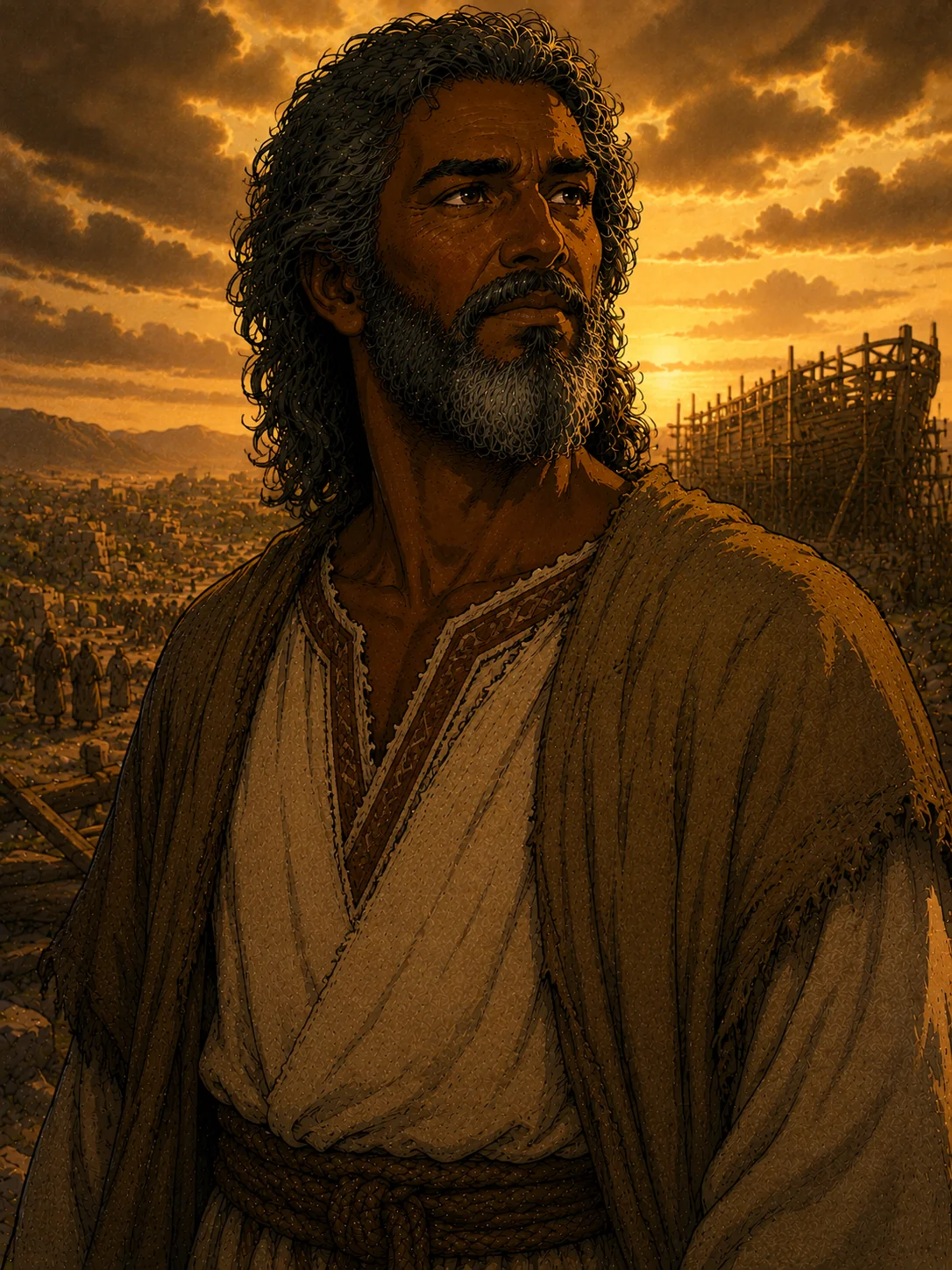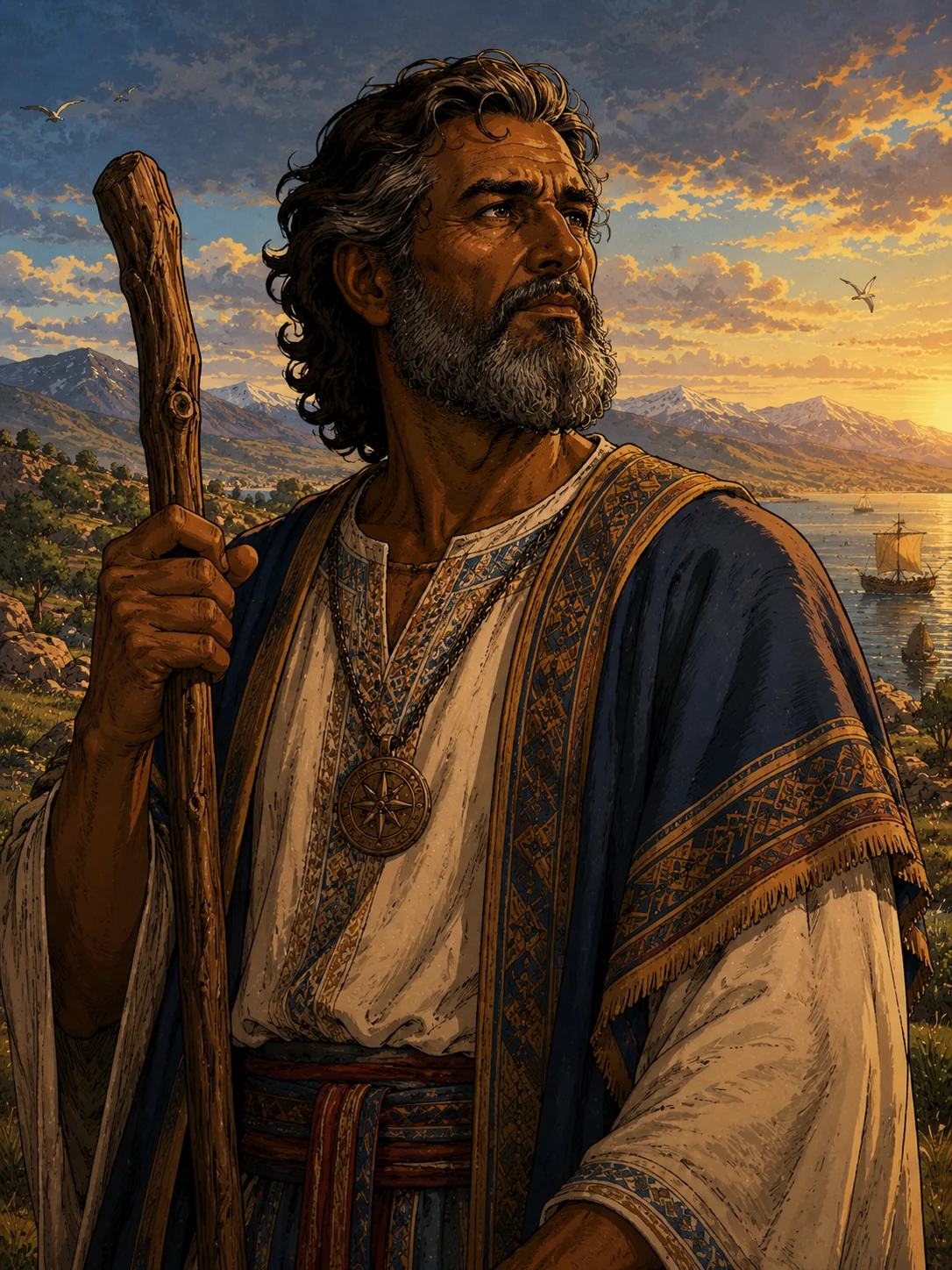
Yefet (יֶפֶת) is the third son of Noach — listed last in birth order in Genesis 10 but addressed first in Noah's post-flood blessing: "May God enlarge (yaft) Yefet, and may he dwell in the tents of Shem" (Genesis 9:27). Some read this as Yefet's descendants eventually coming to inhabit the covenantal sphere established through Shem's line — a reading that found resonance in the Hellenistic period when Greek-speaking communities engaged deeply with the Jewish scriptures.
Yefet fathers seven sons: Gomer, Magog, Madai, Yavan, Tuval, Meshech, and Tiras — each becoming the progenitor of a distinct people group. These nations spread broadly across the northern arc of the ancient world: Gomer's line into the Pontic steppe and Central Europe, Magog into Scythia, Madai into Persia and Media, Yavan into Greece and the Aegean. Gomer's sons Ashkenaz, Riphath, and Togarmah continued this northern and western dispersion.
In the prophetic literature, nations from Yefet's line appear prominently in end-time scenarios. Gog of the land of Magog in Ezekiel 38–39 leads a great northern coalition. Yavan (Greece) becomes the focus of Daniel's visions of the four kingdoms. The Table of Nations positions Yefet's descendants as the peoples who would ring the Israelite world from the north and west — alternately traders, conquerors, and eventual recipients of the covenant's reach.