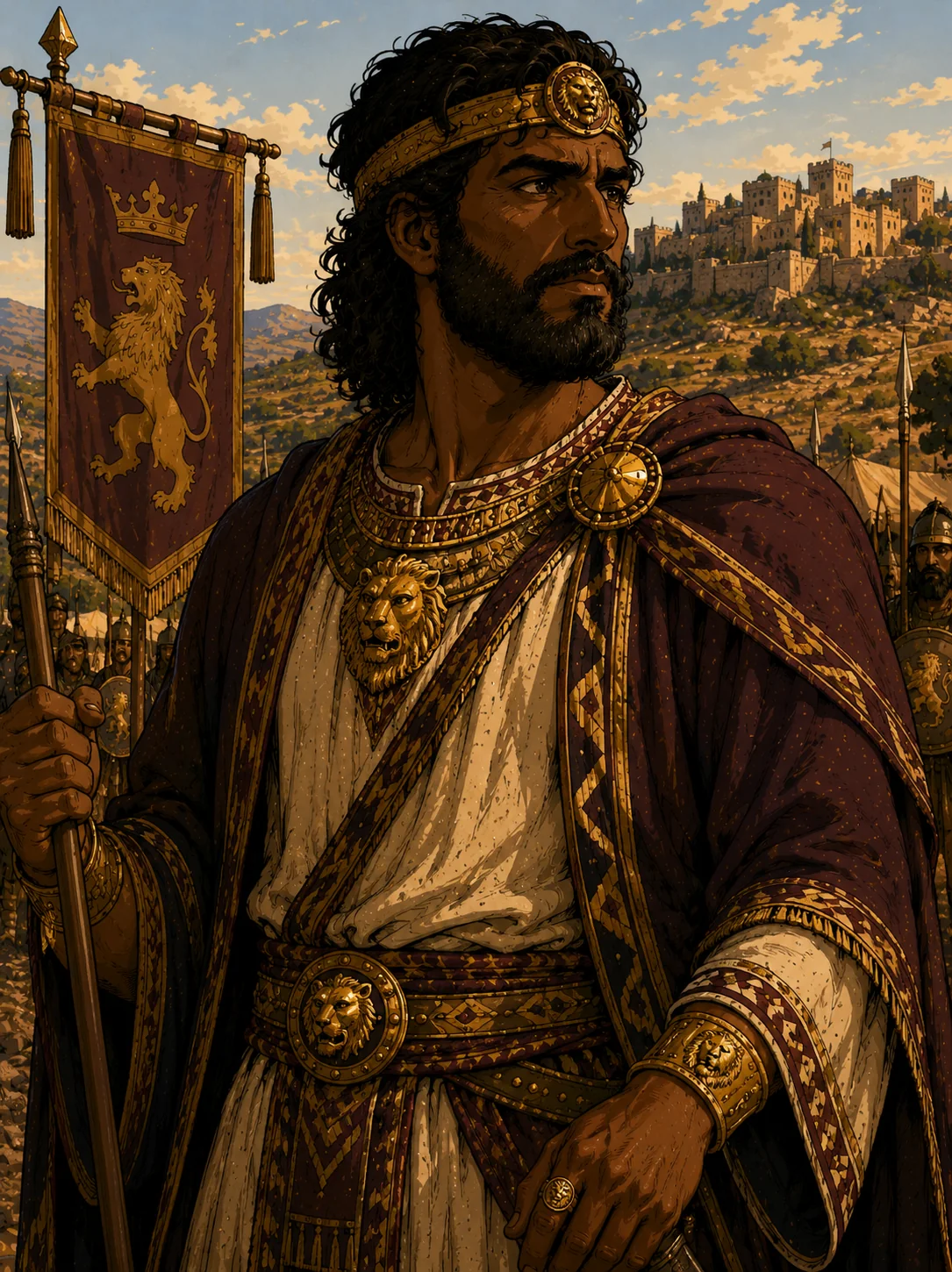
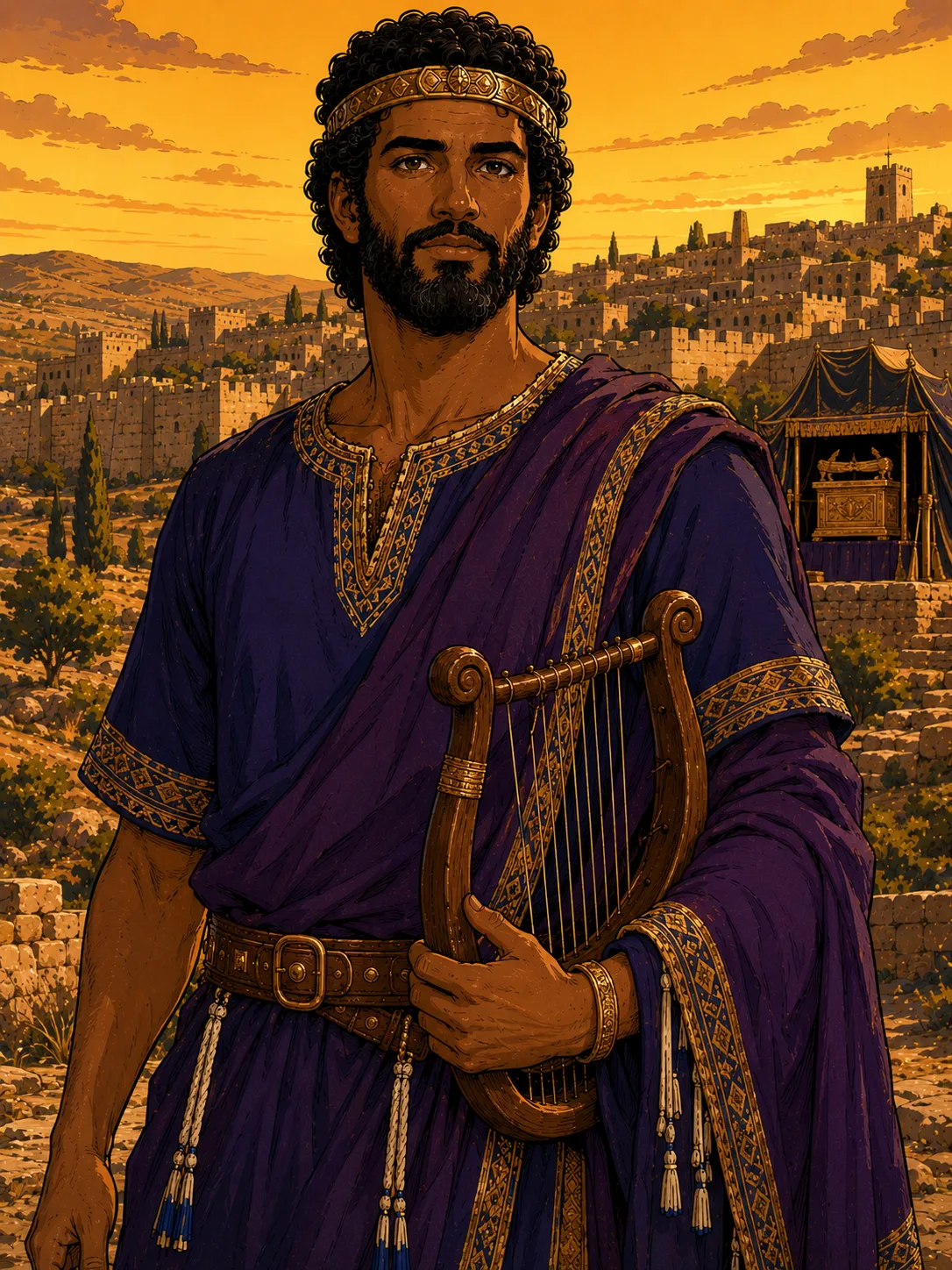
Son of Yehoyakim; became king at 18 during Nebuchadnezzar's siege of Yerushalayim, and reigned only three months and ten days (2 Kings 24:8, 2 Chronicles 36:9)
2 Kings 24:9 2 Chronicles 36:9 — 'he did that which was evil in the sight of Yah, according to all that his father had done'
2 Kings 24:12–16 — Yechonyahu, his mother, his servants, officials, and officers surrendered to Nebuchadnezzar; the king of Babylon took him captive to Babylon along with the queen mother, the entire royal household, the mighty men of valor, and the craftsmen and smiths (10,000 captives in all), together with the treasures of the Temple and palace — the first major deportation of Yehudah to Babylon, eleven years before the city's final destruction under Tzidkiyahu
The prophet Yechezkel (Ezekiel) was among those exiled in this same deportation, and dates his prophetic visions by the years of 'King Yehoyachin's captivity' (Ezekiel 1:2, and repeatedly thereafter)
Nebuchadnezzar installed Yechonyahu's uncle Mattanyahu as king in his place, renaming him Tzidkiyahu (2 Kings 24:17) — the last king of Yehudah
Jeremiah 22:24–30 — one of the most severe oracles against any Davidic king: 'as I live, saith Yah, though Coniah the son of Yehoyakim king of Yehudah were the signet upon my right hand, yet would I pluck thee thence'; Yah declares him 'childless, a man that shall not prosper in his days: for no man of his seed shall prosper, sitting upon the throne of David, and ruling any more in Yehudah'
Jeremiah 24 — in a vision of two baskets of figs given 'after Nebuchadnezzar... had carried away captive Yechonyahu... and the craftsmen and smiths,' Yah names the exiles taken with Yechonyahu the 'good figs,' whom he will watch over for good and one day restore to the land, while those remaining in Yehudah under Tzidkiyahu are the 'bad figs'
2 Kings 25:27–30 Jeremiah 52:31–34 — in the thirty-seventh year of his captivity, Evil-Merodach (Amel-Marduk), in the year he became king of Babylon, released Yehoyachin from prison, 'spoke kindly to him,' set his throne above the thrones of the other captive kings in Babylon, changed his prison garments, and gave him a regular daily allowance for the rest of his life — the final episode recorded in the book of 2 Kings
Babylonian administrative ration tablets excavated at Babylon, dated to Nebuchadnezzar's reign, independently record food allotments to 'Ya'u-kīnu, king of the land of Yahudu' and his five sons — extra-biblical confirmation that Yehoyachin and his household were maintained, not executed, in captivity
Esther 2:6 dates Mordechai's ancestor Kish's exile 'with the captivity which had been carried away with Yechonyah king of Yehudah,' used as a chronological anchor generations later in the Persian period. Named in Matthew 1:11–12 as 'Jechonias': 'and Yoshiyahu begat Yechonyahu and his brothers, about the time they were carried away to Babylon. And after they were brought to Babylon, Yechonyahu begat She'altiel'
“'Write this man down as childless' — yet Matthew names his son; in the thirty-seventh year of exile, his head was lifted up, and the line did not end”
Traditional note: This entry carries the dataset's most significant unresolved scriptural tension and is flagged per the standing instruction to pause on ambiguity rather than smooth over it. (1) Names: this king is called 'Yehoyachin' (the fuller form) in 2 Kings, 2 Chronicles, Jeremiah 52, and Esther 2:6; 'Yechonyah'/'Yechonyahu' (a contracted form) in Jeremiah 24:1, 27:20, 28:4, 29:2, 1 Chronicles 3:16–17, and Matthew 1:11–12; and the shortened, likely pejorative 'Konyahu' in Jeremiah 22:24, 22:28, and 37:1 — all three refer to the same individual; this entry uses 'Yechonyahu' to match Matthew's genealogy, the dataset's spine. (2) The 'curse of Coniah' (Jeremiah 22:24–30) declares this king 'childless... no man of his seed shall prosper, sitting upon the throne of David' — yet Matthew 1:12 states plainly 'Yechonyahu begat She'altiel,' continuing the genealogy through him to Yeshua. This dataset does not resolve this tension; it records both texts as written. Commonly proposed harmonizations (presented here for reference, not as the dataset's position) include: that Yirmeyahu's own continuation defines 'childless' as 'no man of his seed shall prosper, sitting upon the throne of David, and ruling any more in Yehudah' — i.e., no descendant of Yechonyahu would reign as a crowned king, which was literally fulfilled (his grandson Zerubavel governed as a Persian-appointed pechah, never a king); and separately, that Matthew traces the legal/royal succession through Yosef, on whom the throne-right (and with it, the force of this curse) would fall, while Luke 3 traces a different line through David's son Natan rather than Shlomo, converging only at She'altiel/Zerubavel — a question this dataset will need to address directly when the 'yeshua' and 'yosef' entries are written. (3) 1 Chronicles 3:17–18 lists Yechonyahu's sons as 'Asir, She'altiel...' (some manuscript traditions read 'Asir' as a description, 'the captive,' rather than a name), and 1 Chronicles 3:19 names Zerubavel as son of Pedayah (She'altiel's brother), while Ezra 3:2, Ezra 5:2, Haggai 1:1, and Matthew 1:12 all call Zerubavel 'son of She'altiel.' This entry forward-references 'shealtiel' (spelled without the apostrophe present in the transliteration, for id consistency with the rest of this dataset) for Batch D, where the She'altiel/Zerubavel discrepancy must itself be flagged. (4) The Babylonian ration-tablet evidence is extra-biblical and archaeological — flagged here as supporting 'Secondary' material alongside the 'Primary' biblical sources. (5) Era: this entry is marked 'Exile' rather than 'Divided-Kingdom' — the first such marking in this dataset's spine, and a deliberate transition point. Although Yechonyahu's three-month reign occurred before Yehudah's final fall under Tzidkiyahu, his defining narrative — deportation, imprisonment, and the line's continuation in Babylon — belongs to the Exile; the maintainer should review whether this era boundary should instead fall on Tzidkiyahu / 586 BCE once that figure is added in a future batch. 2 Kings 24:8 names Yechonyahu's mother as 'Nechushta, daughter of Elnatan of Yerushalayim' (see the general note on queen mothers in 'rechavam' and 'maakah-bat-avshalom').