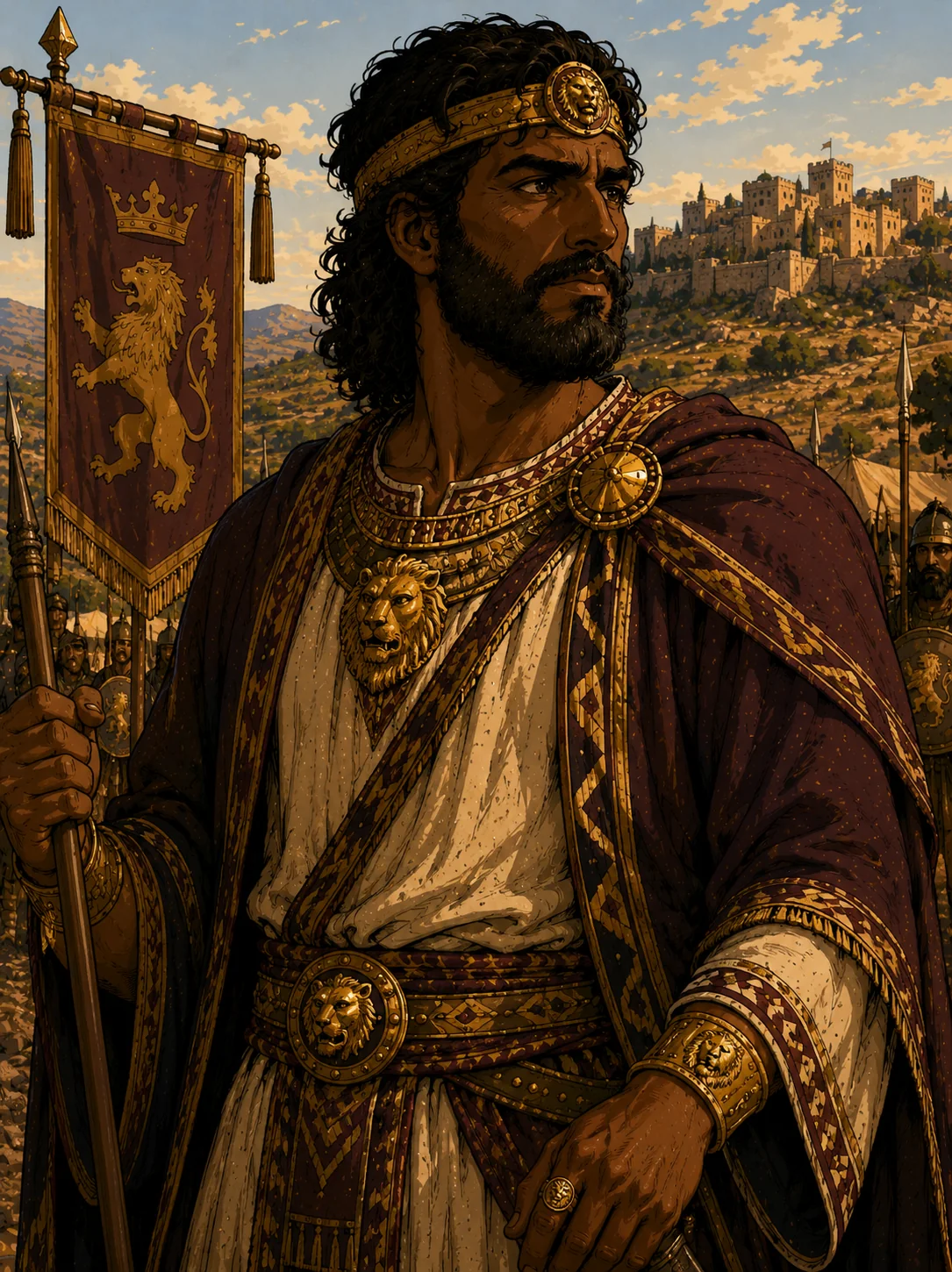
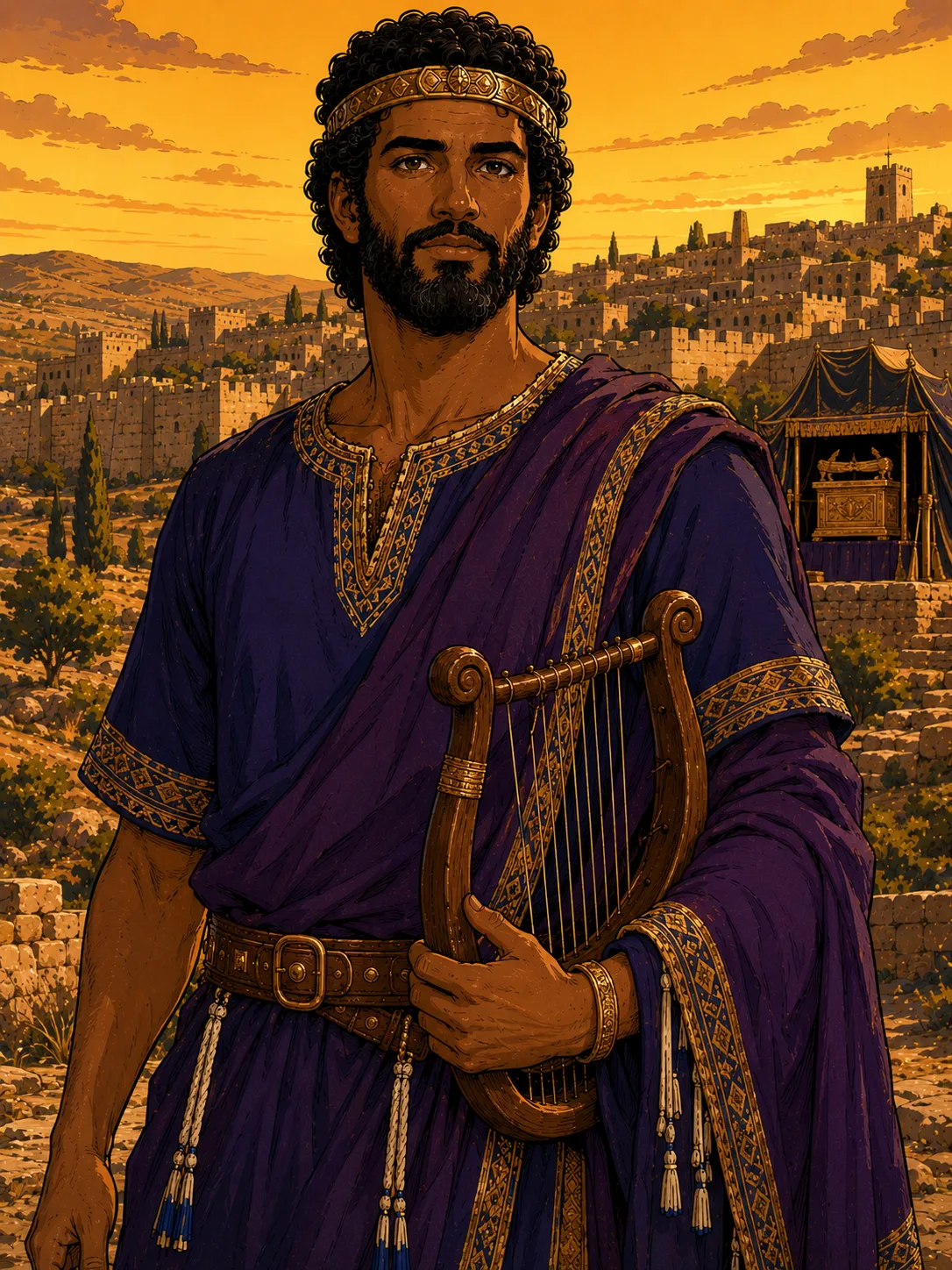
Born Eliakim, second son of Yoshiyahu (2 Kings 23:36); after Pharaoh Necho II deposed his younger brother Yehoachaz — who had reigned only three months — and took him captive to Egypt, Necho installed Eliakim as king and changed his name to Yehoyakim (2 Kings 23:34), a vassal-installation renaming of the same kind later used by Babylon on members of the exiled royal house (cf. Daniel 1:7)
2 Kings 23:35 — taxed the people of the land in silver and gold to pay the tribute Necho had imposed on Yehudah
2 Kings 23:37 2 Chronicles 36:5 — 'he did that which was evil in the sight of Yah, according to all that his fathers had done'
In his third year (c. 605 BCE), Nebuchadnezzar besieged Yerushalayim for the first time; Yehoyakim was given into his hand along with vessels from the Temple, and among the youths taken to Babylon at this time were Daniel, Chananyah, Mishael, and Azaryah (Daniel 1:1–7) — the first of three deportations to Babylon, the second under Yechonyahu (597 BCE) and the third under Tzidkiyahu (586 BCE)
Jeremiah 22:13–17 — a direct prophetic indictment: 'woe unto him that buildeth his house by unrighteousness... that useth his neighbor's service without wages, and giveth him not for his work,' contrasted with his father — 'did not your father... do justice and righteousness, and then it was well with him?... was not this to know me? saith Yah'
Jeremiah 36 — when Baruch read Yirmeyahu's scroll of prophecies before him, Yehoyakim cut it into pieces with a scribe's knife and burned it in a brazier, column by column, despite officials urging him not to; Yah commanded Yirmeyahu to dictate the scroll again 'with many like words added'
Jeremiah 22:18–19 36:30 — Yah pronounced through Yirmeyahu that Yehoyakim would have 'none to sit upon the throne of David,' and that his body would be 'cast out... and buried with the burial of an ass, drawn and cast forth beyond the gates of Yerushalayim'
Became a vassal of Nebuchadnezzar for three years, then rebelled (2 Kings 24:1); Babylonian, Aramean, Moabite, and Ammonite raiders were sent against Yehudah as a result (2 Kings 24:2)
2 Kings 24:6 records simply that he 'slept with his fathers,' while 2 Chronicles 36:6 says Nebuchadnezzar bound him in bronze fetters to carry him to Babylon — the two accounts do not fully agree on the circumstances of his death, and this dataset does not attempt to harmonize them. Succeeded immediately by his son Yechonyahu (2 Kings 24:6)
“Renamed by a foreign king, he burned the prophet's scroll page by page — and Matthew's genealogy passes over his name in silence”
Traditional note: This entry is the second major case in this dataset of Matthew's genealogy compressing the historical king-list (the first being the three-king compression documented on 'achazyahu-melech-yehudah'). Matthew 1:11 reads 'and Yoshiyahu begat Yechonyahu and his brothers, about the time they were carried away to Babylon' — passing directly from Yoshiyahu (the grandfather) to Yechonyahu (the grandson) without naming Yehoyakim at all. This dataset's father/children chain follows the historical succession recorded in 2 Kings and 2 Chronicles (Yoshiyahu → Yehoyakim → Yechonyahu) regardless, consistent with the policy established for the earlier compression. Unlike the three earlier-skipped kings (Achazyahu, Yoash, Amatzyahu), whose omission seems aimed at preserving Matthew's stated count of generations, Yehoyakim's omission may carry additional theological weight: it is against him that Yirmeyahu's indictment in Jeremiah 22:13–19 is spoken, leading directly into the oracle of Jeremiah 22:24–30 against his son Yechonyahu — a curse that becomes directly relevant to the Matthew 1 / Luke 3 genealogy question for Yeshua, addressed in 'yechonyahu'. 2 Kings 23:36 names Yehoyakim's mother as 'Zevudah, daughter of Pedayah of Rumah' (see the general note on queen mothers in 'rechavam' and 'maakah-bat-avshalom').