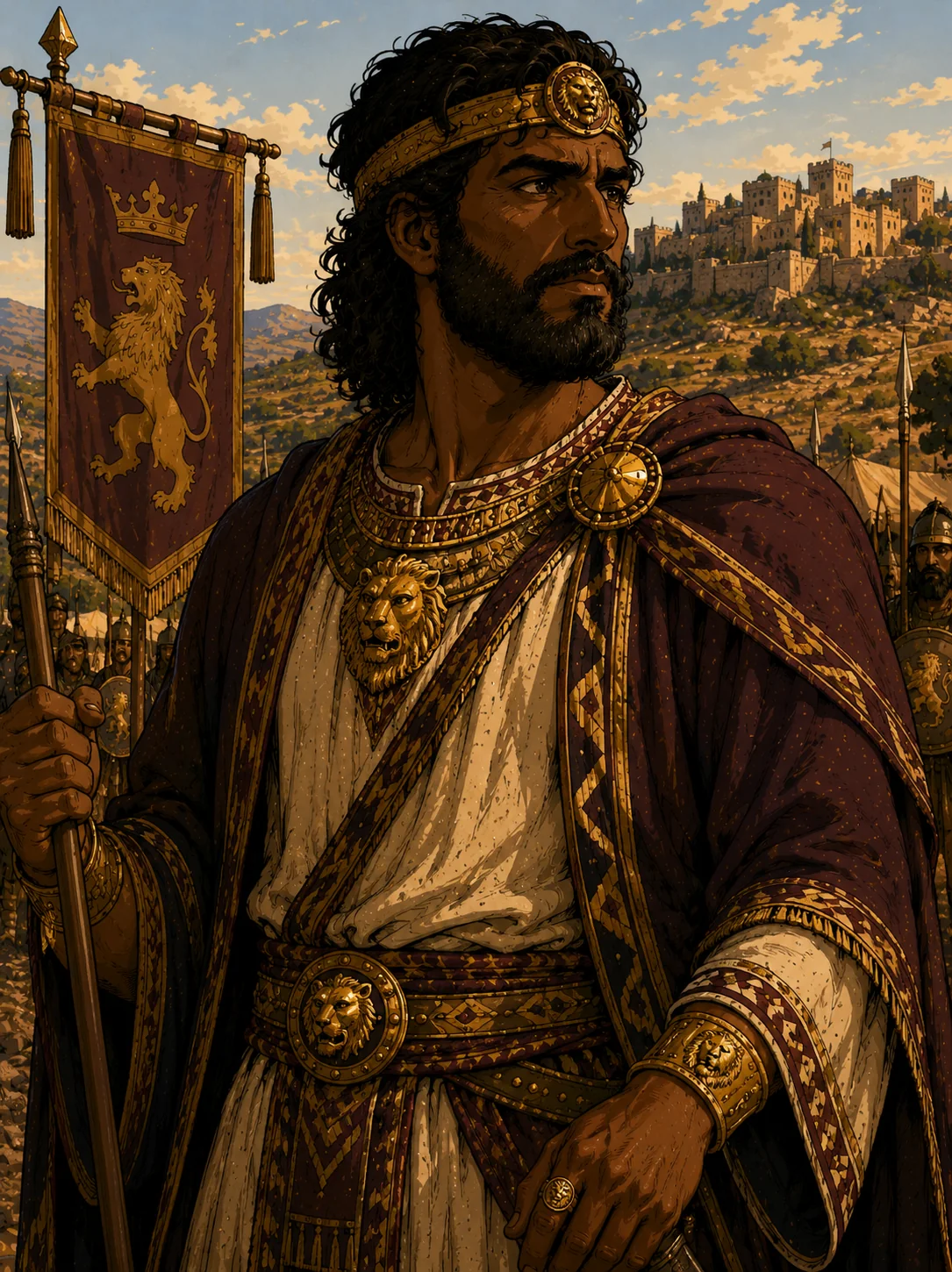
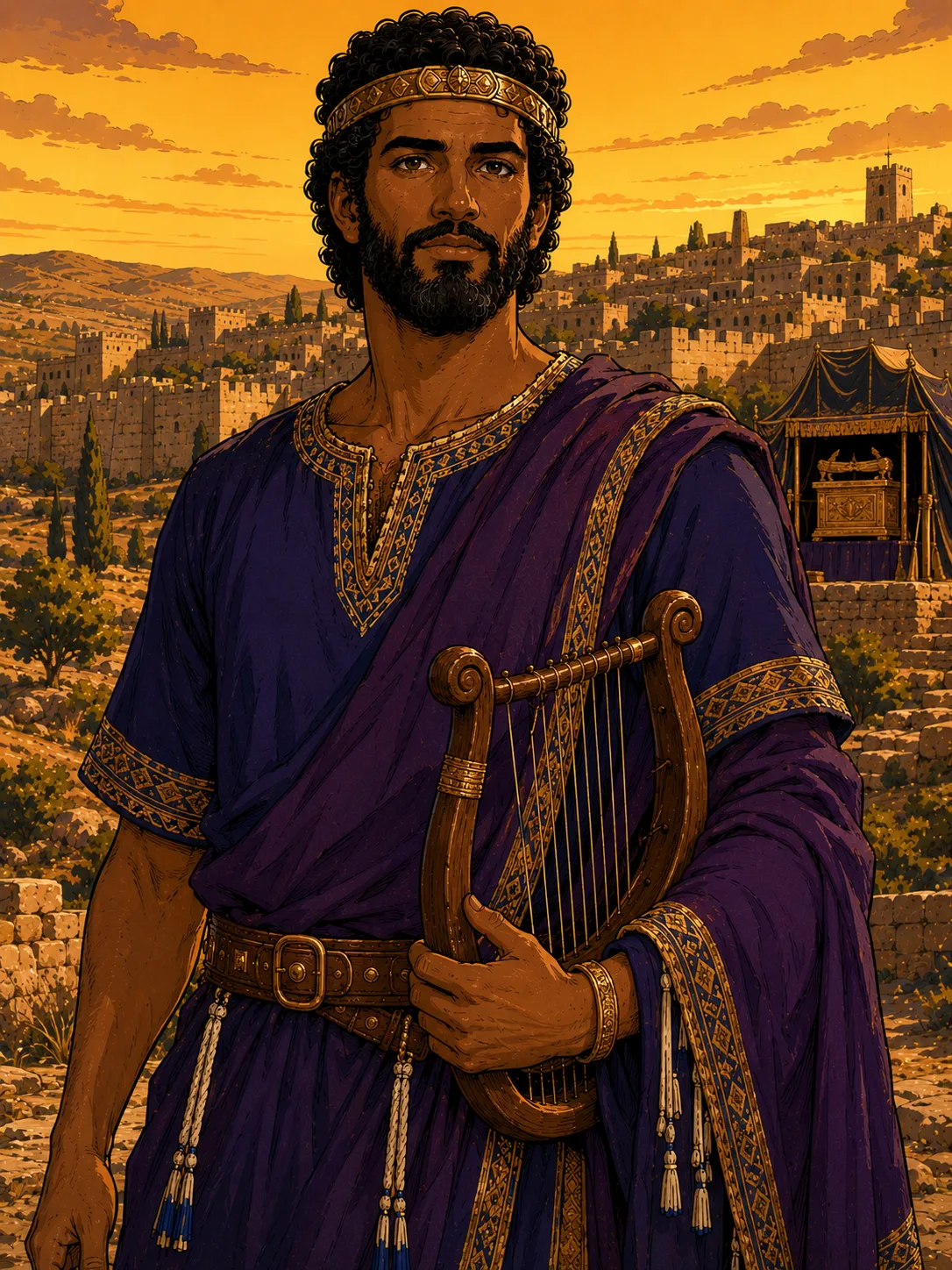
Son of Amon; became king at age 8 after his father's assassination, and reigned 31 years (2 Kings 22:1)
2 Chronicles 34:3 — 'in the eighth year of his reign, while he was yet young, he began to seek after the God of David his father'; by his twelfth year he began purging Yehudah and Yerushalayim of high places, Asherim, and idols
In his eighteenth year, during repairs to the Temple, Hilkiyahu the high priest found 'the Book of the Torah' (2 Kings 22:8) — traditionally identified with Devarim (Deuteronomy) or a substantial portion of it
When the book was read to him, Yoshiyahu tore his clothes, recognizing how far the nation had departed from what was written (2 Kings 22:11)
Sent his officials to inquire of Yah through Chuldah the prophetess (2 Kings 22:14) — one of only a handful of named prophetesses in the Hebrew Bible, consulted at one of its most pivotal moments; she confirmed the coming disaster but promised it would not occur in Yoshiyahu's own lifetime, because his heart was tender and he had humbled himself (2 Kings 22:18–20)
2 Kings 23 records the most sweeping religious reform of any king: he destroyed the vessels made for Baal and Asherah, removed the idolatrous priests, broke down the houses of the male cult prostitutes, defiled Topheth in the Valley of Ben-Hinnom 'so that no man might make his son or daughter pass through the fire to Molech,' and removed the horses dedicated to the sun
2 Kings 23:15–18 — Yoshiyahu went to Beit-El and destroyed the altar and high place there, fulfilling by name a prophecy spoken over 300 years earlier by an unnamed man of God in 1 Kings 13:2 ('a son shall be born unto the house of David, Yoshiyahu by name')
Celebrated a Pesach 'such as had not been kept... since the days of the judges' (2 Kings 23:21–23, 2 Chronicles 35:18)
2 Kings 23:25 — 'before him there was no king like him, who turned to Yah with all his heart, and with all his soul, and with all his might, according to all the Torah of Moshe; nor after him arose there any like him' — yet 2 Kings 23:26–27 immediately adds that Yah's anger against Yehudah for Menashe's sins was not turned away: Yoshiyahu's reform delayed the judgment but did not avert it
Died in battle against Pharaoh Necho II at Megiddo, having gone out to oppose Necho's march toward Assyria (2 Kings 23:29, 2 Chronicles 35:20–24); Yirmeyahu composed laments for him (2 Chronicles 35:25), and Jewish tradition associates his death with the mourning 'of Hadad-Rimmon in the plain of Megiddon' in Zechariah 12:11. Named in Matthew 1:10 (as 'Josias')
“No king before or after turned to Yah as he did — yet he died at Megiddo, and Yehudah's judgment was only delayed, not undone”
Traditional note: 2 Kings 22:1 names Yoshiyahu's mother as 'Yedidah, daughter of Adayah of Botzkat' (see 'amon'). Yoshiyahu had at least three sons who reigned after him: Yehoachaz (also called Shallum, 2 Kings 23:30–34, Jeremiah 22:11), Yehoyakim (this batch's next entry, ancestor of Yeshua), and Tzidkiyahu (also called Mattanyahu, 2 Kings 24:17), the last king of Yehudah before the Babylonian destruction. Only the line through Yehoyakim continues toward Yeshua and is pursued here; Yehoachaz and Tzidkiyahu are flagged as candidates for a future 'Messianic-line-sibling' batch given their major narrative roles (Yehoachaz's three-month reign and deportation to Egypt; Tzidkiyahu's role in the final siege and the Temple's destruction). Notably, 2 Kings 23:31 gives Yehoachaz's age at accession as 23 and 2 Kings 23:36 gives Yehoyakim's as 25 — meaning the younger son (Yehoachaz) was placed on the throne first, by 'the people of the land' (2 Kings 23:30), the same phrase used of Yoshiyahu's own accession after Amon's assassination. This entry is shared with this dataset's planned 'major narrative figures' section — no separate entry will be created for Yoshiyahu there.