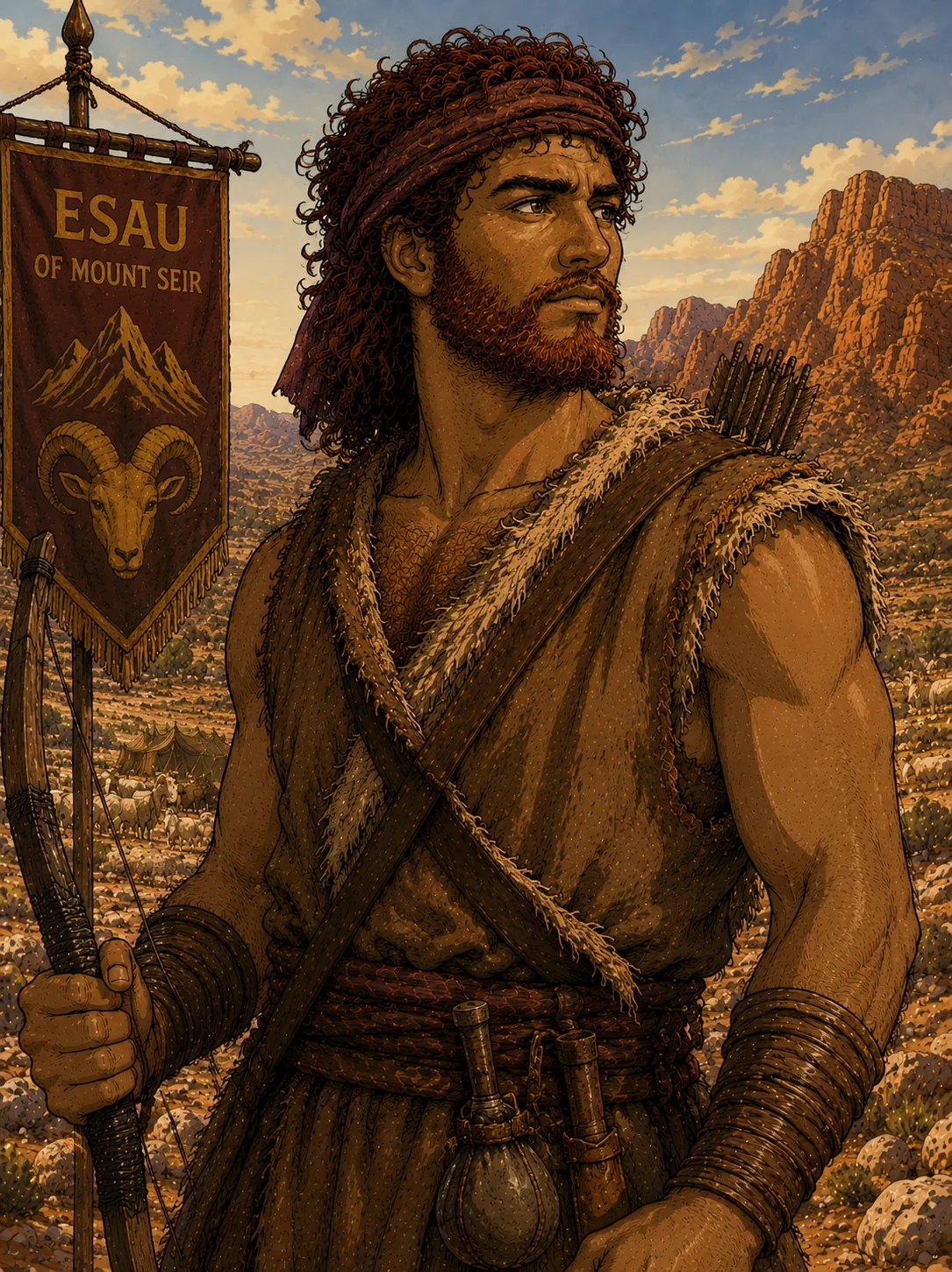
Esav (עֵשָׂו) enters the world struggling. The twins fought in Rivkah's womb so violently that she asked God what was happening, and God answered: "Two nations are in your womb... the elder will serve the younger" (Genesis 25:23). Esav emerges first — red (admoni), hairy all over (se'ar) like a fur coat — and Yaakov follows, gripping Esav's heel. Esav grows up a skillful hunter, a man of the field; Yaakov is a quiet man dwelling in tents. Yitzchak loves Esav because he eats of his game; Rivkah loves Yaakov.
Two transactions define Esav's place in the narrative. The first is the birthright: Esav returns from the field exhausted and finds Yaakov with red lentil stew. He demands it; Yaakov offers it for the birthright. Esav agrees — "I am about to die; what use is a birthright to me?" — and swears it away. The narrator's verdict is immediate: "Thus Esav despised his birthright" (Genesis 25:34). The second is the blessing: Rivkah schemes to have Yaakov dress in skins and present food to Yitzchak while Esav is hunting. Yitzchak blesses Yaakov thinking he is Esav. When Esav returns and the deception is discovered, Esav weeps bitterly: "Have you not reserved a blessing for me?" Yitzchak gives him a secondary blessing — "by your sword you shall live, and you shall serve your brother; but when you break free, you shall break his yoke from your neck."
Esav marries Hittite and Ishmaelite women, settles in Mount Seir, and becomes the father of the Edomites. The meeting between Esav and Yaakov after twenty years apart — Yaakov returning from Paddan-aram, terrified, sending waves of gifts ahead — ends in an embrace. "Esav ran to meet him and embraced him, and fell on his neck and kissed him, and they wept" (Genesis 33:4). The reconciliation is complete and human. Edom's later history with Israel is complex — prophetic oracles against Edom fill Obadiah, Amos 1, Jeremiah 49, and Ezekiel 35 — but Deuteronomy 23:7 commands: "You shall not abhor an Edomite, for he is your brother."