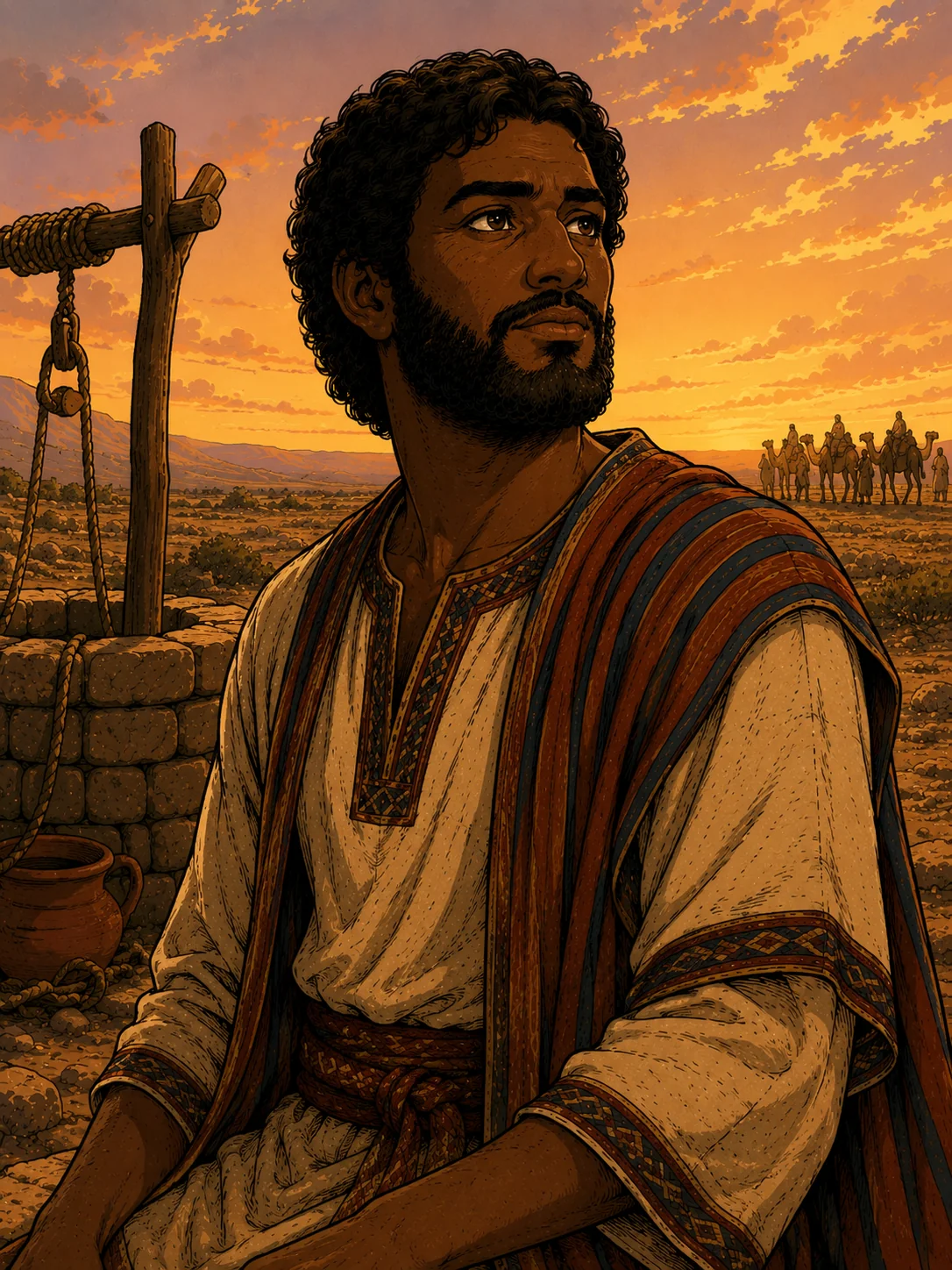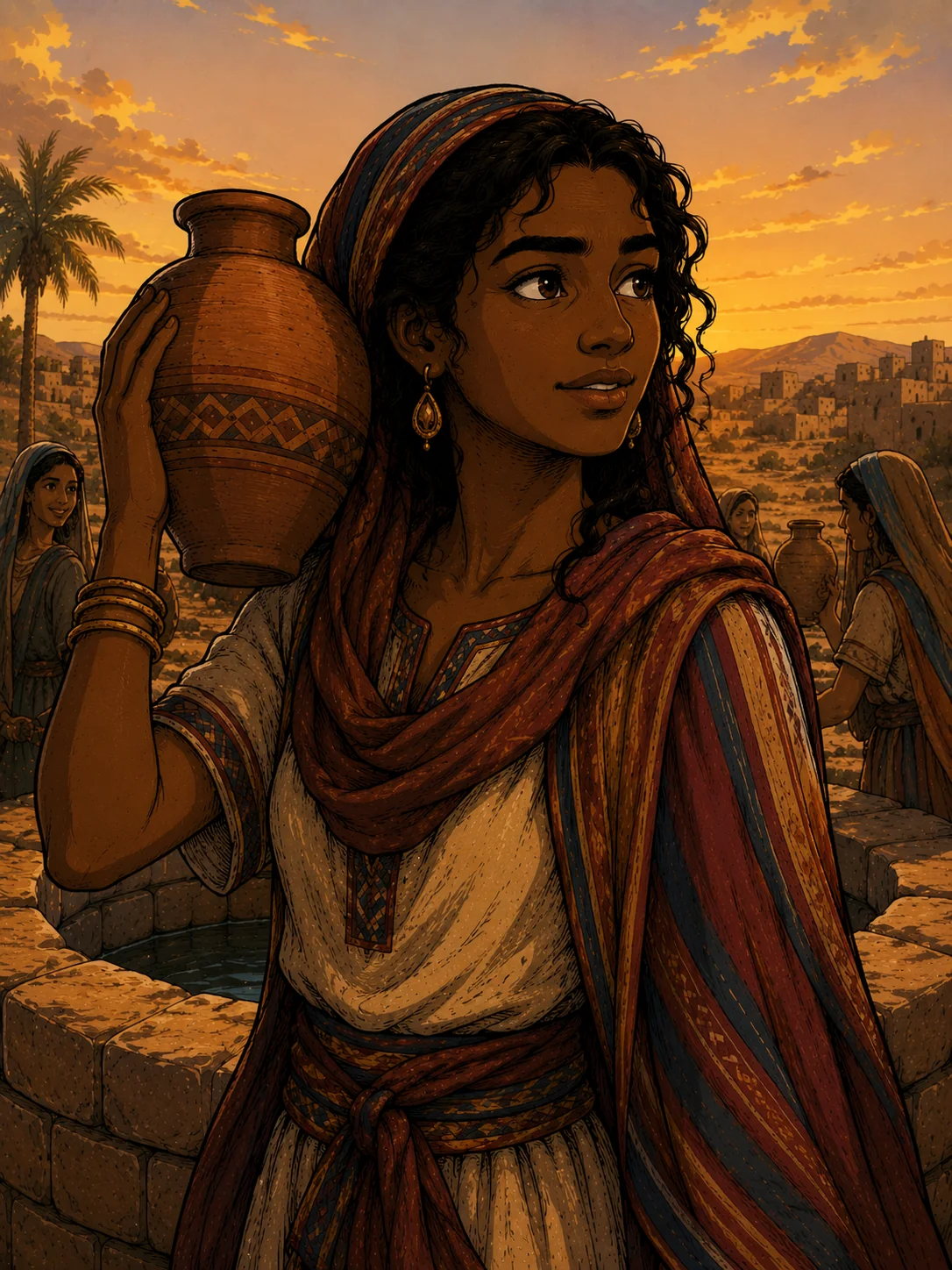
Rivkah (רִבְקָה) is introduced at a well. Avraham's servant arrives in Paddan-aram having prayed for a specific sign: the right girl will offer water to both him and his camels. Rivkah appears, draws water, offers it unprompted, and then offers to water all ten camels — a significant physical task, since a camel drinks up to thirty gallons after a journey. She does it without being asked. The servant watches in silence, waiting to know whether God has prospered his way. Then she names her family, and everything aligns. She is the answer to the prayer.
The marriage proposal is made to her family that same evening. The servant presents his case; Lavan and Bethuel answer that it comes from God and they cannot speak against it. In the morning they ask to delay ten days; the servant asks to leave immediately. They call Rivkah and ask her: "Will you go with this man?" — and she says: "I will go." Her decisiveness echoes Avraham's own response to the call. She leaves that same day.
Rivkah is the only matriarch to receive a direct divine oracle. When the twins struggle in her womb, she goes to inquire of God and receives the answer: "Two nations are in your womb; two peoples will be separated from your belly; one people will be mightier than the other; and the elder will serve the younger" (Genesis 25:23). She carries this knowledge for years. When Yitzchak is blind and plans to bless Esav, Rivkah acts on what God told her — devising the disguise for Yaakov, taking the curse on herself if discovered: "Your curse be on me, my son; only obey my voice." She is the instrument through which God's oracle is fulfilled, and she bears the cost of it: after the scheme succeeds, she sends Yaakov away and the text never records them seeing each other again.